Haverford Roofing brings more than 20 years of work to roofing in Yeadon, and some of the most useful jobs we take on here happen in the weeks before a house is sold. A sale in this borough runs through a code inspection first, and the roof sits in an awkward place relative to that inspection. We help owners sort out what the roof needs before the settlement date forces the question.
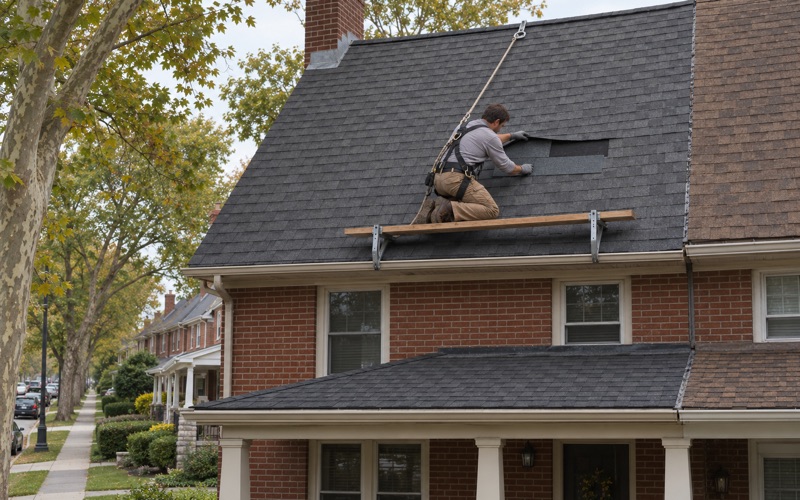
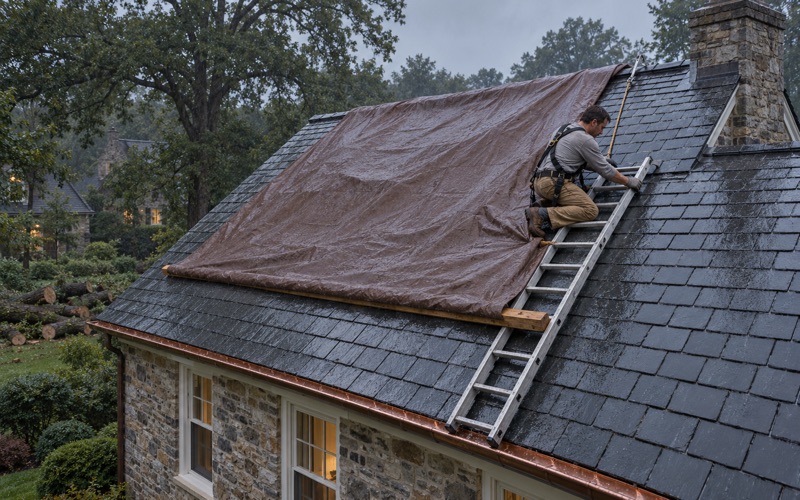
Every leak call we take starts with two looks: one at the roof surface and one from the attic, so we can trace water to where it actually enters rather than guessing from a stain. From there you get a plain answer on whether the roof can be repaired, and only after that do we talk about replacement, if it comes up at all.
Gutters and downspouts are part of the same conversation. We size and pitch them with the roof instead of treating them as a separate afterthought, which matters in Yeadon for a reason the borough’s own sale paperwork makes clear.
Selling in Yeadon Starts With the Borough
Yeadon is a borough in Delaware County that borders Philadelphia, and it handles property sales differently from a simple deed transfer. Before a house changes hands, the owner files a Request for Property Transfer Certificate of Occupancy with the borough. On that form, the owner of record acknowledges they will not proceed to settlement, sell or transfer the property until the Department of Code Enforcement has inspected it and issued the certificate.
The owner and the realtor both sign
The form does not stop at the seller. A separate section repeats the same acknowledgment for the realtor, agent, salesperson or broker, so everyone moving the deal toward closing has put their name to the rule. The form also states that failure to comply may result in citations with fines assessed up to $10,000 per day for each day the violation occurs.
That figure is the maximum the form states; it says nothing about how often the borough uses it. The practical point for a seller is simpler. The certificate is a condition of the sale, so anything that could hold it up deserves attention early rather than in the final week.
Applications are due 30 days prior to settlement
The form’s footer is printed in capital letters: all applications for a certificate of occupancy must be submitted at least 30 days prior to settlement. Working backward from a closing date, that leaves a seller less time than it sounds, because the inspection, any repairs it calls for and a reinspection all have to fit inside the same window.
The borough’s Schedule of Fees, effective October 2024, prices the residential certificate at $150 for up to two inspections and $50 for each inspection after that. If a roof or gutter problem is going to be fixed, fixing it before the first visit is the cheaper and calmer order of operations.
When the timeline runs short
The borough’s forms page also lists a Provisional Use and Occupancy Application, and the same fee schedule prices provisional certificates at $75 for 30 days, $100 for 31 to 90 days and $500 for 91 to 365 days. We do not advise anyone on which certificate fits their sale; that is a question for the Code Department and the people handling the closing.
What we can do is tell a seller, in writing, what condition the roof and drainage are in and how long any work would take, so that the decision is made with real numbers. The borough office sits at Church Lane and Baily Road for anyone who wants to ask the department directly.
Looking for roofing closer to West Bradford? See West Bradford Roofing.
Gutters Are on the List, the Roof Is Not
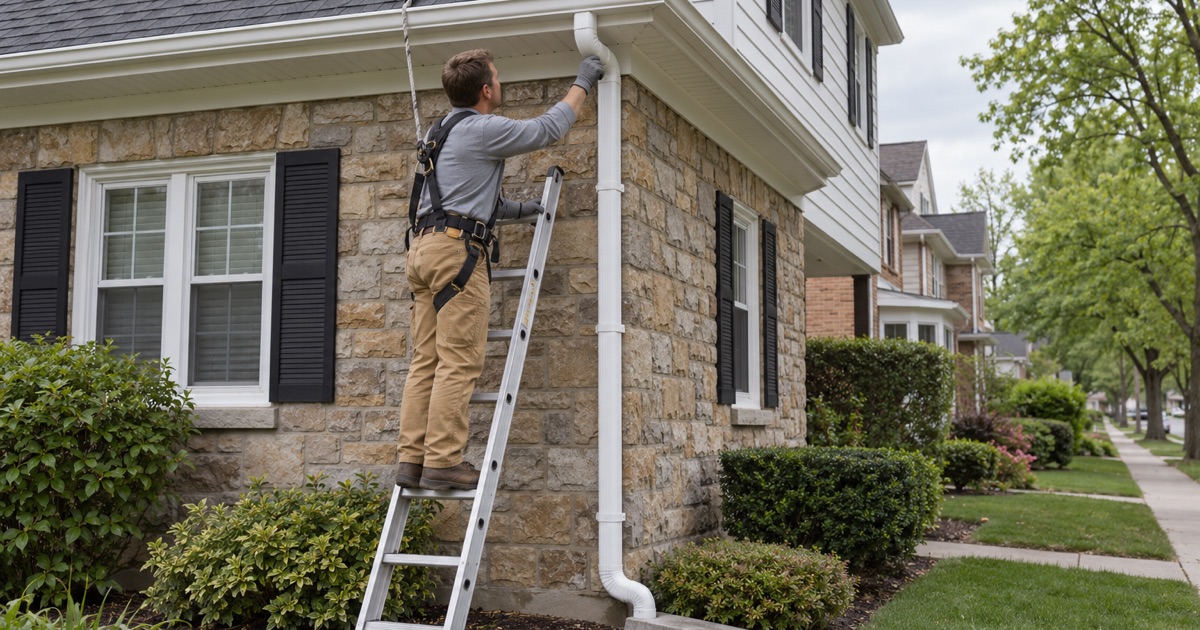
The borough’s resale inspection list, headed for all property owners and future property owners and signed by the Code Director, spells out what inspectors look for during a use and occupancy visit. The very first exterior item reads: downspouts and gutter install and properly operation. Sidewalks, steps, railings, the driveway, exterior lighting, the electrical service cable and screen doors follow.
Nothing on that list names the roof, the flashing or the chimney. Inside, the list checks that ceilings are clear of any holes or damage, which is often where a roof problem shows itself first. So the borough looks at the two ends of the water path, the gutters outside and the ceilings inside, without listing the surface in between.
When a gutter counts as working
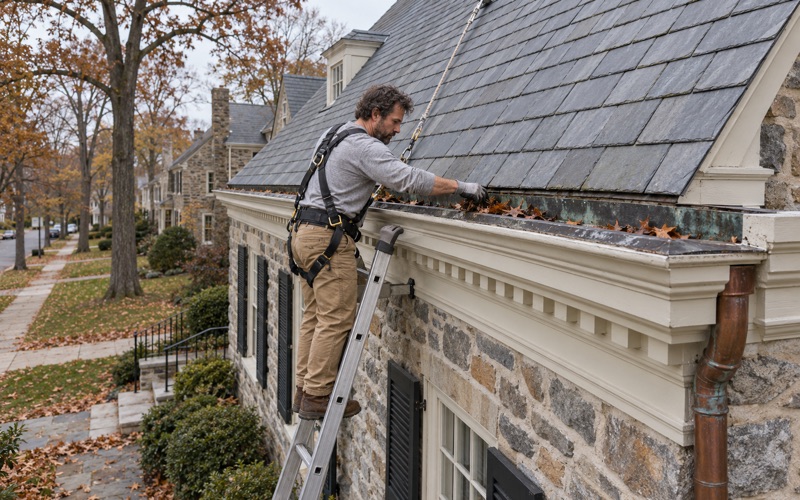
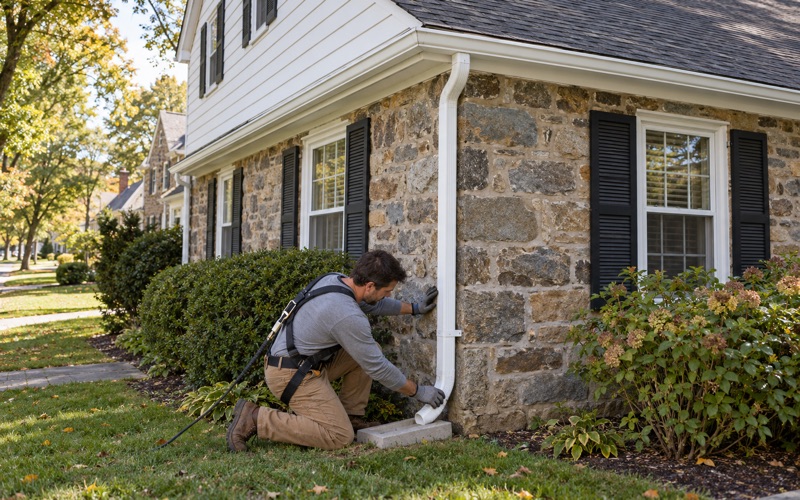
A gutter can be attached and still fail to drain. Sagging runs hold water, a section pitched the wrong way sends it over the front edge, and a downspout clogged at the elbow backs the whole line up. On an older house the hangers and fascia behind them are often tired, so a gutter that looks fine from the sidewalk may not do its job in a real rain.
We check pitch, outlets, hangers and the downspout discharge, and because we size and set gutters as part of the roof system, we look at whether the roof edge is feeding them correctly. Drip edge at the eaves and the condition of the fascia board both decide whether water lands in the gutter or behind it.
Ceiling stains point back to the roof
Because the list requires ceilings free of holes or damage, a water stain on an upstairs ceiling is something a seller wants explained before the inspector arrives. Painting over a stain does not settle anything; the leak that caused it is still there, and the buyer will own it the first time it rains hard.
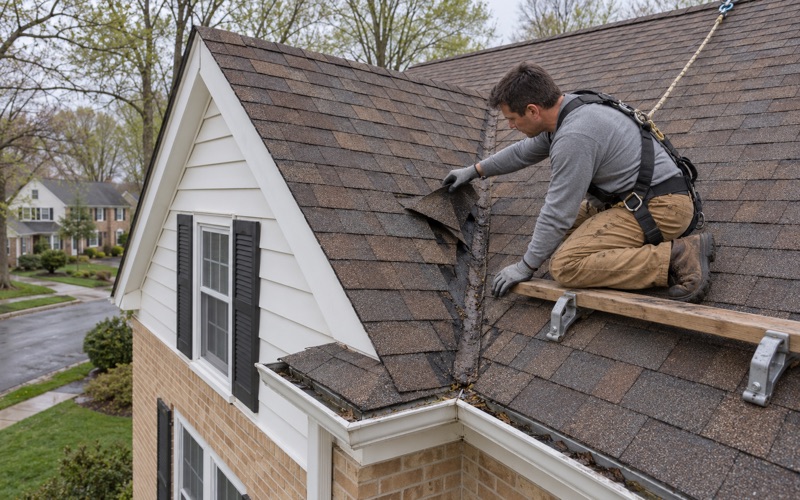
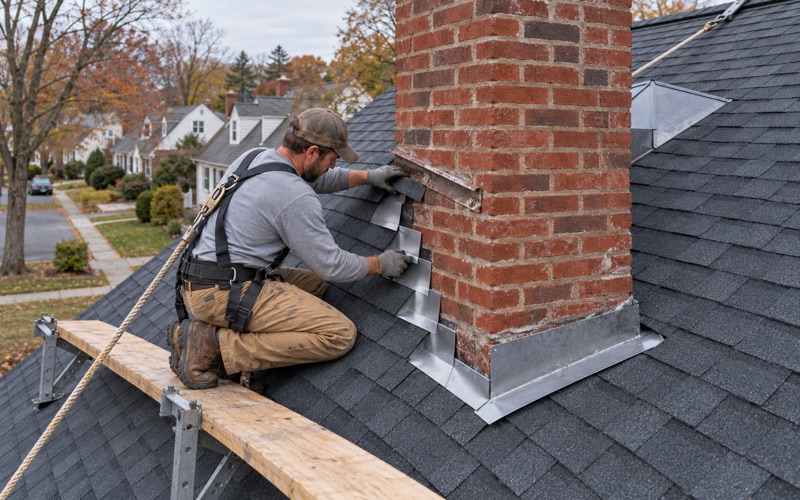
This is where our attic-first habit earns its keep. We go up into the attic or the space above the stain and follow the trail back to the entry point, whether that is a cracked pipe boot, failed step flashing at a dormer wall or a worn valley, and we price the actual fix rather than the stain.
The same list applies to rentals
Renters occupy 2,946 of Yeadon’s 5,353 occupied homes, and the borough charges an annual rental license per unit. The rental inspection list carries the same exterior items as the resale list, gutters and downspouts included, and it also leaves the roof off. Landlords facing a license inspection run into the same gap a seller does.
Why a Visual Inspection Leaves the Roof to the Buyer
The second page of the borough’s request form is a Buyers Inspection Verification Affidavit. In it, the buyer acknowledges that the inspection checks compliance with the borough’s Property Maintenance Minimum Housing and Quality of Life Code, that it is visual in nature, and that no diagnostic testing or technical evaluation of equipment and services is performed.
The buyer also accepts that a certificate is not a warranty, does not mean the property is free of violations or structural defects, and waives the borough’s liability for defects found after settlement. Put plainly, a certificate in hand tells a buyer the house met the borough’s list on the day of the visit, and nothing about the roof.
A home inspector’s report goes in the file
The affidavit invites buyers who have hired a third-party home inspector to attach a copy of the report to the property file. That report usually covers the roof from the ground, a ladder or a drone, and it often ends with a recommendation to have a roofer evaluate anything questionable.
That recommendation is where we come in for buyers. We get on the roof, go into the attic, and write up what we find in plain terms: what is sound, what needs repair now, what can wait, and what it would cost. A buyer can carry that into negotiations instead of a vague line about further evaluation.
What Yeadon’s housing means for the roof
Yeadon filled in over three decades, growing from 1,308 residents in 1920 to 11,068 by 1950, and 2,730 of its 5,573 housing units were built before 1950. Attached houses outnumber detached ones by more than two to one, 2,381 against 953, and they make up 1,572 of the 2,407 owner-occupied homes.
The architectural record describes this part of Delaware County as row houses and small twin houses, so a pre-sale repair on one half of a house often has to tie in with the neighbor’s roof. We plan that work with the shared wall and the adjoining roof in mind, and on houses this age we look closely at flashing, decking and the gutter line.
Fixing Roof and Gutter Items Before the Certificate
Once a seller knows what the roof and gutters need, the order of work matters. We start with whatever could affect the resale inspection directly, meaning gutters and downspouts that are loose, clogged or pitched wrong, and any active leak behind a ceiling stain. Roof work that is real but not urgent can be priced separately so the seller and buyer can decide who handles it.
Permits for re-roofing in Yeadon
Yeadon’s own Schedule of Fees lists re-roofing among the building permits, at $100 for the first $1,000 of project cost and $50 for each additional $1,000. Contractors working in the borough pay an annual $150 license, and work started without an approved permit carries a penalty for the owner and a larger one for the contractor.
Because every municipality in our service area sets its own re-roof rule, we check Yeadon’s before we price a job, and the permit sits on the estimate as its own line. A sale is a bad moment to be answering questions about unpermitted work.
Written scopes a buyer and seller can both read
Our estimates separate tear-off, decking, underlayment, flashing, ventilation and gutters into their own lines, which is useful when two parties are splitting a repair credit. If decking turns out to be damaged once the old roof is off, we photograph it and show the owner before replacing it, at a per-sheet price already written into the contract.
Contracts follow Pennsylvania’s home improvement law, including the three-business-day cancellation notice and a deposit kept within the legal limit. On a tight settlement schedule that cancellation window is worth planning around, so we build it into the start date rather than letting it surprise anyone.
Repair before replacement, even on a deadline
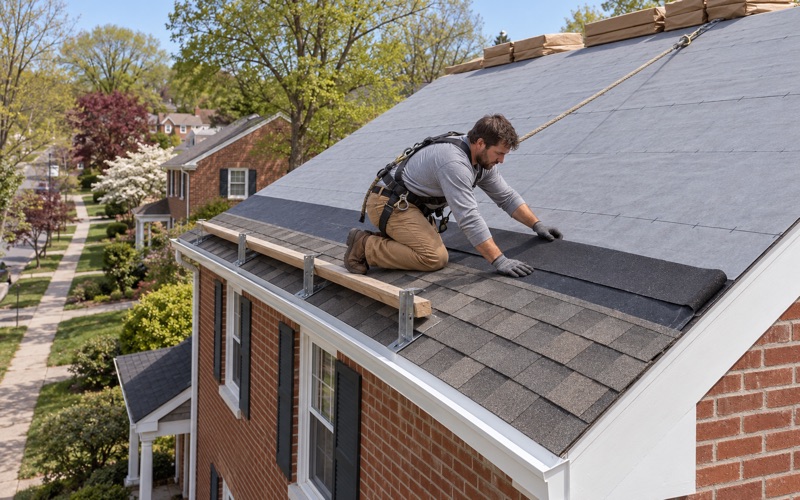
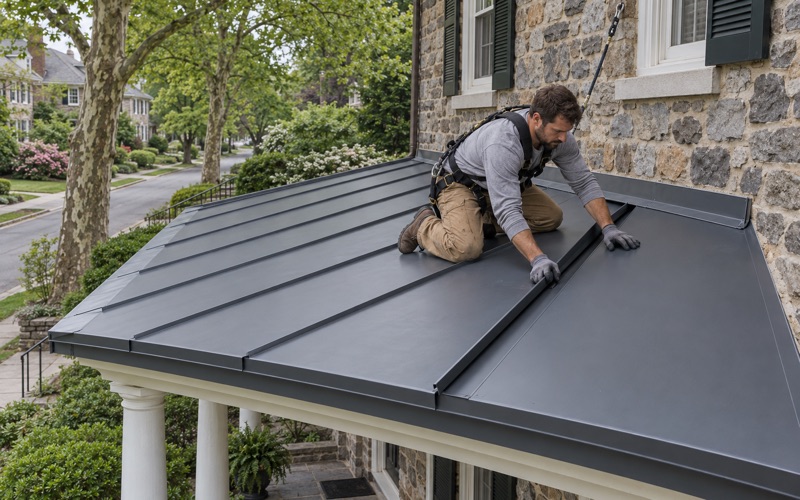
A sale deadline tempts people toward a full replacement just to make the question go away. We would rather tell a seller plainly when a roof can be repaired. When replacement is the right call, step, counter and chimney flashing are replaced with the roof rather than reused, and the yard and gutters are cleaned, with a magnet sweep for nails, at the end of each work day.
Either way, the seller goes into the borough’s resale inspection with working gutters and dry ceilings, and the buyer gets a written account of the roof that a visual inspection was never meant to provide.
- 20+ Years in Business
- Attic Checked on Every Leak
- Line-Item Written Scopes