Haverford Roofing brings more than 20 years in the trade to roofing in Worcester, and most calls we take here begin with one question: can this roof be fixed? We answer that plainly before replacement is ever on the table, and we put our reasoning in writing so the owner can check it against what they see on the house.
A leak call here always includes two inspections, not one. We go into the attic as well as onto the roof, because water often travels along a rafter or the decking before it shows on a ceiling, and the spot where it drips is rarely the spot where it gets in. Nothing gets priced until we have traced the path.
Every written scope we hand over breaks the job into separate lines for tear-off, decking, underlayment, flashing, ventilation and gutters. That lets an owner set our estimate beside anyone else’s and compare item by item. Before we price anything, we also confirm how the house’s own township treats a re-roof, since that is decided locally rather than by one rule for the whole region.
Worcester’s Preserved Farmland and Open Space
Worcester Township is a Montgomery County township founded in 1733, and a measurable part of its 16.2 square miles has been set aside on purpose. The township’s Open Space Preservation Program reports that about 1,825 acres have been preserved throughout the community. That figure shapes what a lot of homeowners see from their roofs and their back windows.
The Agricultural Security Area
Alongside the preserved acreage, the program says more than 1,000 acres are presently enrolled in the Worcester Township Agricultural Security Area. Enrollment is a farmland designation, and we do not treat it as a rule about how a neighboring house is roofed. We mention it because it tells a homeowner something practical: the working land beside many properties here is expected to stay working land.
For a roofing job, that steady setting means wide sightlines, open exposure on at least one side of many houses, and fields that sit right up to the property line. We plan staging, material drop-off and cleanup with that in mind, so a pallet of shingles or a dumpster does not end up where it blocks a farm lane or a neighbor’s view.
Fisher Road and the Griffith Property
The program’s first purchase was announced in August 2022, when the township reported that the Board of Supervisors had bought a 40-acre farmstead on Fisher Road that it described as soon to become its next community park. In October 2023 the supervisors approved buying about 10 acres of farmland at Griffith Road and Valley Forge Road for $595,000, land the township called farmland with a great deal of history.
We bring these purchases up as context, not as jobs. The township announcements we have seen describe no building on either parcel, and we have no part in what happens to them. What they show is direction: the land around Fisher Road and along Valley Forge Road is being kept open, and the houses near it will keep looking out on open ground.
Looking for roofing closer to Bryn Mawr? See Roofing in Bryn Mawr.
Farmhouse Roofs on Older Worcester Properties
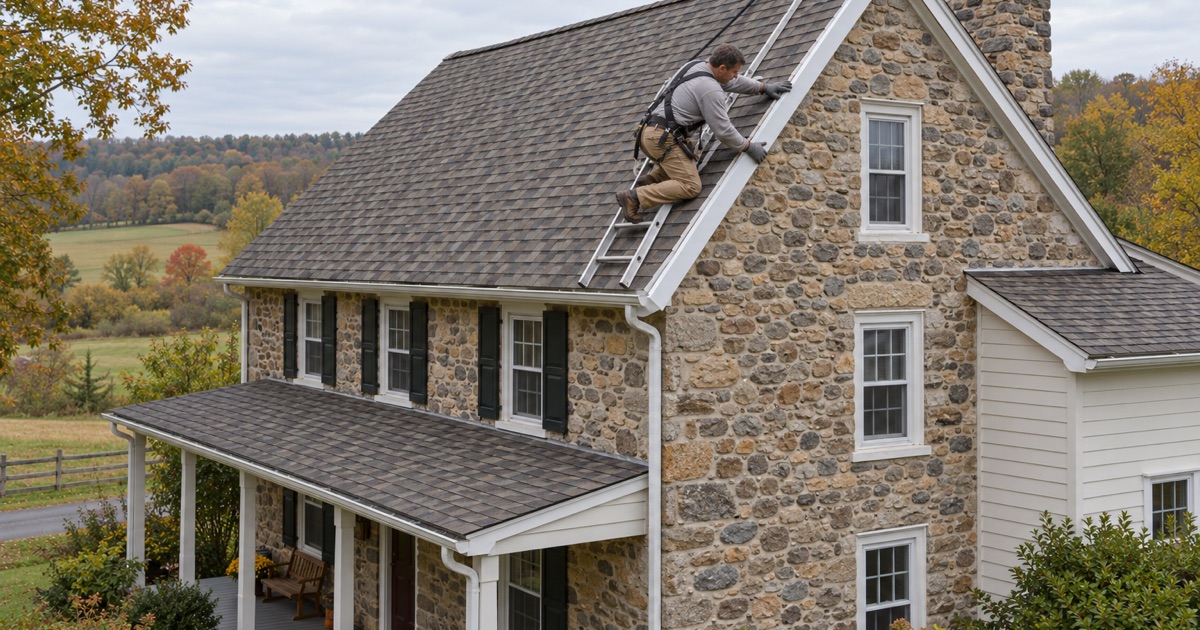
Census estimates for Worcester Township count 307 housing units built in 1939 or earlier, out of 4,060 in all. In a township with this much farmland, we expect some of them to be farmhouses, and a roof on a house that old has usually been worked on more than once. When we climb one, we look for layers of past repairs rather than a single clean system.
Layers, Decking and the Tear-Off Question
Older roofs are where we most often find a second layer of shingles over the first, or a newer roof laid over something that should have come off. We check what is actually up there before the estimate is written, so the scope says plainly whether a full tear-off is part of the job. The reroofing provisions in IRC R908 also cap how many layers a roof can carry, which is one more reason we look before we price.
Once the old material is off, the decking underneath can show rot or soft spots that nobody could see from the ground. We photograph any damaged boards and show them to the owner before replacing them, at a per-sheet price already set in the contract. On an old farmhouse, that rule keeps a surprise from turning into an argument.
Slate, Flashing and Painted Trim
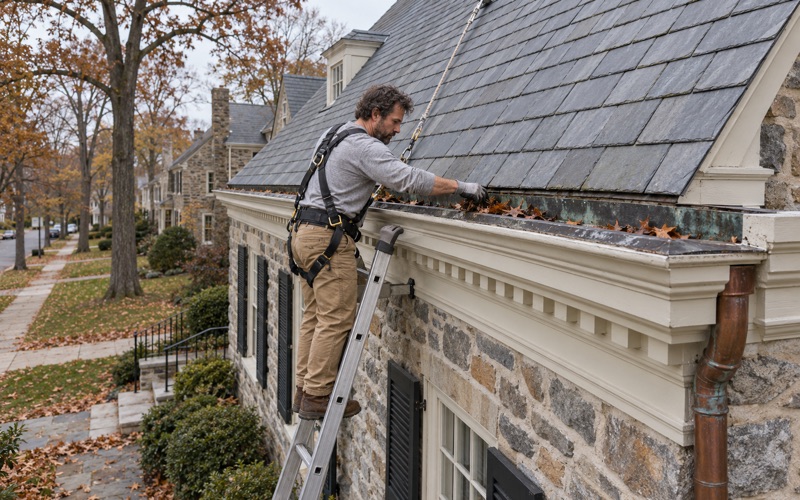
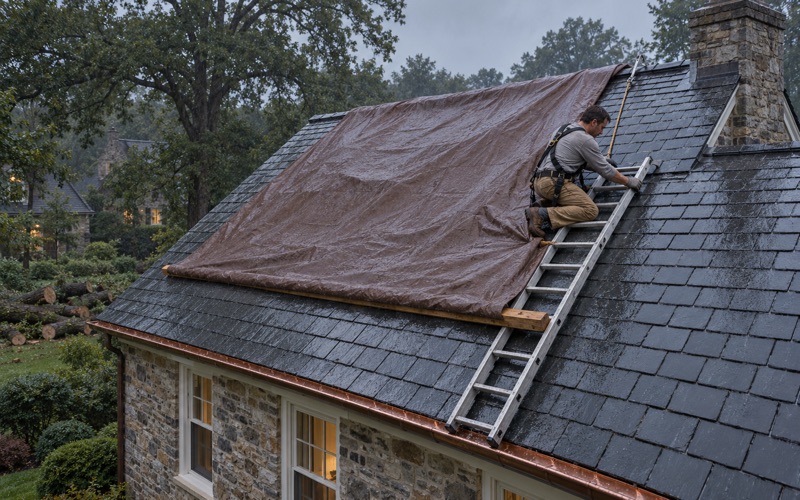
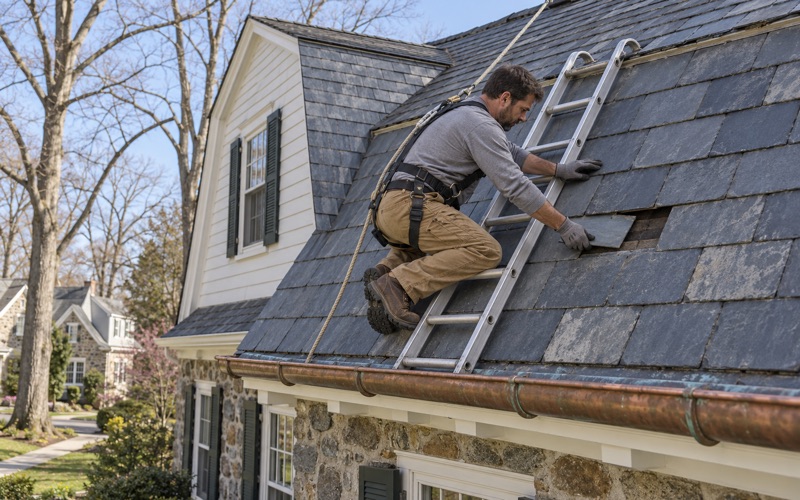
Some older houses still carry slate, and a sound slate roof rarely needs to come off. We repair it slate by slate, using copper nails and slate hooks, and we only raise replacement when the roof as a whole has reached the end of its life. Where a slate roof drains to gutters, half-round copper gutters are often the better match.
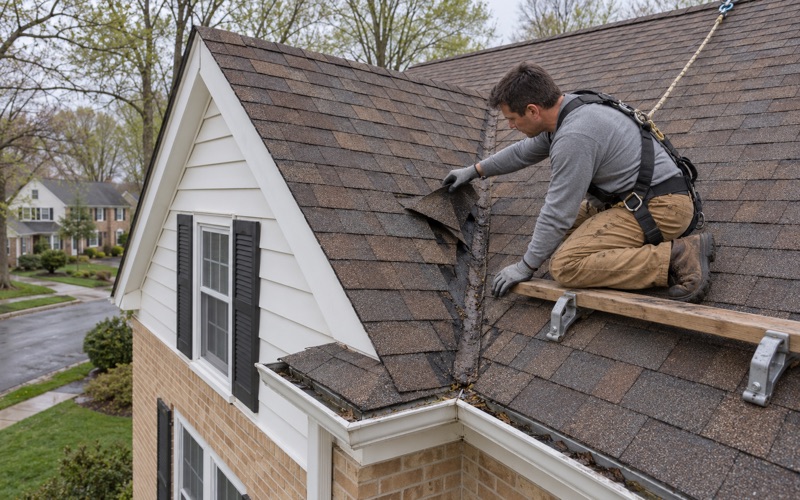
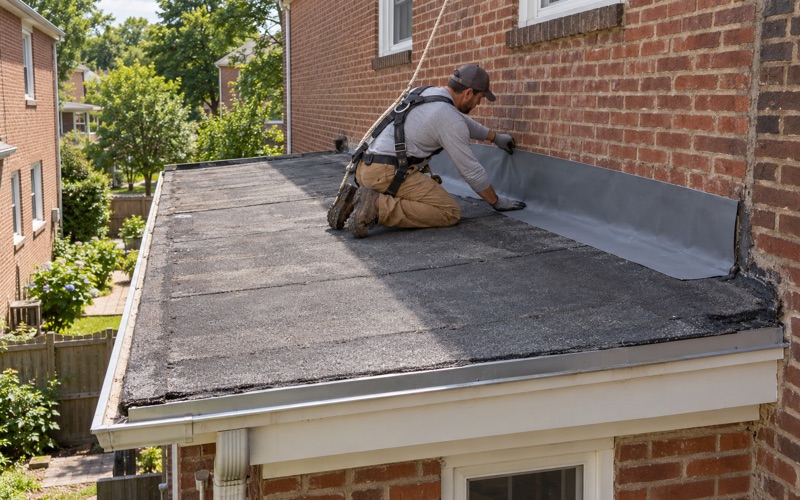
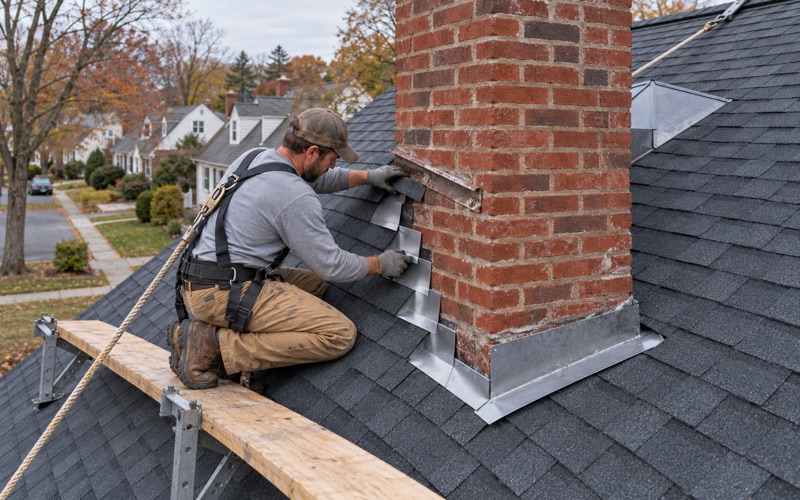
Chimneys and dormers on older homes depend on step flashing, counter flashing and sometimes a chimney cricket to shed water. We replace that flashing along with the roof rather than reusing tired metal under new material. On pre-1978 houses, painted fascia and trim fall under the EPA RRP lead-safe rule, so we plan the work around it.
Roofing a House That Borders Open Fields
A house beside a preserved field or a large farm parcel often has little standing between it and the wind. In the township’s AGR Agricultural District, zoning sets an 80,000-square-foot minimum lot and a 250-foot minimum lot width for every building or use, so homes there tend to stand well apart with open ground around them.
Wind Exposure and Shingle Ratings
Open exposure is the main reason we talk about wind ratings with owners on these lots. Architectural shingles such as GAF Timberline HDZ, Owens Corning Duration and CertainTeed Landmark carry wind ratings under standards like ASTM D3161 Class F and ASTM D7158 Class H, and we explain what each rating means rather than treating it as a label.
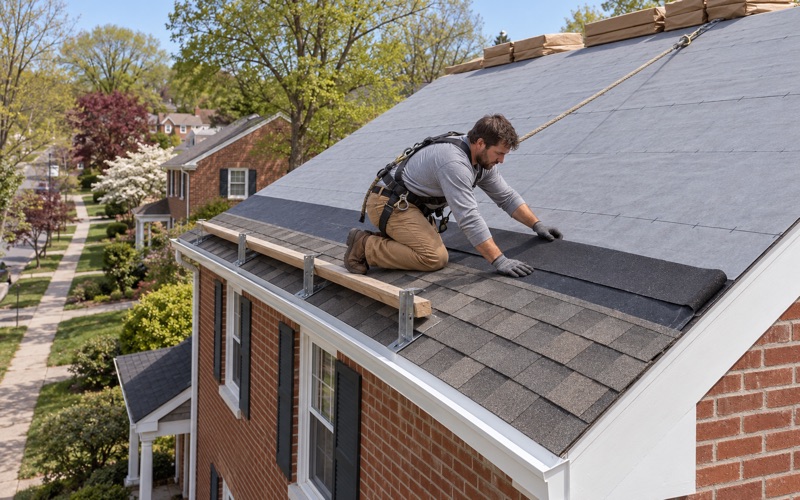
Installation matters as much as the bundle. Drip edge at the eaves and rakes, correct nailing and sealed starter courses are what keep an edge from lifting on a roof that takes wind straight off a field. We check those details on the way up, not after the last shingle is down.
Snow, Ice and Gutters
Worcester gets real winter. A trained spotter measured 8.0 inches of snow in Worcester Township on January 25, 2026, and a storm like that can leave snow drifted against the sheltered side of a roof that faces open ground. We run self-adhering ice and water barrier meeting ASTM D1970 at the eaves, in line with the IRC R905.1.2 ice barrier provision.
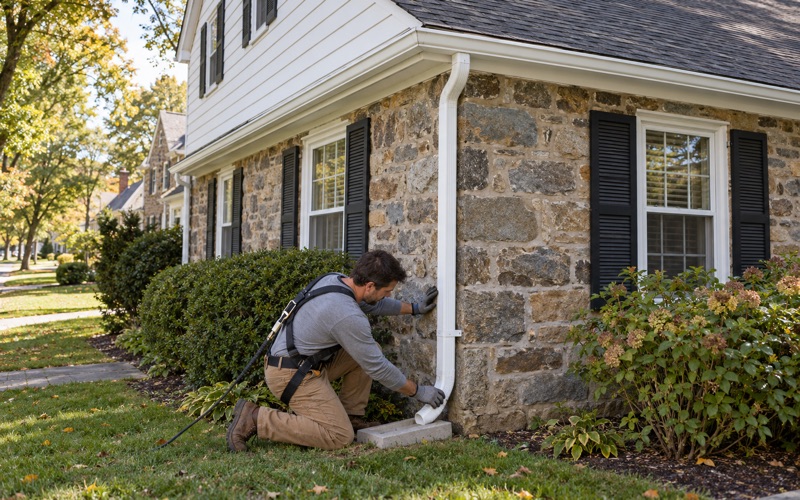
Melt has to go somewhere, which is why we size and pitch gutters and downspouts with the roof instead of treating them as an add-on. On a big lot with a long run to the yard, seamless aluminum gutters and properly placed downspouts keep water off the foundation and away from the walls.
Worcester drains through Skippack Creek and Stony Creek, part of the Schuylkill watershed, and on sloping lots we look at where downspouts discharge so roof water is not sent straight across a neighbor’s field or toward a low corner of the house. Where a downspout empties is part of the scope, not left to chance.
Clean, Safe Sites Next to Working Land
Roofing nails in a hayfield or a pasture are a real problem for whoever works that land next. At the end of every work day we clean the driveway, yard and gutters and run a magnet sweep for loose nails, paying extra attention along any edge that meets a field.
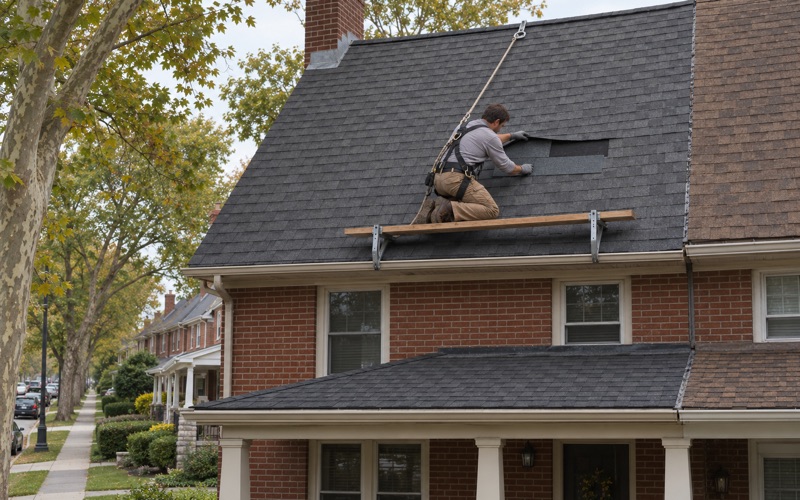
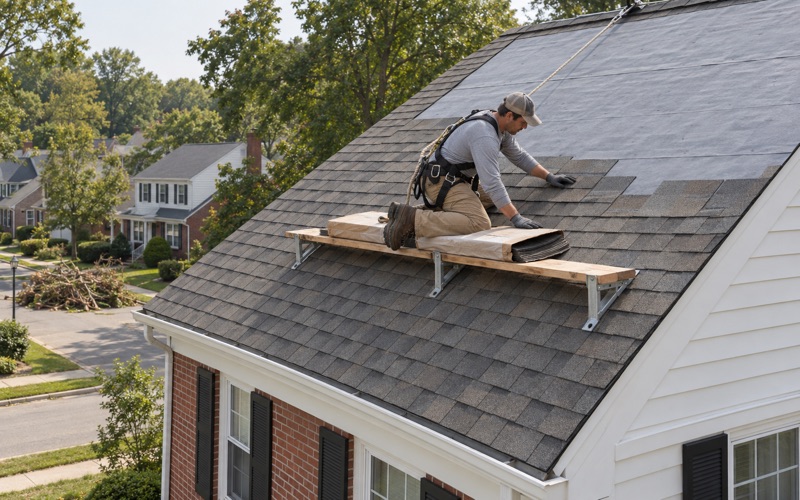
Safety on the roof itself follows OSHA’s fall protection rule for residential roofing at 6 feet, which matters more on a tall farmhouse with a steep roof than on a low ranch. Anchors and harness lines go up before the crew starts stripping.
Worcester’s 300-Acre Goal and Its Older Roads
The Open Space Preservation Program aims to permanently preserve at least 300 acres of land by 2033, the township’s 300th year. For homeowners, the practical meaning is simple: a house that looks out on open land today has a good chance of doing so for a long time, and the roof facing that land will keep taking its weather.
Planning a Roof for the Long Term
That is a reason to choose materials and details for the long haul rather than the cheapest pass. We walk owners through underlayment choices, including ASTM D8257 synthetic underlayment, and through ventilation, where a ridge vent only works when the soffit intake gives it enough net free area to pull air through the attic.
We also set the repair-or-replace question against that horizon. A roof with years left in it gets a repair and a plain explanation, and a roof at the end of its life gets a scope that lists every line so the owner can weigh it.
Villages, Roads and Older Houses
Worcester takes in several villages, among them Center Point, Fairview Village, Cedars and Providence Square, and Route 73 and Route 363 both cross the township. The Peter Wentz Homestead, built in 1758 and listed on the National Register of Historic Places, shows how far back building here goes.
The housing stock is mixed, though. Census figures count 1,379 units built in the 1990s alone, and 2,651 of the township’s homes are single detached houses. Many of those 1990s houses may still carry their first roof, so original shingles and far older farmhouse roofs sit within the same few miles, and each one gets its own assessment.
Attached and Twin Homes
Not every Worcester roof sits on an open lot. The census counts 1,075 attached units in the township, and on a twin or townhouse roof we plan the work around the neighbor’s roof and the shared wall, so flashing and transitions at the party line stay watertight on both sides.
Permits, Contracts and Storm Claims
Re-roof permit treatment in Pennsylvania is set township by township, so before we price a Worcester job we confirm how the Worcester Township Codes Department handles it rather than assuming. Our contracts follow Pennsylvania’s home improvement law, including the three-business-day cancellation notice and deposits kept within the legal limit.
The township’s permits page says building permits are paid at pickup, and its 2026 fee schedule sets the penalty for failing to obtain a required permit at twice the permit fee. That is one more reason we settle the question before any work starts.
If a storm does damage, we photograph it and write it up for the owner’s own insurance claim. When asked, our crew will meet the adjuster on site, but we do not negotiate the claim; that stays between the owner and the insurer.
- 20+ Years in Business
- Attic Checked on Every Leak
- Line-Item Written Scopes