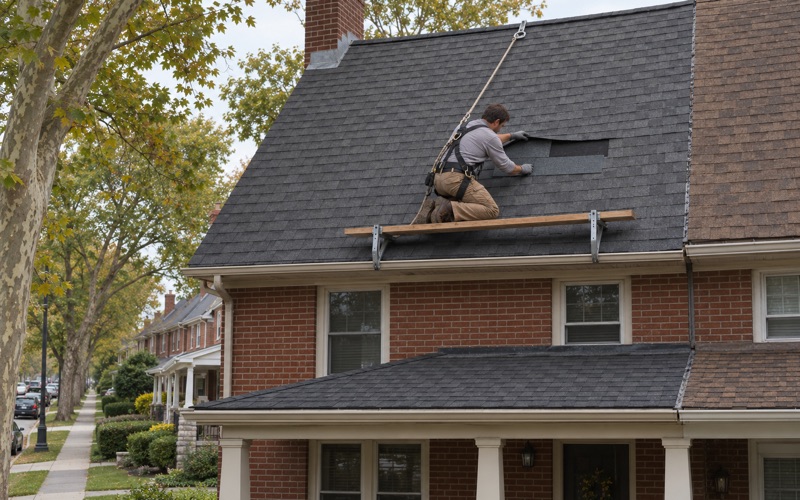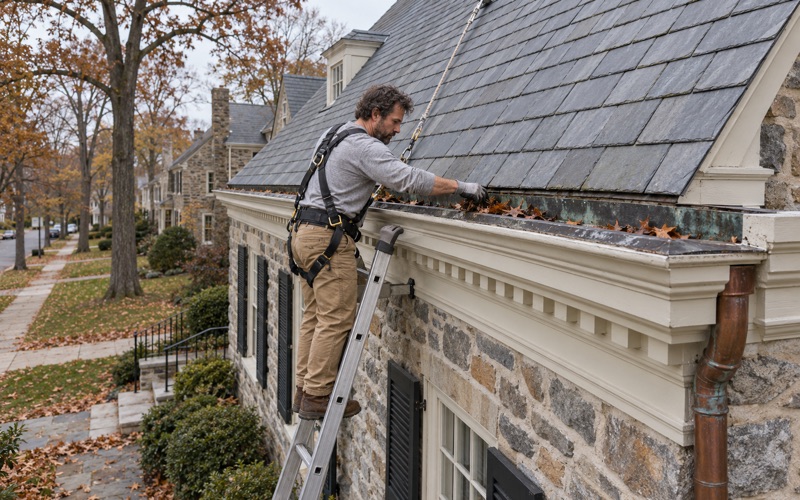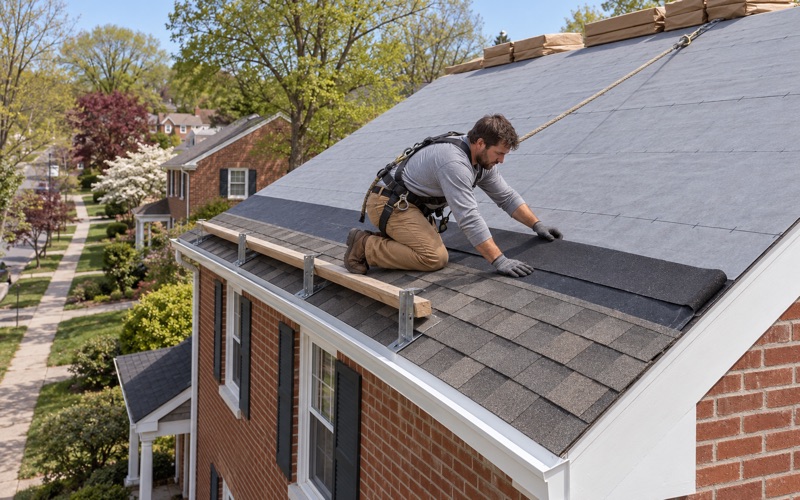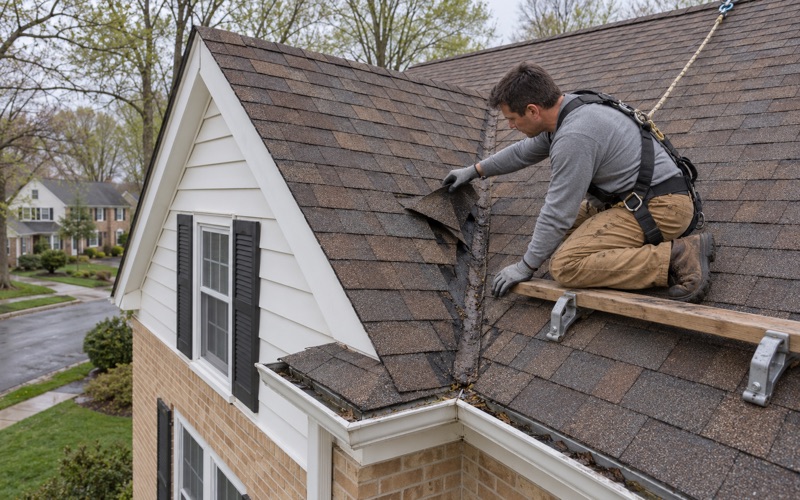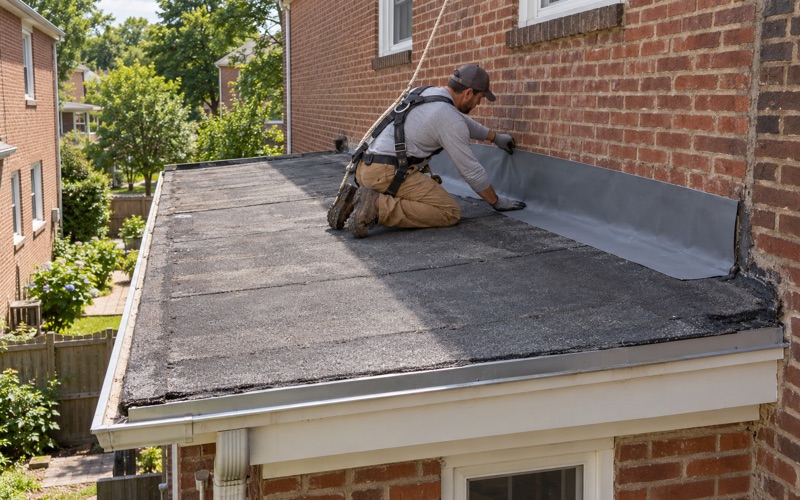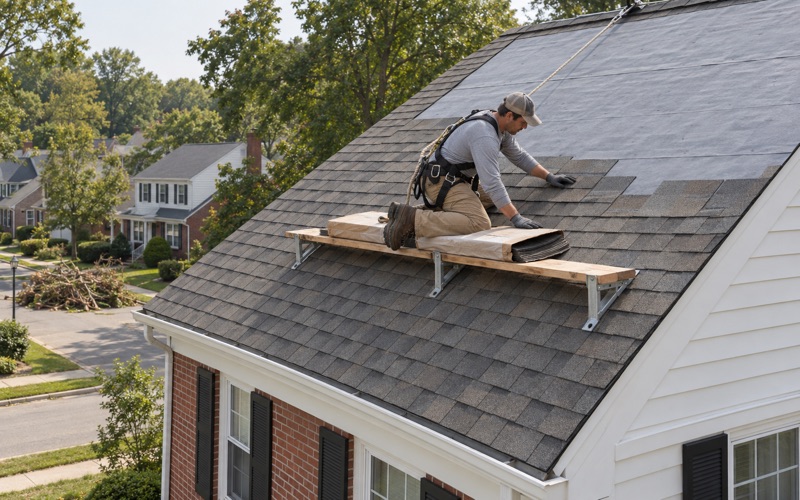
Haverford Roofing has spent more than 20 years on roofing in Willistown and across our service area, and the first thing we settle on any job here is which rules apply to the house. Each township sets its own re-roof permit rule, so we confirm the one that governs your address before we price the work, not after the shingles are ordered. That habit matters more in a township that runs its own historic review.
A leak call starts with two inspections, one from the roof and one from the attic, because water rarely shows up on a ceiling directly below the spot where it got in. We trace it to the entry point first, then tell you plainly whether a repair will hold. Replacement only comes up when a repair honestly will not do the job.
When a full roof is the right answer, our written scope breaks out tear-off, decking, underlayment, flashing, ventilation and gutters as separate lines. That lets you set our estimate beside anyone else’s and compare it item by item. The sections below cover what owners of older Willistown houses should know about the township’s historic review before a crew is booked.
Willistown’s Historical Commission and Its Three Districts
One Body, Two Roles
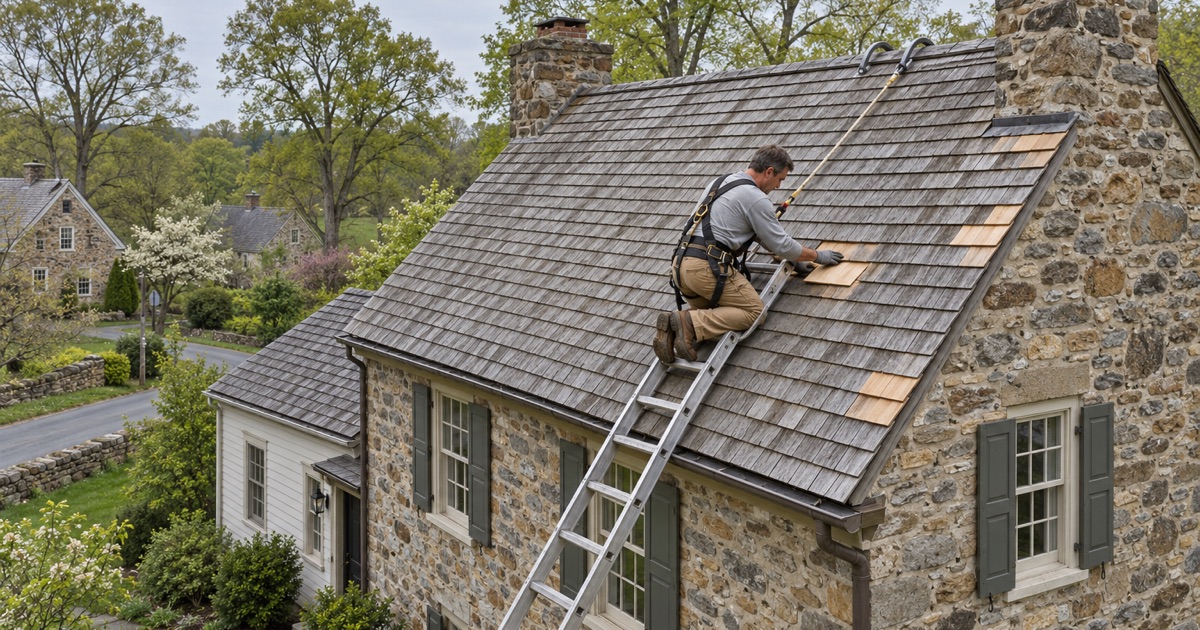
Willistown handles historic review through its own township body. That body is the Historical Commission, and the same group also sits as the Historical and Architectural Review Board, so one set of members handles both roles. The township code, as summarized, has the Commission review applications to rehabilitate, enlarge or alter historic resources against the Secretary of the Interior’s Standards.
It also advises the Zoning Officer and the Board of Supervisors when a demolition permit touches a historic resource. For a roofing customer, the practical point is simple: the township, not the roofer, decides whether a project needs the Commission’s eyes, and we would rather you hear that from us before the estimate than from an inspector afterward.
A Long Local Record
The township’s history runs long. Willistown was part of the 50,000-acre Welsh Tract surveyed for William Penn in 1684 and became a township in 1704. Its population was 1,521 at the 1860 census, 8,269 in 1980 and 11,273 in 2020, so a great deal of the housing came long after the oldest structures.
Okehocking carries its own early date, too: Penn established a 500-acre Lenape reservation there in 1702. A roof on one of the township’s older buildings can be part of that longer record, which is why we treat the review question as a first step rather than paperwork.
Sugartown, Okehocking and Whitehorse
The township’s Historical Review Application, revised in February 2024, carries a Historic District Listing with three boxes: Sugartown, Okehocking and Whitehorse. Those are Willistown’s own local districts, and the form expects an applicant to tick the one that applies. We cannot tell you from the street whether a given house falls inside one, and we will not guess.
Whitehorse deserves the same attention as the other two: whatever district a house might sit in, the planning office at the township is the place to confirm it. That answer belongs in hand before any roof material is chosen, because it shapes everything that follows.
The Sugartown Historic District on the National Register
Sugartown also appears on a federal list. The Sugartown Historic District went onto the National Register of Historic Places on September 7, 1984, and covers 39 acres along Sugartown, Boot, Spring, Dutton Mill and Providence roads. Its fourteen contributing buildings include the Sign of the Spread Eagle tavern, a 1909 township building, the c. 1790 house Coxefield and an 1866 school.
A National Register listing and a local district box are two different things, and we do not treat one as proof of the other. When a house sits anywhere near those roads, the township is the source we rely on for what review, if any, applies to a roof.
Looking for roofing closer to Aston? See Aston Roofing.
Photographs, Inventory Numbers and Architect Drawings
The Structure Inventory Number
The Historical Review Application asks for a Structure Inventory number, and it tells you where to find it: the Township Comprehensive Plan. That inventory is the township’s own record of historic structures. If your house carries a number there, it belongs on the form, and it is worth knowing before you plan any change to the building’s exterior.
We never assume a house is or is not on that list. Census estimates count 309 Willistown homes built in 1939 or earlier and 868 built in the 1980s, so age alone sorts very little, and the honest move is to ask the township rather than read history off a front porch.
Photographs Before Any Construction Change
One line on the form is printed in capitals: all historic buildings are to be photographed by the owner before any construction changes are made. The application also asks for recent color photographs of every elevation and of the building’s exterior conditions. That record is the owner’s to make, and it has to exist before the old roof comes off.
Our own photographs sit alongside yours, not in place of them. If damaged decking turns up once the old roof is off, we photograph it and show you before any sheet is replaced, at the per-sheet price written into the contract. On a historic house, those pictures also help document what changed and why.
Drawings From a Pennsylvania-Licensed Architect
The application calls for architectural drawings by a PA licensed architect that document existing conditions and depict all proposed modifications or additions. That is the owner’s architect, engaged by the owner, and it is not a role a roofing company fills. We can explain what our scope would change on the roof so the drawings reflect it accurately.
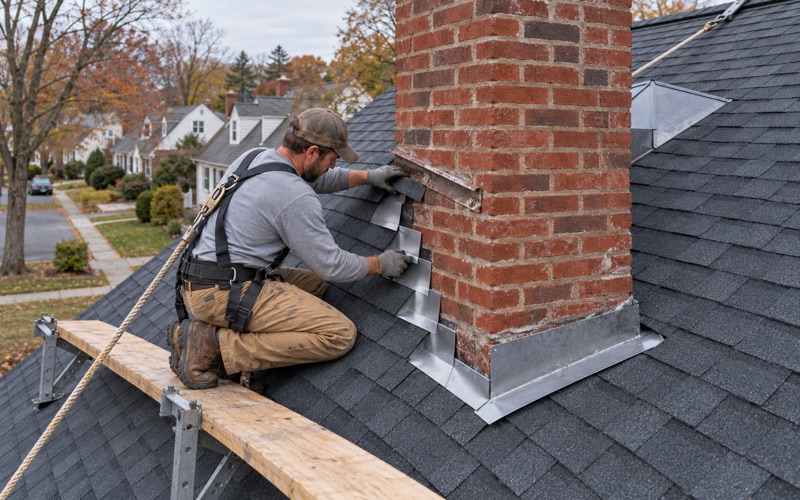
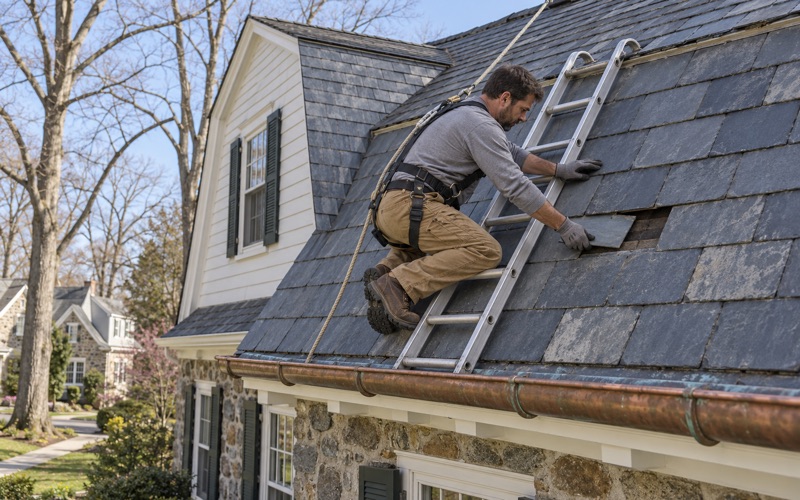
Material choices are where that conversation earns its keep. We repair slate on an older house slate by slate with copper nails and slate hooks before anyone talks about tearing a sound roof off, and we replace step, counter and chimney flashing with a new roof rather than reusing it.
Fitting a Roof to the First-Tuesday Calendar
When the Commission Meets
The Willistown Township Historical Commission meets once a month, on the first Tuesday at 7:00 p.m. The township’s own paperwork says an application is due no later than 5 p.m. two weeks before that meeting, and the review application adds that submissions must follow the schedule posted on the township website.
Put those together and the calendar gets long quickly. A packet that misses the cutoff waits for the next month’s meeting, so on an inventoried house the timeline can start weeks before anyone sets a ladder against the eaves. Gathering photographs and drawings adds time of its own before the packet is ready.
Building the Schedule Backward
We plan these jobs from the meeting date backward. If the township tells you review applies, the install window sits after the Commission has acted, and our estimate says so in writing instead of promising a start date the calendar cannot support. That also leaves room to order the right material once the decision is known.
The same planning covers other moving parts. Roofs under solar panels get the panel removal and reinstall built into the schedule, and gutters and downspouts are sized and pitched with the roof rather than added as an afterthought. Neither should surprise anyone on the morning the crew arrives.
Attached Homes and Shared Walls
Census estimates put 1,196 of Willistown’s housing units in single-family attached buildings, 26.2% of the total, and 92.9% of occupied homes are owner-occupied. On an attached house, we plan the job with the neighbor’s roof and the shared wall in mind, which can add a conversation next door to the schedule.
If an attached house might be inventoried, ask the township early whether the review reaches it. One call made at the start can save weeks of waiting on both sides of the wall. We would rather start a week later with the answer in hand than stop halfway through a tear-off.
Watching the Forecast Once a Date Is Set
Willistown sits in the National Weather Service’s Eastern Chester forecast zone, served from the Mount Holly office. When a review pushes a start date out by a month or more, we watch that zone’s forecast for the tear-off days, because an open roof deck is the one stage of the job that cannot wait out a storm.
A forecast is not a promise, so the schedule keeps a margin on either side of the tear-off. If the weather turns, we hold the start rather than open a roof we cannot close the same day.
Asking the Township Before Work on an Older Willistown House
Permits, Zoning and Every Name on the Deed
Willistown’s building permit application lists repair and replacement as a type of improvement, and every owner named on the deed has to sign it. The township’s permit page also says all building permits require a zoning permit. A 2010 fee resolution listed a separate roof-covering permit with application, plan review and per-inspection fees.
Section VI of that same application, the part covering other approvals a project may need, includes a box marked WT HISTORIC alongside zoning and the other jurisdiction lines. Whether a straightforward re-roof calls for that box is a question for the township, and we check it for your address before we price the job.
Where to Ask
The township offices are at 688 Sugartown Road in Malvern, and the phone number printed on its forms is 610.647.5300. The planning staff handle historical review questions, and the building permit desk handles roof permits. A single call to ask what applies to your house costs nothing and settles the matter before money is spent.
Bring the questions that matter most: whether the house has a Structure Inventory number, whether it sits in Sugartown, Okehocking or Whitehorse, and whether the planned roof work is the kind of alteration the Commission reviews. Write down the answers and the date, then share them with whoever prices the roof.
Contracts and Cleanup
Once the township’s answer is clear, our contract follows Pennsylvania’s home improvement law. It includes the three-business-day cancellation notice, and any deposit stays within the legal limit, which for contracts over $5,000 is one third of the price.
If storm damage is part of the story, we photograph it and write it up for your own claim, and we will meet the adjuster on site if you ask, without negotiating the claim for you. At the end of each work day we clean the driveway, yard and gutters, including a magnet sweep for roofing nails.
- 20+ Years in Business
- Attic Checked on Every Leak
- Line-Item Written Scopes