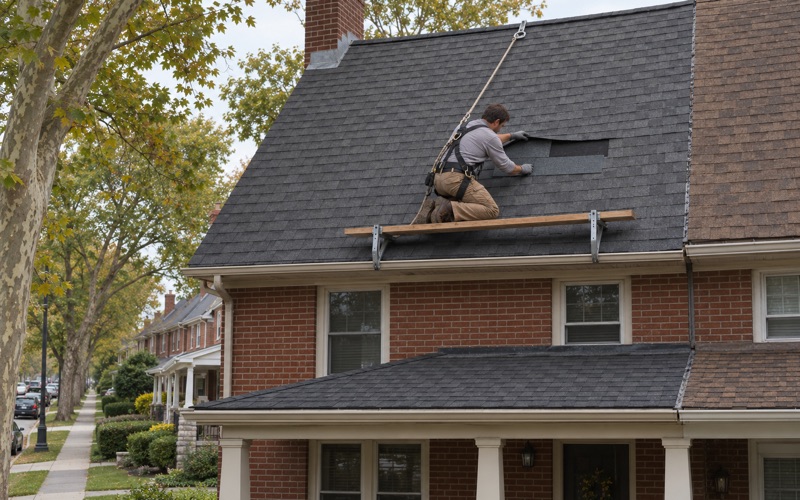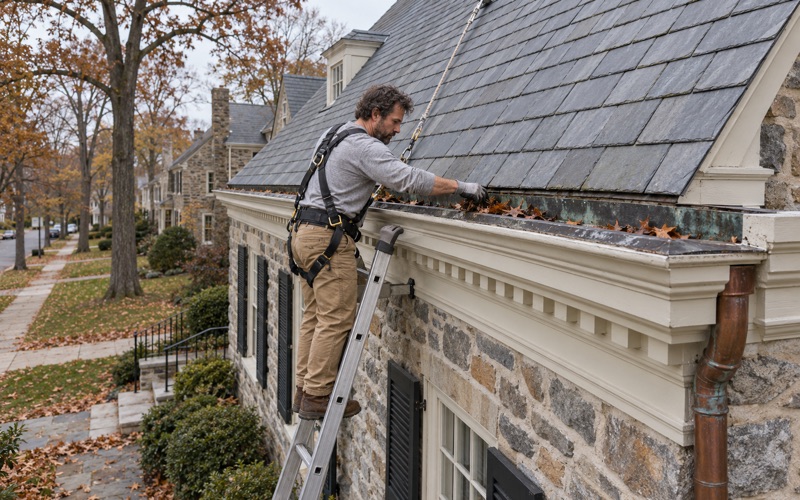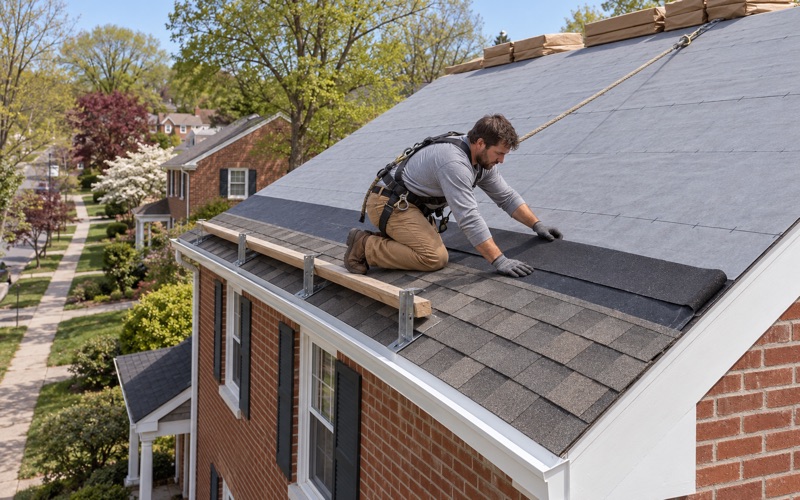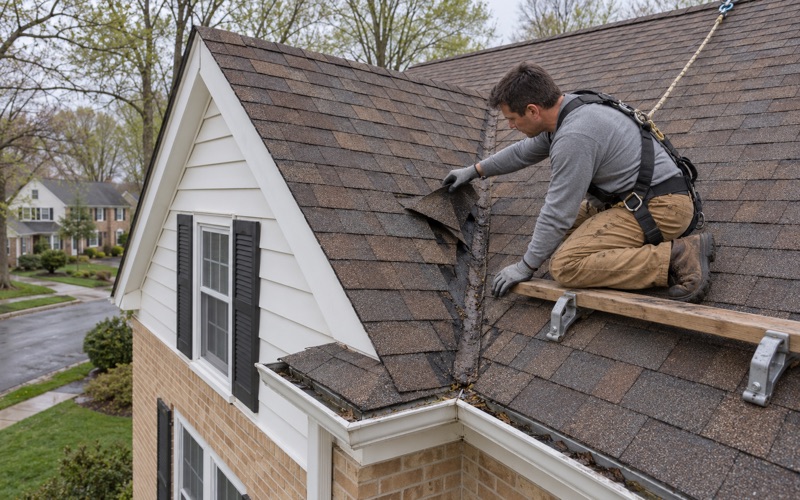
Haverford Roofing has spent more than 20 years on roofing in West Bradford and the rest of our Pennsylvania service area, and the first thing we do on any call is figure out what the roof actually needs. That means a repair conversation comes before a replacement conversation, and a leak gets traced from inside the attic as well as from the shingles before we put a number on anything.
Most homeowners who call us want three things settled quickly: where the water is getting in, whether the roof can be saved, and what a fair scope looks like. We answer those in that order. When a roof does need to come off, our written estimate breaks the job into separate lines for tear-off, decking, underlayment, flashing, ventilation and gutters, so you can hold it beside another contractor’s bid and compare each piece.
This page covers what is particular about roofing work in this township, from the questions on the local permit application to how a roof’s runoff fits into a watershed the township watches closely. None of it changes how carefully a roof should be built, but it does change the paperwork and the conversations around a project.
Roofing Between the Brandywines in West Bradford
West Bradford Township sits in Chester County, and its own motto is Between the Brandywines. The township covers about 18.6 square miles, and the West Branch of the Brandywine Creek passes through it. That water shapes how the township thinks about building, and it shows up on the forms a homeowner or contractor fills out before work begins.
What the housing stock looks like
The township is overwhelmingly single-family. Census estimates put about 4,552 of its roughly 5,163 housing units in detached homes, and nearly all occupied homes are owner-occupied. A large share went up in recent decades: about 1,589 units were built between 2000 and 2019, and another 1,120 date to the 1980s.
That mix means many West Bradford roofs are reaching the age where the first full replacement comes due. Architectural shingles over plywood decking are common on subdivision homes from those decades, and a first tear-off usually tells us how the original underlayment, drip edge and pipe boots have held up.
Older homes and attached houses
The township also has older stone houses, including in the village of Marshallton, along with a few hundred attached homes. An older house can hide box gutters, worn chimney flashing or a roof built over an earlier layer, and we check for each of those before we write a scope.
On an attached home, the shared wall and the neighbor’s roof are part of the plan from the start. We look at how the two roofs meet, where the flashing ties in and how water moves across the line between them, so the finished roof does not push a problem onto the house next door.
How we start a West Bradford job
Every leak call begins with a look in the attic as well as on the roof. Stains on the sheathing, wet insulation and daylight around a vent pipe often point somewhere different from where the ceiling spot appeared. Tracing the actual entry point first is what lets us tell you honestly whether a repair will hold.
Once the source is clear, you hear our view on repair first. A cracked pipe boot, a lifted shingle tab or a failed flashing joint can often be fixed for a fraction of a new roof. Replacement only comes into the conversation when the decking, the underlayment or the shingles themselves have reached the end of their service life.
Looking for roofing closer to Upper Providence Township? See Roofing in Upper Providence Township.
Why West Bradford’s Permit Form Asks About Floodplain and Impervious Cover
Re-roof permit rules in Pennsylvania are set township by township, so we check the rule for your own township before we price a job. In West Bradford, the township’s Building and Zoning Permit Application lists Re-Roofing as its own project type, alongside boxes for Added Impervious work and other projects.
The questions on the application
The same form asks every applicant whether the property is in a FEMA floodplain, whether it has an HOA, and what the existing and proposed impervious cover is. It also states that zoning approval is required before any permit is issued, and that zoning approval is granted or refused within 30 days of receiving the application.
We do not guess at the floodplain answer for any property. If you are unsure how to answer that box, the township’s Building, Zoning and Codes office can confirm it, and we build the permit timeline around whatever the township decides rather than assuming.
Where to reach the township
West Bradford’s township building is at 1385 Campus Drive in Downingtown, and the Building, Zoning and Codes office can be reached at 610-269-4174 or by email at its permits address. Questions about a specific property’s status, an HOA requirement or the zoning review belong with that office.
Why we ask about the HOA early
Since the application itself asks about an HOA, we raise it during the estimate. An HOA may have its own rules on shingle color or profile, and learning that before materials are ordered keeps a project from stalling between approval and installation.
Fitting approval into the schedule
Because zoning approval comes before the permit, and the township allows itself up to 30 days to grant or refuse it, we do not promise a start date until the paperwork is moving. We would rather give you an honest window than book a crew for a week the township has not yet cleared.
The same planning applies to roofs with solar panels. Panel removal and reinstallation go into the schedule from the start, so the electrician and our crew are lined up in the right order and nobody discovers on the morning of the tear-off that the array is still bolted to the roof.
Broad Run and Where a Roof’s Water Goes
The reason the impervious questions matter becomes clearer once you look at the streams. Broad Run is a stream that lies almost entirely in West Bradford Township and drains 7.08 square miles to the West Branch Brandywine Creek, according to a 2005 U.S. Geological Survey study of the watershed.
An Exceptional Value stream
Broad Run carries an Exceptional Value designation from the Pennsylvania Department of Environmental Protection. The USGS study was undertaken because of the potential effect of encroaching development and other stresses on the watershed, and it recorded 67.8 inches of precipitation over the year from April 2003 to March 2004.
Of that total, 38.8 inches drained by way of streamflow to the West Branch Brandywine Creek. Every roof in the watershed is part of that picture, because rain that lands on shingles does not soak into the ground beneath them. It runs off, gathers in gutters and leaves the house through downspouts.
Roofs as impervious surfaces
West Bradford runs a stormwater program in conjunction with the Pennsylvania DEP MS4 program. The township’s overview names rooftops, along with paved streets and driveways, as impervious surfaces where the stormwater problem begins, and its post-construction controls require recharge of runoff from new impervious surfaces.
The township also posts an Act 167 Stormwater Management Operations and Maintenance Agreement and a homeowner guide to maintaining stormwater practices. If a project of yours involves those documents, the township is the one to say so, and we schedule the roof work around its answer.
Keeping roof water under control
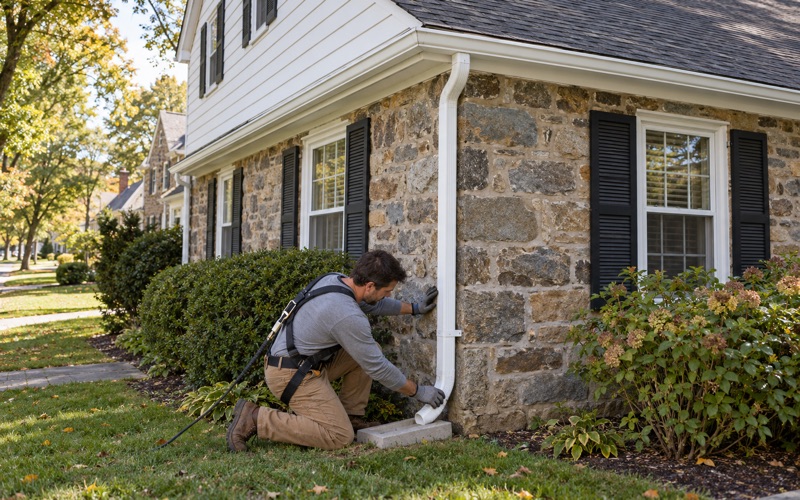
On the roof itself, the job is simple to describe: water should move off the shingles, into the gutters and out through the downspouts without backing up along the way. Clogged gutters, sagging hangers and downspouts that dump onto a walkway are the problems we see most, and each one is cheaper to fix during a roof project than after it.
Re-Roofing Versus Adding Roof Area, and the Drainage That Goes With It
A straight re-roof on the same footprint replaces the roof covering without adding impervious cover. The surface area that sheds water stays what it was. A new porch roof, a sunroom or an addition is different, because it creates roof area where there was none and changes the numbers on the permit application.
What changes on paper
That is why the form asks for existing and proposed impervious cover separately. When a project adds roof area, the proposed figure goes up, and the township reviews it under its own stormwater rules. We flag that difference at the estimate so a homeowner planning a replacement and a porch roof together knows the porch is the part the township will look at more closely.
The practical step is to settle the full scope before the application goes in. If an addition or porch roof is likely within the next year, it is worth deciding now whether it belongs on the same permit, because a second application later means a second round of the same floodplain and impervious questions.
Gutters and downspouts sized with the roof
We size and pitch gutters and downspouts as part of the roof, not as an afterthought. Seamless aluminum gutters are the usual choice on newer homes, and the downspout count follows the roof area each run has to carry. A gutter that overflows at a valley corner sends water against the fascia and foundation every time it rains.
Where downspouts discharge is a site question, and we talk it through with you rather than assume an answer. Any township requirement on drainage is the township’s to state, and we work within it once it is known.
Flashing, decking and the finished site
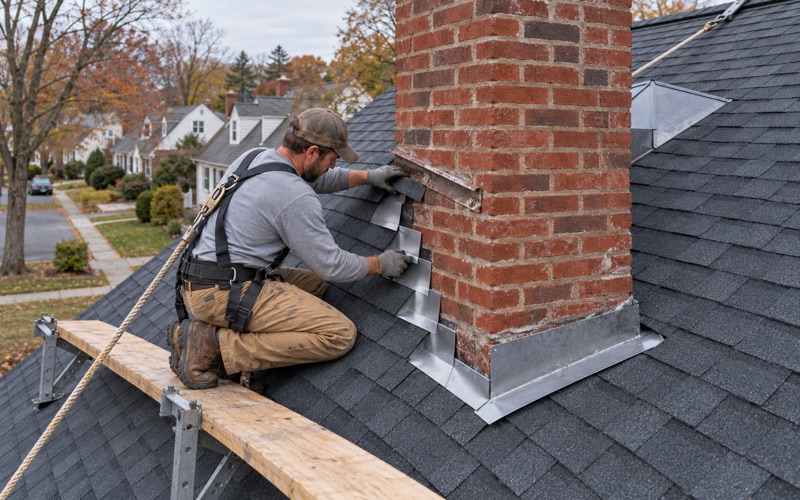
Step, counter and chimney flashing is replaced with the roof rather than reused under new material, and drip edge goes on at the eaves and rakes. If the old roof comes off to reveal damaged decking, we photograph it and show you before any sheet is replaced, at the per-sheet price written into the contract.
Our contracts follow Pennsylvania’s home improvement law, including the three-business-day cancellation notice and deposits held within the legal limit. At the end of every work day the crew cleans the driveway, yard and gutters and runs a magnet sweep for nails, so the property is usable each evening.
Storm damage and insurance
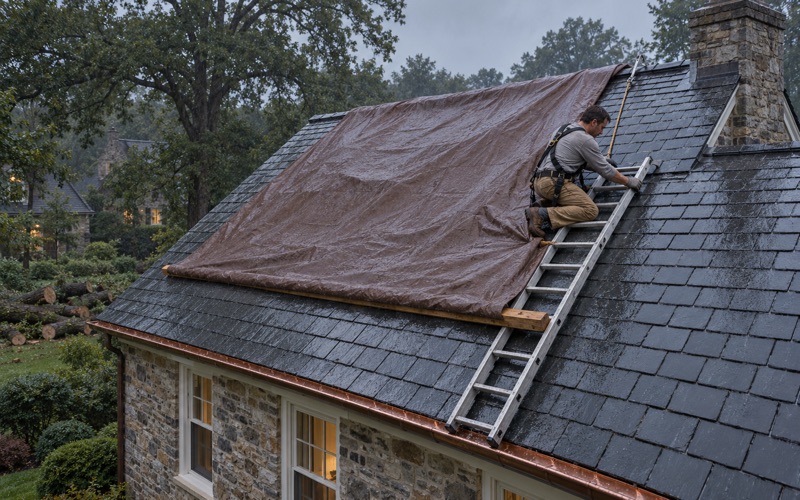
When a storm damages a roof, we photograph the damage and write it up for your own claim. If you ask, a member of our crew will meet the insurance adjuster on site to walk the roof, though we do not negotiate the claim itself. The decision on coverage stays between you and your insurer.
- 20+ Years in Business
- Attic Checked on Every Leak
- Line-Item Written Scopes