Haverford Roofing has spent more than 20 years on roofing in Upper Providence Township and the neighboring Delaware County towns, and the first thing we settle on any job here is what kind of work it is. A shingle patch, a full tear-off and a switch to a new material are not treated the same way on every lot in this township, so we sort that out before quoting.
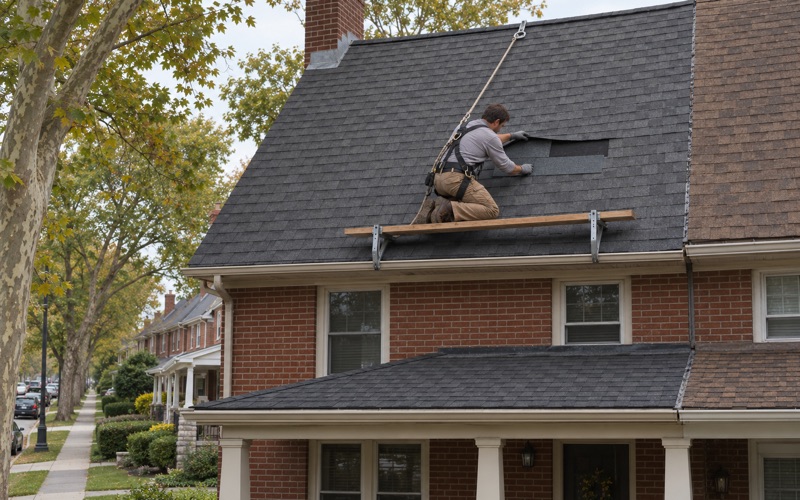
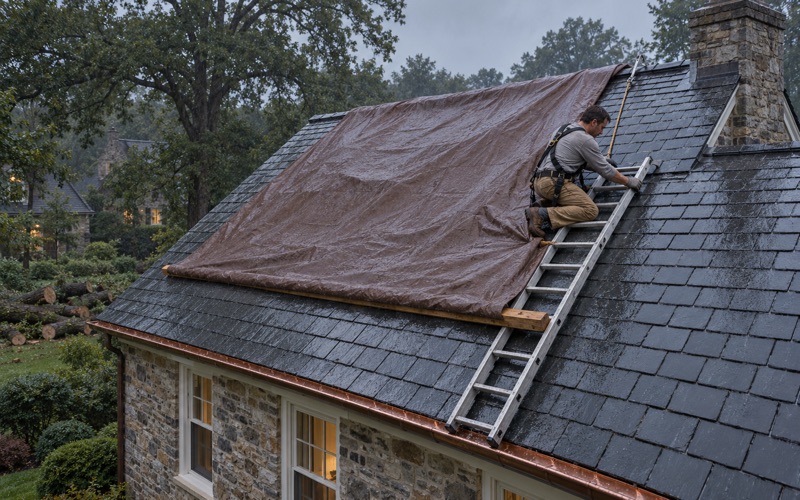
Most calls start with a leak or a worn roof. On a leak, we go into the attic as well as onto the roof, because water often runs along a rafter or the deck before it shows on a ceiling, and the repair has to go where the water actually enters. Then we tell the owner plainly whether the roof can be repaired before anyone talks about replacing it.
That order matters more here than in most places. For a house in a mapped floodplain, a repair that keeps the same materials can fall into a different category from a job that changes them, and the township’s own roofing permit sits on top of that question. Our estimates name which path a job is on, so the owner sees it in writing.
Ridley Creek, Crum Creek and the Upper Providence Floodplain

Upper Providence lies between two streams. Ridley Creek forms the township’s western boundary and Crum Creek its eastern one. Houses on low ground near either creek can sit inside the flood zones FEMA has mapped, and that mapping is what brings the township’s floodplain chapter into a roof job.
What the Floodplain Chapter Covers
The township’s Floodplain Management chapter makes it unlawful to undertake any construction or development anywhere in Upper Providence without a permit from the Floodplain Administrator. The same section then says a permit shall not be required for minor repairs to existing buildings or structures. Everything about a floodplain roof job turns on which side of that line the work falls.
One caution we give every owner: the chapter never mentions roofs. It does not list a roof as a minor repair, and it does not list one as development. Reading a roof job into its definitions is an interpretation, which is why we point owners to the Floodplain Administrator for the final word rather than treating our reading as a ruling.
High Water on Ridley Creek
The creeks do rise. The National Weather Service gauge called Ridley Creek at Media has a flood stage of 7 feet, and its flood statement for January 10, 2024 reported a reading of 8.79 feet at 4:30 a.m. That is a gauge reading, not a damage report, but it is a reminder that the mapped floodplain along these creeks is not theoretical.
Upper Providence also has a separate Ridley Creek Watershed Overlay that ties stormwater to the Ridley Creek Act 167 plan. For a roof, the practical point is simpler: water that comes off a large roof has to go somewhere, and on a lot near a creek, where the downspouts discharge is a part of the job we plan from the start.
Looking for roofing closer to Nether Providence? See Roofing Services in Nether Providence.
Like-for-Like Roof Work as Routine Upkeep
The chapter defines a minor repair as the replacement of existing work with equivalent materials for the purpose of its routine maintenance and upkeep. Read against a roof, that describes most of what a sound house needs over its life: worn shingles swapped for the same kind, a failed flashing replaced in kind, a tired roof stripped and covered again in the material it already had.
Repairs That Keep the Same Material
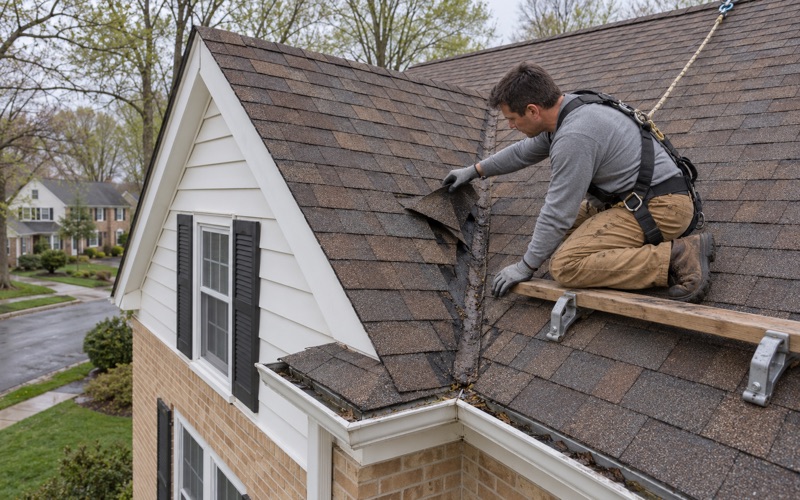
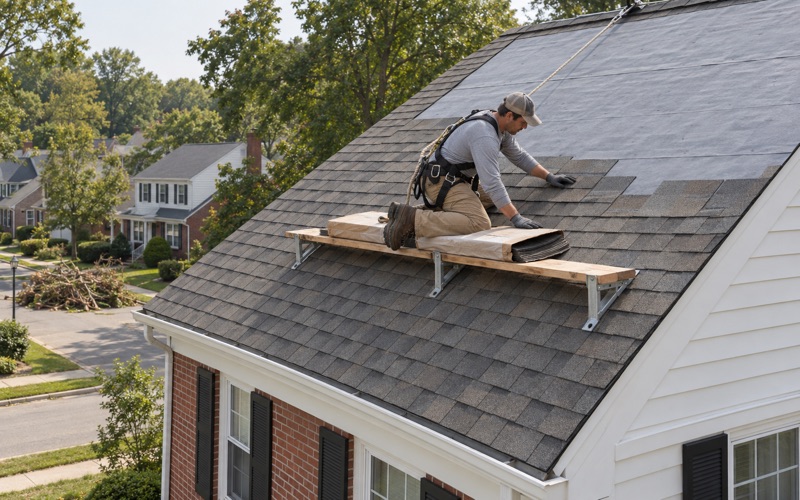
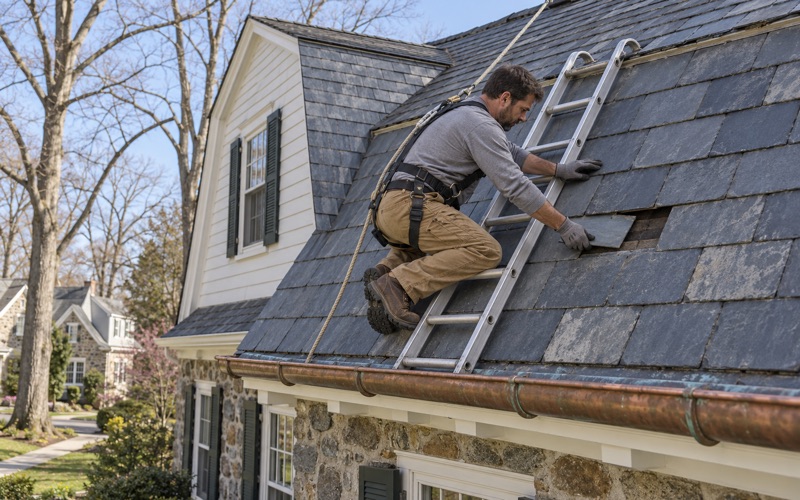
A slipped tab, a cracked pipe boot, a few lifted shingles after a windy night: these are repairs that put back what was there. On a floodplain house we keep them that way on purpose, matching the shingle type and replacing the boot or flashing with the same kind of part, so the work stays plainly within routine maintenance and upkeep.
Matching matters down to the details. A three-tab roof patched with architectural shingles, or a lead pipe boot swapped for a different type, is a small change, but it is a change. We note the existing material in the estimate so the owner can see that what goes back on is the same kind of thing that came off.
A Like-for-Like Re-Roof
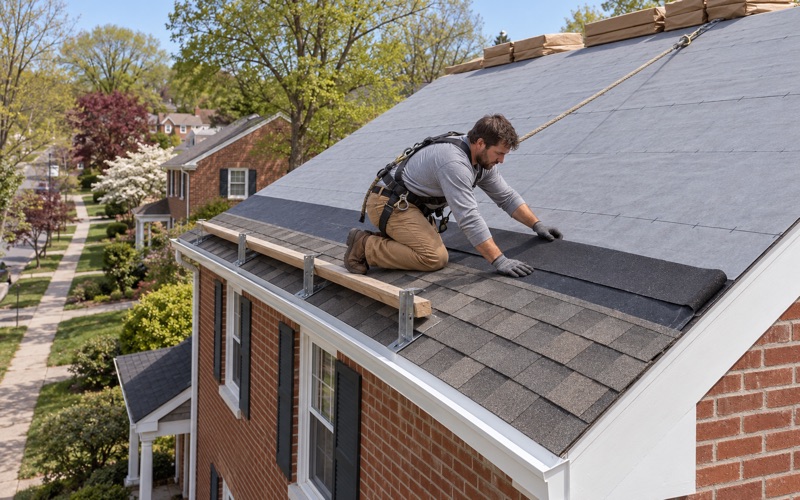
A full replacement is a bigger job, but size is not what the definition turns on. Our reading is that stripping an asphalt roof and putting asphalt back, with the same deck and the same framing, is replacement of existing work with equivalent materials. That is an inference from the wording, not a line in the code, and we say so.
Even then, a floodplain question is separate from the building permit. The township lists a roofing permit among the permits required before a project starts, and a like-for-like re-roof still goes through it. What the minor repair language can settle is only whether a separate floodplain permit is needed as well, and that call belongs to the township.
Scopes Written Line by Line
Our written scopes break a re-roof into tear-off, decking, underlayment, flashing, ventilation and gutters as separate lines. On a floodplain house that layout does a second job: anyone reading the estimate, including the township, can see line by line whether each item replaces what is there or changes it.
Decking is the line that cannot be known in advance. If sheathing is rotted once the old roof is off, we photograph it and show the owner before replacing it at the per-sheet price set in the contract, so a repair to the deck is documented as replacing like with like.
When a Roof Job Is More Than a Minor Repair
The definition has edges, and some ordinary roof work crosses them. The chapter says minor repairs do not include cutting away a wall, removing or cutting a structural beam or bearing support, or any addition to, alteration of, replacement or relocation of drainage or drain leader piping. A roof job that touches any of those is no longer plain upkeep.
Changing the Roofing Material
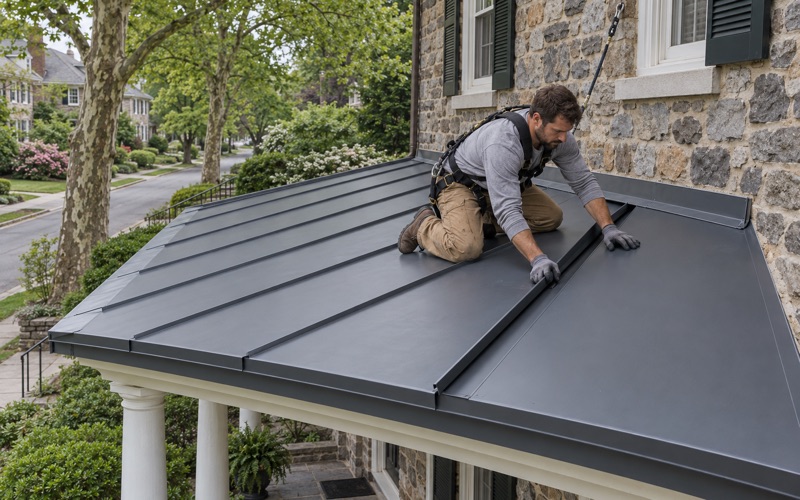
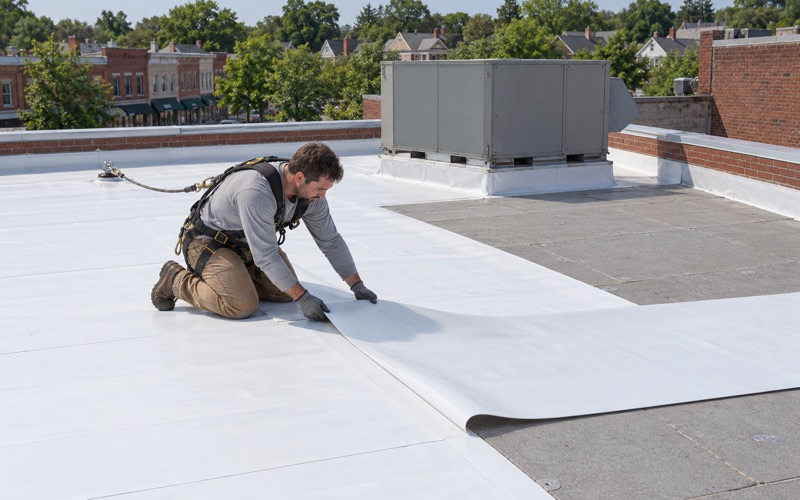
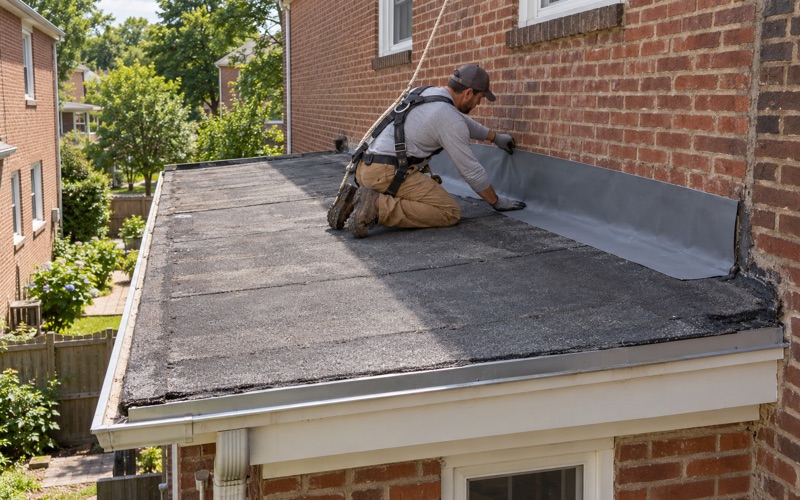
Owners often want something different on the way back: architectural shingles in place of an old three-tab, standing seam metal in place of asphalt, or a single-ply membrane where a low-slope section had rolled roofing. Each can be a good choice for the house. On a floodplain lot, though, a different material may not read as equivalent, so we treat that job as one the minor repair exemption may not cover.
In practice that means asking the Floodplain Administrator before the material is ordered, not after the tear-off. A change of material is not a reason to avoid the upgrade, only a reason to get the answer in writing first. We build that question into the schedule so it does not hold a crew on a stripped roof.
Rafters, Dormers and Structural Cuts
Cutting structural framing is one of the things the definition leaves out of minor repair. A new skylight opening, a dormer, a rafter sistered after cutting out a rotted section, or a reframed low-slope area all involve cutting or removing a structural member. When the attic inspection shows framing work is needed, we flag it before the estimate is final.
Rotted sheathing is a different matter from rotted framing. Replacing deck boards or plywood in kind is routine tear-off work, while cutting into a rafter or a bearing support is not. Keeping those two apart on the estimate lets the owner and the township see exactly where a job stops being upkeep.
Drain Leaders and Downspouts
The piping exclusion is the one that catches roof jobs by surprise. A drain leader is the pipe that carries roof water down and away, so replacing or relocating one falls under that exclusion. Moving a downspout to a new corner, or tying leaders into a new underground line, is the kind of change that language reaches.
We size and pitch gutters and downspouts with the roof, which sometimes means a better discharge point. On a floodplain house we price that as its own line and raise it with the township first, rather than folding a relocated leader into a re-roof and calling the whole job routine upkeep.
Checking the Flood Map and the Permit Before Work Starts
Each township in our service area sets its own rules, so we check the rule for the house’s own township before a job is priced. In Upper Providence that check has two parts: where the house sits on the flood map, and what the township’s roofing permit application asks for.
Reading the Flood Insurance Rate Map
The floodplain chapter adopts FEMA’s Flood Insurance Study and the Flood Insurance Rate Maps dated November 18, 2009, or the most recent revision. We look up the address on the current map before scoping a roof near either creek. If the house sits inside a mapped flood zone, we raise the minor repair question with the township before the scope is final.
Flood zone lines follow ground elevation, not property lines or streets, so two neighbors on the same slope toward Crum Creek can fall on different sides. That is why we check each address rather than assuming a whole street is in or out. A map revision after 2009 can also move a line, so we work from the current panel, not an old copy.
What the Roofing Permit Application Asks For
The township’s roofing permit application sets the technical floor for a permitted re-roof. Existing coverings may stay only if there are fewer than two layers, they are in good condition, and they are not slate, clay or cement tile. Low slopes of 4:12 or less need double underlayment, and the ice barrier must run from the eave to 2 feet inside the exterior wall line.
The application also asks for pictures of the ice barrier taken during installation and a ventilation ratio of 1 to 150, and inspections are scheduled through Linn Architects, the township’s third-party inspector. We take those photos as part of the job, so the inspector sees what is under the shingles without anyone pulling them back.
Fees, Flashing and the Final Scope
The 2026 fee schedule charges residential roofing at $25 per $1,000 of cost with a $200 minimum, plus a $4.50 state educational fee, and adds a $200 penalty for residential work done without a permit. We put the permit in the estimate as its own line so the cost is visible before the contract is signed.
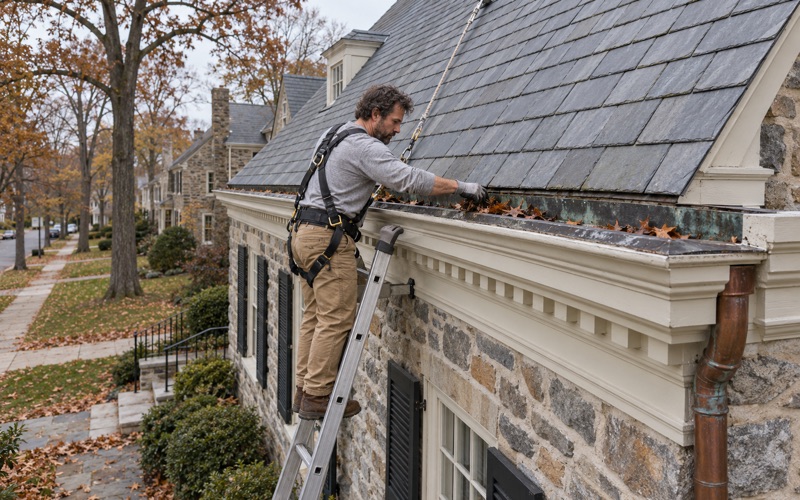
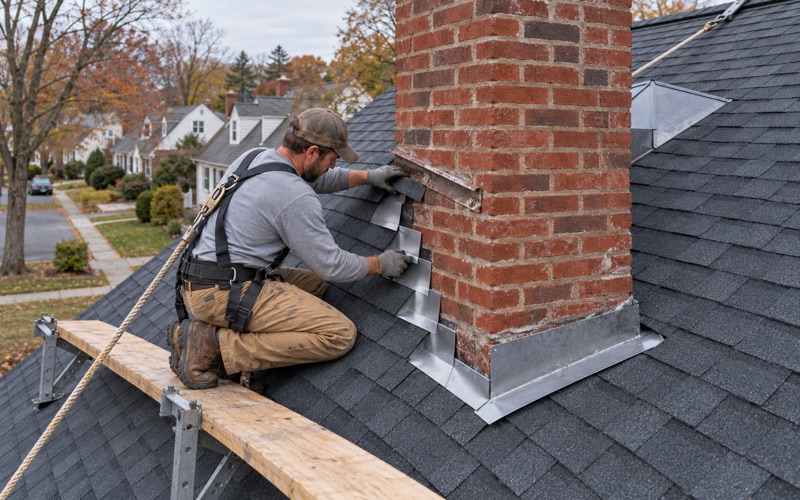
The rest of the scope follows from those checks. Step, counter and chimney flashing is replaced with the roof rather than reused, which keeps a re-roof a true replacement of existing work. The yard, driveway and gutters are cleaned at the end of each day, with a magnet sweep for nails, so nothing from the tear-off is left in the yard or washed toward a creek.
- 20+ Years in Business
- Attic Checked on Every Leak
- Line-Item Written Scopes