
Haverford Roofing repairs storm damage to roofs in Haverford, PA, serving surrounding cities including Uwchlan, Yeadon, West Bradford, Upper Providence Township, Nether Providence. With 20+ years of roofing, we have seen how storm damage hides: a roof can look fine from the street while dozens of shingles have lost their seal, or a dented valley is quietly letting water into the attic.
A storm repair job has three parts. We find and document all of the damage, we give you that record for your own insurance claim, and then we repair the roof with matching materials and new flashing once the scope is agreed.
We are clear about where our role stops. We photograph the damage, write it up and will meet your adjuster on site when you ask, but we do not negotiate your claim, interpret your policy or tell you a roof will be free with insurance. In Pennsylvania that negotiating role belongs to a licensed public adjuster.
Types of Storm Damage We Repair
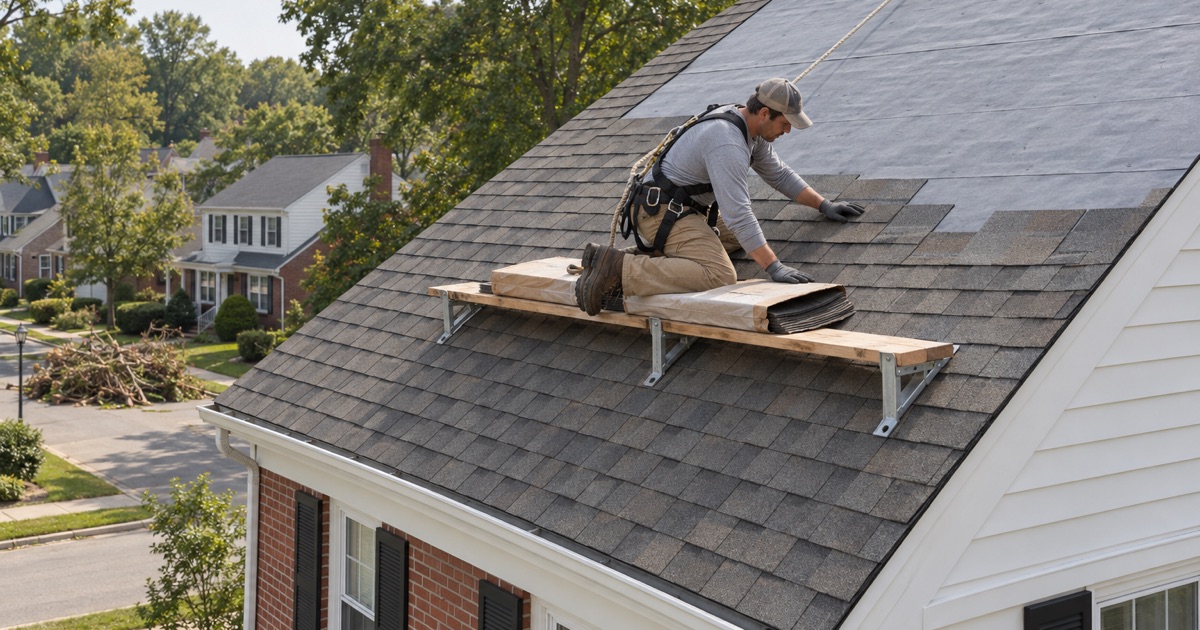
Wind Damage to Shingles
Strong gusts lift shingles and break the adhesive strip that holds each one down. Some tear off completely, but many are creased at the nail line and settle back into place, looking intact from the ground while they no longer seal.
We check shingles by hand across the affected slopes, looking for creases, broken seals and pulled nails. Damaged shingles are replaced, and lifted ones that are still sound are re-sealed so they hold in the next storm.
Hail Damage
Hail bruises asphalt shingles, knocking granules loose and cracking the mat underneath. It dents metal flashing, vents, gutters and downspouts, and it can crack slate and older skylights.
We photograph hail strikes with a scale reference and mark them on each slope, so the pattern is clear. Shingles rated UL 2218 Class 4 for impact resist this damage better, and we explain whether that upgrade makes sense if the roof is being replaced.
Fallen Limbs and Debris
Branches and whole trees can puncture the deck, break rafters and crush gutters. Smaller debris scrapes granules and tears shingles as it slides off.
We inspect the framing from the attic as well as the roof surface, because a puncture often hides cracked rafters below it. Structural repairs are listed separately from the roofing work so you can see each one.
Water Driven Under Flashing
Wind-driven rain pushes water sideways under step flashing, around chimneys and through gaps at roof-to-wall joints. These leaks often appear only in storms that come from one direction.
We replace bent or loose flashing with new step and counter flashing rather than reusing it, and add kick-out flashing where a missing one lets water into the wall. Those details decide whether the next storm from the same direction finds a way in.
Documenting Damage for Your Claim
Photos From the Roof and the Attic
Our documentation covers every damaged slope, the flashing at each penetration, the gutters and the attic below. Dated photos tie the damage to the storm, and attic photos show where water actually entered the house.
You receive the photos and a written description to send with your own claim. Clear evidence is the best way to keep a claim moving.
Pennsylvania Claim Timelines
Pennsylvania’s unfair claims settlement rules, 31 Pa. Code 146, give insurers 10 working days to acknowledge a claim, 30 days to investigate, and 15 working days to decide after proof of loss. The Pennsylvania Insurance Department also publishes guidance for homeowners filing claims.
Knowing those dates helps you follow up in writing when a claim stalls. Keep copies of everything you send and receive.
Meeting the Adjuster
When you ask, we meet the insurance adjuster at the house and show what we documented on the roof and in the attic. That makes sure nothing is missed during a short visit.
If you want someone to negotiate the claim for you, you can hire a licensed public adjuster under the Pennsylvania Public Adjuster Licensing Law. That choice is yours, and it is separate from hiring a roofer.
Older Roofs and Policy Terms
How a storm claim pays out on an older roof depends on the policy. Many policies pay older roofs at actual cash value, with depreciation subtracted, rather than full replacement cost.
We can document the roof’s condition and likely age; your declarations page tells you how it will be valued. Read both before deciding between a repair and a full replacement.
Repairing the Roof After a Storm
Matching Materials
We source the closest available match for shingles, slate or metal and show it to you before installing. On slate roofs we replace broken pieces individually with copper nails and slate hooks.
All flashing disturbed by the repair is replaced with new metal rather than reused. Old flashing that has been bent back into place rarely seals the way it did before the storm.
Permits and the Two-Layer Limit
Larger storm repairs and replacements usually need a township permit. In Haverford Township the roof permit addendum then applies, allowing no more than two layers of shingles and no new roof over slate, wood shake or tile.
We confirm the permit requirement and check the Historic Resource Inventory before scheduling, so the repair does not stall once it has started. The permit fee appears as its own line on the estimate.
Floodplain Houses and FEMA’s 50 Percent Rule
Some Haverford Township houses sit in the Darby Creek, Cobbs Creek and Naylors Run floodplains on the township’s flood map, dated November 18, 2009. When a building in the regulated floodplain is substantially damaged, FEMA’s substantial damage rule can require it to be brought up to current floodplain standards once repair costs reach 50 percent of its market value.
That rule is about the whole building, not the roof alone, but a large storm repair can count toward it. If your house is in a mapped floodplain, check with the township before a major repair.
- 20+ Years in Business
- Attic Checked on Every Leak
- Line-Item Written Scopes