
Haverford Roofing provides slate roof repair in Haverford, PA, serving surrounding cities including Uwchlan, Yeadon, West Bradford, Upper Providence Township, Nether Providence. Slate covers many of the older stone and brick houses on the Main Line, and in 20+ years of roofing we have learned that most slate roofs that leak are not worn out; their nails and flashing are.
That is why we repair slate slate by slate, with copper nails and slate hooks, before anyone suggests tearing a sound slate roof off. A slate roof stripped because a few pieces slipped is a roof that could have lasted for decades more.
It matters even more here because Haverford Township’s roof permit addendum does not allow a new roof over slate. The choice is repair or full removal, so an honest assessment of what the roof needs is worth more than anything else we provide.
Why Slate Roofs Leak
Nail Failure and Slipped Slates
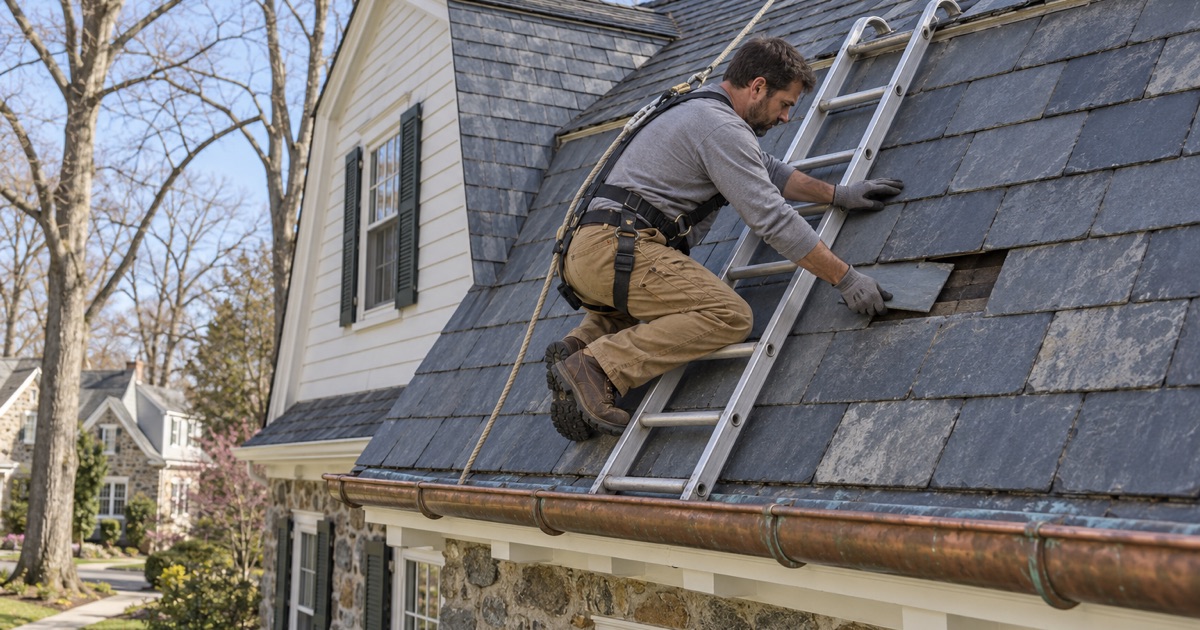
Each slate hangs on two nails. When those nails rust through, the slate slides down and leaves a gap above it, or falls off entirely, even though the slate itself is fine.
This is the most common slate problem we see. The slates are reusable, and the fix is resetting or replacing pieces with copper nails or stainless slate hooks that will not rust out the same way.
Broken and Cracked Slates
Slates crack from falling branches, from people walking on them, and occasionally from hail. A cracked slate lets water reach the slate below and the underlayment beneath.
We replace broken slates individually, sliding the remains out with a slate ripper, cutting the nails, and installing a matched replacement held by a hook or a copper nail with a bib flashing over the head.
Worn Flashing and Valleys
Slate roofs often outlast their flashing. Chimney flashing, valley metal and the step flashing at dormers and walls wear thin, split at soldered seams or rust through long before the slate gives out.
We replace failed flashing with copper and rebuild the slate around it. On a roof that is otherwise sound, renewing the flashing is often the single repair that stops the leaks.
Delaminating Slate
Some slate eventually begins to flake in layers, turning soft or powdery at the surface. When that happens to scattered pieces, we replace them; when it is happening across the whole roof, the slate is reaching the end of its life.
We photograph what we find and tell you which situation you are in. That is the honest line between repair and replacement on a slate roof.
How We Repair Slate
Copper Nails and Slate Hooks
We secure replacement slates either with copper nails covered by a small copper bib, or with slate hooks that hold the bottom of the slate from below. Both leave no exposed nail head to rust or leak.
We choose the method based on the roof and how visible the area is. Hooks are quick and hold well; copper nails with bibs are less visible on a prominent slope.
Matching Size, Thickness and Color
Slates vary in size, thickness and color from roof to roof, and a mismatched piece stands out. We measure the existing slate and match it as closely as possible, often with salvaged slate from roofs of a similar age.
New slate can look slightly brighter at first, but it weathers toward its neighbors. We show you the replacement pieces before they go on.
Working Without Breaking More Slate
Slate cracks under foot traffic, and careless crews often break more than they fix. We work from ladders, roof hooks and padded supports, and avoid walking on the slate wherever we can.
When we must cross the roof, we spread our weight on the strongest points. Protecting the sound slate is part of the repair.
Copper and Gutters on Slate Roofs
Copper Valleys and Flashing
Copper is the traditional partner for slate, used in valleys, around chimneys and at dormers. It lasts nearly as long as the slate when it is installed well.
We repair copper with copper and keep dissimilar metals out of the roof. Aluminum or galvanized pieces mixed into copper flashing corrode where they touch.
Half-Round Copper Gutters
Half-round copper gutters often hang on slate roofs, and their condition affects the slate above them. Overflowing or sagging gutters soak the eaves and rot the boards the bottom slates are nailed to.
We reseal and rehang sound copper gutters, replace failed sections in copper, and size the gutters to the roof area they drain. Keeping the eaves dry protects the slate courses that are hardest to reach.
Box Gutters Behind the Cornice
Many slate-roofed houses drain into built-in box gutters hidden in the cornice. When the lining fails, water runs into the walls rather than over the edge.
We reline box gutters and repair the slate courses above them at the same time, so the bottom of the roof and the gutter work together again. Doing both in one visit also avoids disturbing the same slates twice.
Slate Roofs and Haverford Township Rules
No Roofing Over Slate
Haverford Township’s Roof Permit Application Addendum, version V-02-2025, bars a new roof over slate, along with wood shake, clay and cement or asbestos-cement tile. The same addendum caps shingle roofs at two layers.
So when a slate roof truly is finished, it must be fully removed, and we price it that way from the start. Until then, every repair we make keeps that larger decision further off.
Historic Resource Houses
Many slate roofs sit on houses that may be on the township’s Historic Resource Inventory. Under Section 182-1302, removing or covering any portion of a historic resource’s roof is listed as demolition, and the Historical Commission has cited a house whose roof came off without approval.
We check the inventory before scheduling and keep repairs like-for-like in slate and copper. That is usually the simplest path through any review the township requires.
- 20+ Years in Business
- Attic Checked on Every Leak
- Line-Item Written Scopes