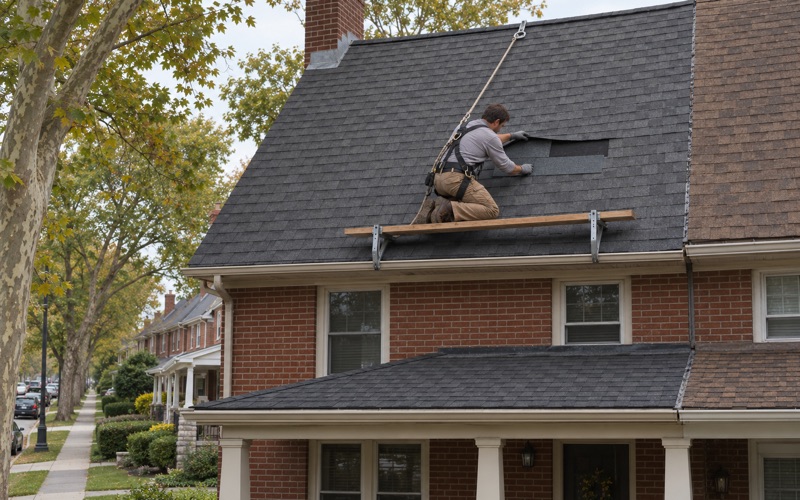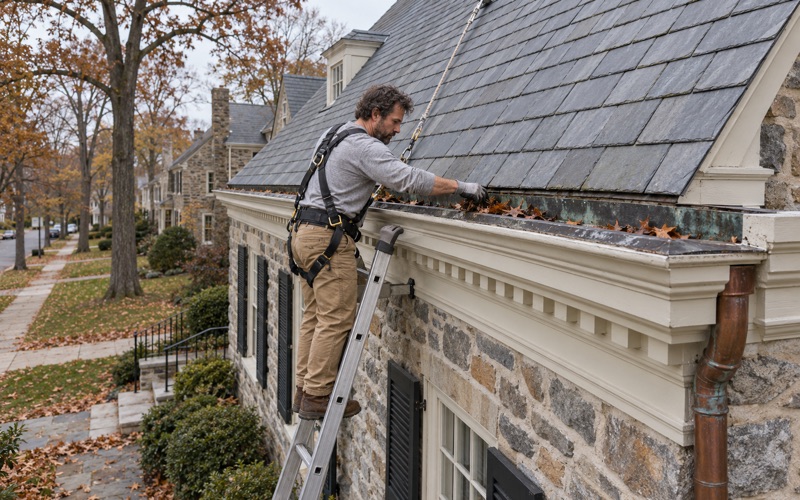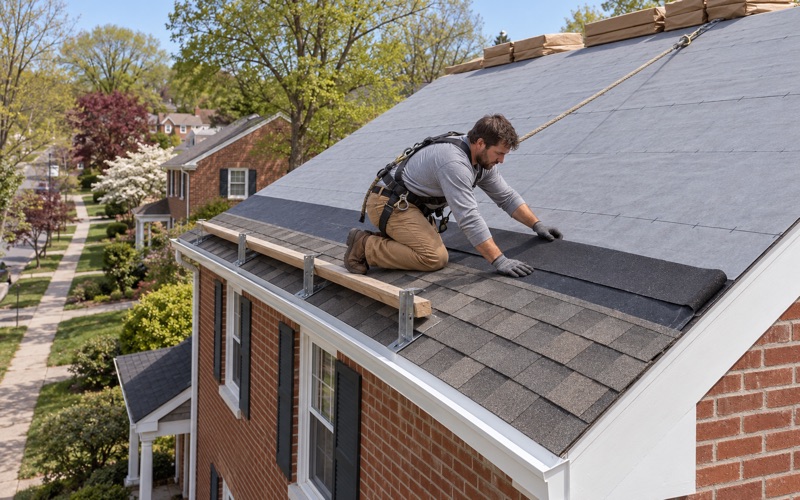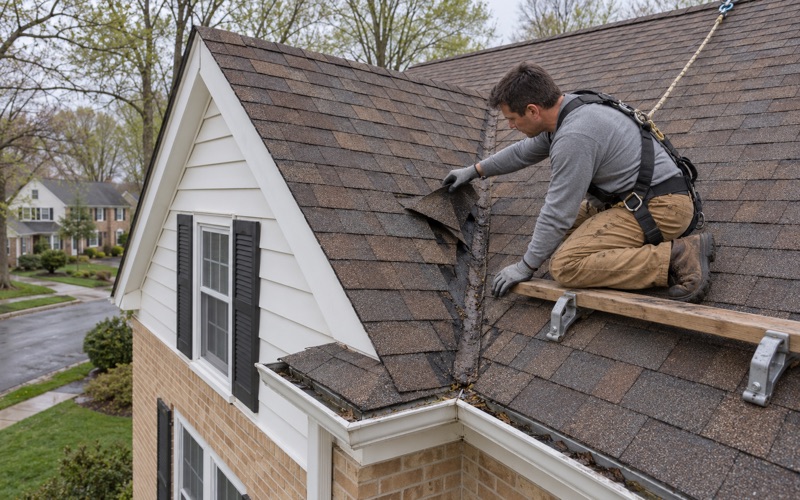
Haverford Roofing has handled roofing in Skippack and across the surrounding townships for more than two decades, and we have learned that a good roof job here is decided before the first shingle comes off. Where the old material goes, which permit the work needs, and how the driveway survives the week all get settled in the estimate, not on the morning the crew arrives.
Before anyone talks about replacement, we tell you plainly whether the roof can be repaired instead. When a leak is the reason for the call, we go into the attic as well as onto the roof, following the water back to where it actually enters so the price covers the real problem rather than the stain on the ceiling.
When a full tear-off is the honest answer, our written scope breaks the job into separate lines for tear-off, decking, underlayment, flashing, ventilation and gutters. That lets you hold our estimate next to anyone else’s and compare it item by item. Our contracts follow Pennsylvania’s home improvement law, with the required cancellation notice and a deposit held within the legal limit.
Where the Roll-Off Goes on a Skippack Roof Job
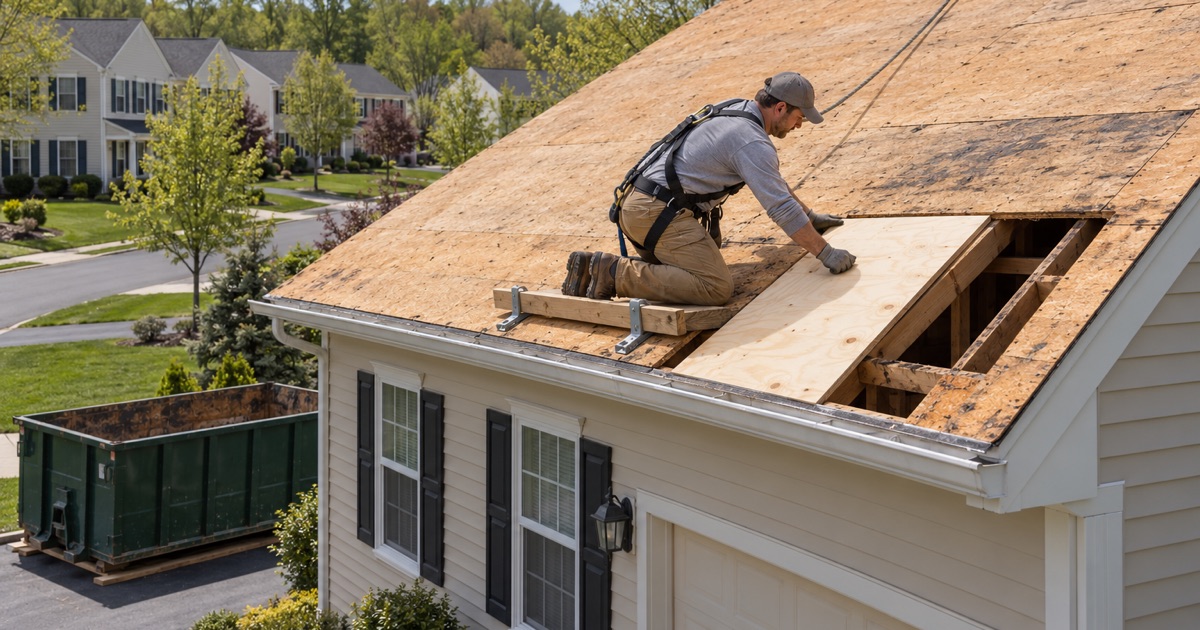
Skippack Township’s 2026 fee schedule lists roll-off containers, PODs and dumpsters as a $25 permit, and it prints the condition in parentheses: containers cannot be placed in the street. For a tear-off, that single line decides more about the week than the shingle color does, because the container has to sit somewhere on your own property.
Why the Curb Is Not an Option
In many towns a roofer drops the dumpster at the curb and works from the street. In Skippack that is not available, so we plan the job as if the street does not exist. The roll-off goes on the driveway or on a firm, level part of the yard, and the township permit for it is pulled before the container is delivered.
Before delivery we walk the drop spot with you. We look at the slope of the driveway, where the truck can back in without catching a mailbox or a low branch, and whether you need a car parked outside the container while the job runs. Boards go under the container’s rails so the driveway surface is not scored when it is set down and hauled off.
Driveways Along Skippack Pike
Homes that front Skippack Pike raise their own questions. With the street ruled out, a long or narrow driveway off a state road has to hold the container, the delivery truck’s approach and any material pallets, all without blocking your way in and out. We sometimes place the container deeper on the lot and carry debris a little farther to keep the drive usable.
Skippack Pike is also Pennsylvania Route 73, so delivery timing matters. We schedule the drop and the pickup so the truck is not idling on the shoulder waiting for the driveway to clear, and we keep shingle bundles staged on your property rather than at the road edge.
Subdivision Lots From the 1990s and 2000s
A large share of Skippack’s housing went up between 1990 and 2009. Census estimates count 2,473 of the township’s 4,397 housing units in that window. Where one of those subdivision homes has a paved driveway in front of the garage, that is the natural spot for the container, though it usually means the garage stays shut and cars park elsewhere until pickup.
Roofs on homes from those decades are often due for their first replacement, typically a single layer of asphalt shingles. We estimate the debris from the roof’s measured squares and order a container to match, so a second haul is not needed halfway through the tear-off.
Looking for roofing closer to Cinnaminson? See Cinnaminson Roofing.
Skippack’s Reroofing Permit: Shingles Only or With Sheathing
Each township in our service area sets its own re-roof rule, so we check the rule for your house’s township before we price anything. Skippack’s is clear. Its re-roofing requirements sheet states that permits are required for roofing work, and the township’s fee schedule sets the residential reroofing fee in two tiers.
$100 or $250
A shingles-only reroof carries a $100 permit fee. When sheathing is replaced as part of the job, the fee is $250. The difference matters because nobody can be completely sure what the decking looks like until the old roof is off, and the permit should match the work actually done.
We read the attic side of the decking during the estimate, looking for dark staining, soft spots around vents and daylight at the eaves. If the signs point to sheathing work, we tell you which permit tier we expect and why, so the number on the estimate is not a surprise later.
Approval Comes First
The fee schedule says plainly that permit fees for work started prior to approval are doubled, and that all permit fees are non-refundable. A $100 permit becomes $200 and a $250 permit becomes $500 if the crew starts early. We do not start a Skippack tear-off until the township has approved the permit.
Questions about a permit go to Skippack Township’s building codes office at 4089 Heckler Road. We handle the application for you, but you are always welcome to call the township directly and confirm what has been filed for your address.
When the Old Roof Has to Come Off
The township’s re-roofing sheet applies Chapter 9 of the 2018 International Residential Code and quotes IRC R907.3, which lists when every existing layer must be removed. A new covering cannot go over a roof that is water-soaked or deteriorated, one that already has two or more applications, or one made of wood shake, slate, clay, cement or asbestos-cement tile.
Our estimate says up front whether your roof falls under one of those conditions, so you know before signing whether a full tear-off and a container are part of the job. Roofs that qualify for an overlay still get an honest look at whether one more layer is the better choice.
Sheathing Found Rotten Halfway Through
Even a careful attic inspection cannot see every board. Sometimes the shingles come off and the decking underneath is soft, delaminated or stained through, and the job changes on the spot. How that moment is handled says more about a roofer than the brand of shingle on the estimate.
You See It Before We Replace It
Every damaged sheet we find is photographed and shown to you before it is replaced. You see the board, the photos and the count, and the replacement is billed at the per-sheet price already written into the contract. No open-ended change order appears after the fact.
In Skippack the discovery also touches the permit. A job that was permitted as shingles only and turns into sheathing replacement belongs in the $250 tier, so we bring the permit in line with the township before the new decking goes down rather than leaving the paperwork behind the work.
Keeping the House Dry Mid-Job
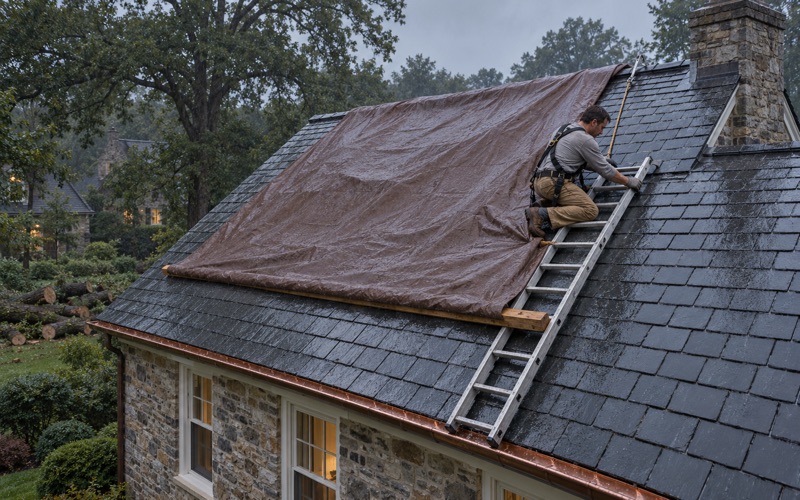
Sheathing work adds time to a tear-off day, so we strip only as much roof as we can deck, underlay and dry in before evening. Open sections are covered before the crew leaves, and old decking goes straight into the container rather than sitting in a pile on the lawn.
New underlayment goes over the replaced decking with self-adhering ice and water barrier at the eaves and valleys. Drip edge is set at the eaves and rakes before the field shingles start, so the new sheets are protected along every edge from the first day.
Older Houses in the Township
Not every Skippack roof sits on a subdivision house. Census estimates put 528 housing units in the township as built in 1939 or earlier, and those roofs often sit on board sheathing rather than plywood. Older board decking can hide gaps, old nail holes and patched sections, so we look harder at the attic side when the house is that age.
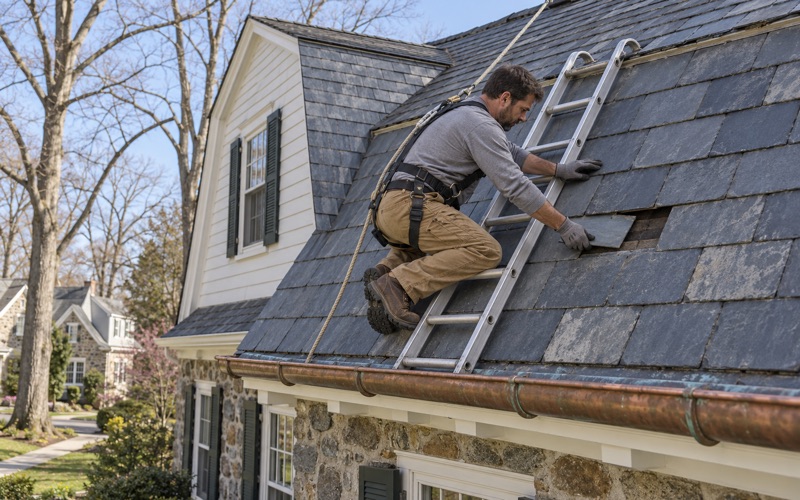
Where an older house still carries slate, we repair a sound slate roof slate by slate with copper nails and slate hooks before anyone talks about tearing it off. If a tear-off is truly needed, the township’s own sheet already rules out covering slate with a new layer.
Cleanup, Nails and the Last Day of the Job
A driveway-staged tear-off puts the work zone right where your family walks and parks. That makes daily cleanup more than a courtesy in Skippack, because the same pavement holding the container is the pavement your tires cross every evening.
A Magnet Sweep Every Day
At the end of each work day the crew clears the driveway, yard and gutters, then runs a magnet sweep for roofing nails across the lawn, the beds and the drive. Tarps catch most debris as it comes down, and the sweep picks up what slips past them.
The area around the container gets the closest attention, since shingle grit and nails collect wherever debris is tossed in. When the container is finally hauled away, we sweep the patch of driveway it sat on, because that spot has been out of reach for the whole job.
Flashing and Gutters Finished With the Roof
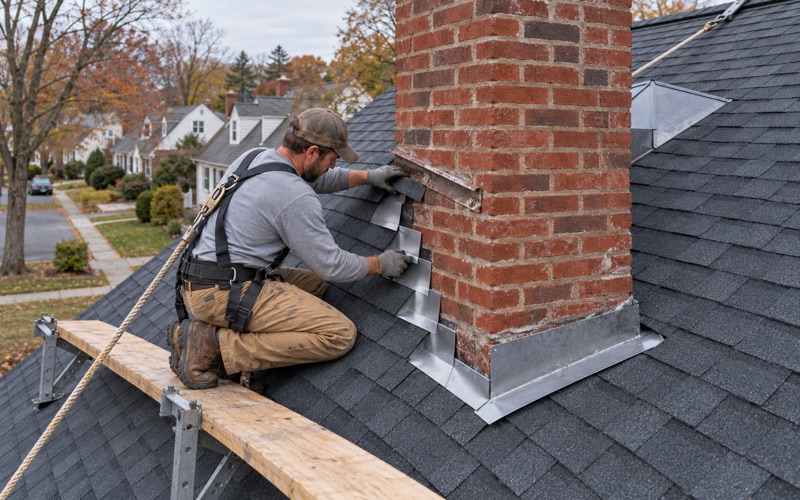
The final days are about the details that keep water out. Step, counter and chimney flashing are replaced with the roof rather than reused under new shingles, and ridge vent is paired with soffit intake so the attic we inspected at the start can actually breathe.
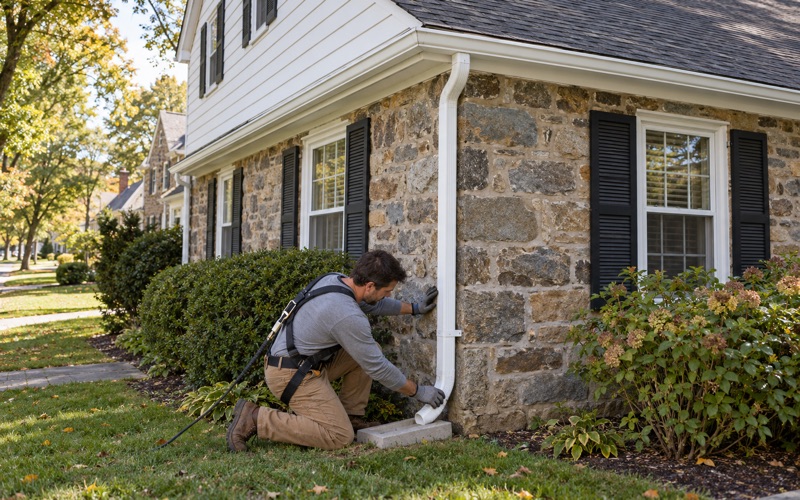
Gutters and downspouts are checked for size and pitch along with the roof, not as an afterthought once the container is gone. A new roof that sheds water into a sagging gutter just moves the leak to the fascia, so we settle the gutter question while the crew and equipment are still on site.
The Final Walk-Through
The last step is a walk-through. We go over the finished roof, the flashing and the gutters with you, check the lawn and driveway one more time, and leave the photos of any decking we replaced so you have a record of what is under the new shingles.
- 20+ Years in Business
- Attic Checked on Every Leak
- Line-Item Written Scopes