
Haverford Roofing has handled roof repair in Haverford, PA for 20+ years, serving surrounding cities including Uwchlan, Yeadon, West Bradford, Upper Providence Township, Nether Providence. The work runs from a single cracked pipe boot to rebuilt chimney flashing, replaced slates and torn shingles after a storm, and every job is priced only after we know exactly where the water gets in.
That means looking from both sides. Each repair visit includes the attic as well as the roof surface, because a wet trail on the underside of the deck leads straight to the opening, while a stain on the ceiling below can sit several feet away from it.
You also get a straight answer on whether the roof is worth repairing at all. Most roofs we are called to need a repair, not a replacement, and we say which one yours needs before any replacement price is mentioned.
Shingle Roof Repairs
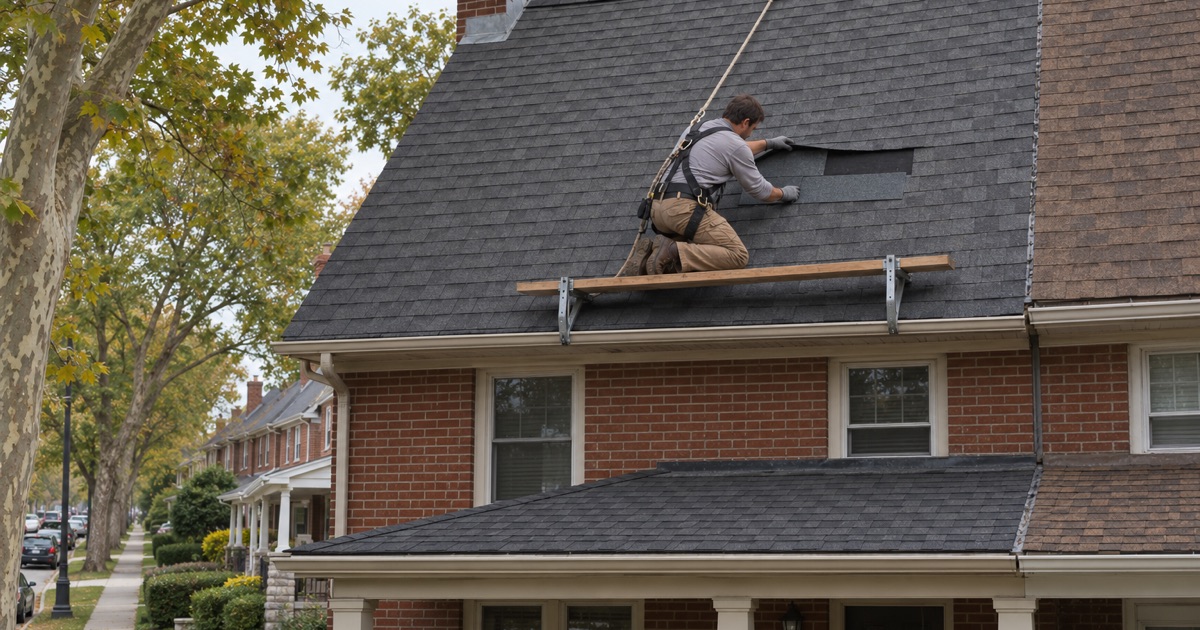
Lifted, Torn and Missing Shingles
Wind gets under a shingle whose seal strip has aged, lifts it, and either creases it or tears it off at the nail line. The exposed strip leaves nail heads and underlayment open to rain, and the shingles beside it are usually loosened by the same gust.
We replace damaged shingles with the closest current match, set new nails above the old holes and hand-seal the course above. Then we check the neighboring tabs by hand, because a shingle that lifts easily now will be the next one gone.
Pipe Boots and Roof Vent Repair
The rubber collar around a plumbing vent pipe cracks after years of sun, and water runs down the outside of the pipe into the attic. It is one of the most common leaks we find, and one of the cheapest to fix properly.
We replace cracked boots with new rubber boots or lead flashing boots, woven into the shingles so the upper edge sits under the course above. Box vents and exhaust caps get the same treatment when their flanges have rusted or their fasteners have backed out.
Exposed Nails and Failed Sealant
Nails driven through the face of a shingle, or set too high on a ridge cap, rust and loosen until each hole becomes a small leak. Old sealant at roof edges and penetrations dries out and splits in the same way.
We pull exposed fasteners, replace the shingle or cap that held them, and remove old caulk patches before installing proper flashing where flashing belongs. A roof covered in tar spots is usually a roof where someone treated symptoms one at a time.
Flashing and Penetration Repair
Chimney Step and Counter Flashing
A chimney needs two layers of metal: step flashing woven under each shingle course along the sides, and counter flashing set into a reglet cut in the mortar joint and folded down over it. When the counter flashing is only surface-mounted with caulk, it pulls away and water runs behind it.
We rebuild chimney flashing with new step pieces and counter flashing let into the masonry. A wide chimney also gets a cricket, or saddle, on the uphill side so water and leaves are split around it instead of piling against the brick.
Apron and Kick-Out Flashing
Where a lower roof meets a wall, apron flashing seals the joint across the bottom, and a kick-out flashing at the end of the eave turns water into the gutter. Without the kick-out, runoff pours down the face of the wall and soaks the siding or stucco below.
We add missing kick-outs and replace bent or rusted aprons. On houses with stucco or stone, that small piece of metal often explains a long-running stain no one could trace from inside.
Skylight and Dormer Flashing
Skylights tend to leak at their upper corners, where water and debris collect against the curb, and dormers leak along their cheek walls where step flashing has failed. Both are easy to misread as a shingle problem.
We reflash skylights with the kit made for that unit and rebuild dormer step flashing piece by piece. If a skylight’s own seal has failed, we tell you so, because new flashing will not stop water passing through the glass frame.
Repairs on Older Main Line Roofs
Slate Repair With Copper Nails and Slate Hooks
Slate roofs on older houses usually fail one slate at a time, from a broken corner, a slipped piece or a rusted nail. The roof as a whole is often sound for many more years.
We replace slates individually, matching size, thickness and color, and fasten them with copper nails or slate hooks. In Haverford Township a new roof cannot be laid over slate, so a careful repair is often the only alternative to a full tear-off.
Box Gutter and Cornice Leaks
Built-in box gutters sit inside the eave behind trim, so a cracked lining sends water into the framing and walls rather than over the edge. These leaks are often blamed on the roof above.
We open the gutter, check the wood behind the lining and reline it. If the framing has rotted, we explain the choice between rebuilding the box gutter and switching to a hung gutter before any work begins.
Repairs on Historic Resource Houses
In Haverford Township, removing or covering part of a historic resource’s roof is listed as demolition under Section 182-1302, and the roof addendum asks whether the house is on the Historic Resource Inventory. We check the inventory before scheduling repair work.
Where a house is listed, we keep repairs like-for-like and confirm with the township whether the scope needs review. That protects you from a stop-work order on a job that should have been simple.
Storm, Ice and Low-Slope Roof Repairs
Temporary Tarping After Storm Damage
When a limb comes through the roof or a section of shingles is stripped, the first job is keeping more water out. We tarp the opening, fasten the tarp so wind cannot get under it, and photograph the damage before anything is moved.
Those photos and a written description of the damage go to you for your own insurance claim. The permanent repair is then priced on its own, once the roof is dry and the full extent is visible from the attic and the roof.
Ice Dam Leak Repair
Winter leaks along the eaves usually come from ice dams, where meltwater backs up under the shingles behind a ridge of ice at the cold overhang. The stain often shows up on an exterior wall or above a window rather than in the middle of a ceiling.
We replace the damaged shingles and underlayment at the eave and, where the roof allows it, install self-adhering ice and water barrier under them. We also check attic insulation and ventilation, because the heat escaping into the attic is what builds the dam in the first place.
Flat Roof and Wall Joint Repairs
On a rear addition or porch, the leak is usually at the wall where the flat roof turns up against the house, or at a seam that has opened in the membrane. Ponding water makes both worse by holding moisture against the joint for days.
We repair the seam or patch the membrane with material that bonds to what is there, and rebuild the wall flashing with the membrane turned up and counter-flashed. If the low spot keeps holding water, we tell you, because the repair will not last on a roof that cannot drain.
Our Step-by-Step Roof Repair Process
Step 1: Roof and Attic Inspection
We look at the roof surface, the flashing at every penetration and the underside of the deck in the attic, and photograph what we find. The goal is the entry point, not just the stain.
Step 2: Repair or Replace, in Writing
You get a written answer on whether a repair will hold, with the photos behind it. The repair scope lists each item and its price, so nothing is bundled into a single unexplained number.
Step 3: Permit Check and Scheduling
We confirm whether your township needs a permit for the work and whether the house is on a historic inventory. Then the repair goes on the calendar.
Step 4: Repair and Cleanup
We make the repair with matching materials and proper flashing, then clean the gutters, driveway and yard and run a magnet sweep for nails. You get photos of the finished work.
- 20+ Years in Business
- Attic Checked on Every Leak
- Line-Item Written Scopes