
Haverford Roofing provides roof inspection in Haverford, PA, serving surrounding cities including Uwchlan, Yeadon, West Bradford, Upper Providence Township, Nether Providence. With 20+ years of roofing behind us, we inspect the way a roofer does: on the roof, in the attic and along every flashing line, with a written report you can act on.
An inspection is worth having before you buy or sell a house, after a storm, before solar panels go up, or simply when a roof is getting old and you want to plan the cost. In each case the question is the same: what condition is the roof in, how long does it have, and what needs attention first.
The report says it plainly. If the roof only needs a repair, we say so and price the repair, and if it is near the end of its life we explain why, with photographs, before any replacement is discussed.
What a Roof Inspection Covers
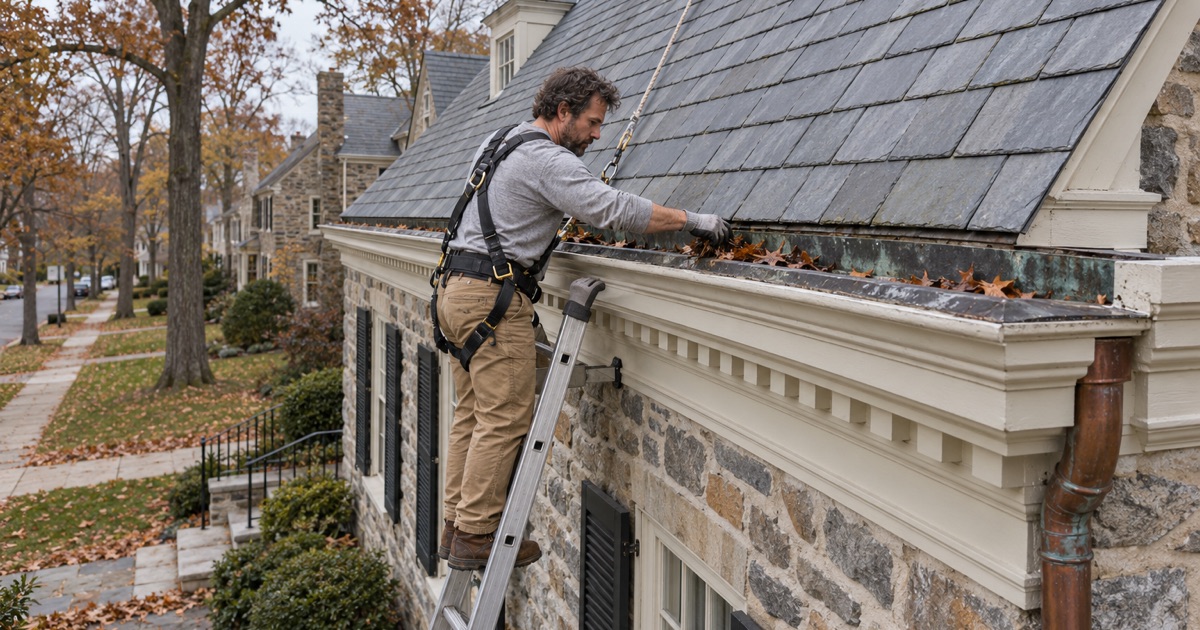
Roof Covering and Fastening
We look at the shingles, slate, metal or membrane across every slope: granule loss, cracking, curling, lifted tabs, broken or slipped slates and open seams. We also check how the roof was fastened where we can see it, because nails set high or through the face of a shingle shorten a roof’s life.
We note how many layers are on the roof as well. In Haverford Township no more than two layers of shingles are allowed, so a roof that already has two means the next one starts with a full tear-off.
Flashing at Chimneys, Walls and Penetrations
Most leaks start at flashing rather than in the open field of the roof. We check chimney step and counter flashing, the apron and kick-out flashing where roofs meet walls, valley metal, skylight flashing and every pipe boot and vent.
Where counter flashing is held on only by caulk, or a kick-out is missing at the end of an eave, the report says so. These are inexpensive fixes that prevent expensive water damage.
Attic, Deck and Ventilation
The attic shows what the roof surface hides: water stains on the sheathing, dark or soft decking, rusted nail tips, frost on cold mornings and insulation pressed flat by moisture. We trace any staining to its entry point above.
We also check how the attic breathes, with intake at the soffits and exhaust at the ridge or vents. A roof without balanced airflow ages faster and is more likely to form ice dams along the eaves in winter.
Gutters, Downspouts and Roof Edges
Gutters that overflow, sag or are hung too low send water behind the fascia and into walls. We check the pitch, the downspout outlets, the drip edge at the eaves and rakes, and any built-in box gutters on older houses.
Where half-round copper gutters hang on a slate roof, we note the condition of the solder joints and hangers. Those details often decide whether a sound slate roof stays dry.
When to Book a Roof Inspection
Buying or Selling a House
The Pennsylvania seller property disclosure statement asks about the roof, including known leaks, and the buyer’s inspector will look at it too. A roofer’s inspection before listing lets a seller fix what should be fixed and describe the rest accurately.
For buyers, it turns a vague note in a home inspection report into a priced list. Haverford’s resale Use and Occupancy checklist does not cover the roof, so the township will not catch a roof problem for you.
After a Storm
After high wind or hail, damage is easy to miss from the ground. We check for lifted or creased shingles, broken slate, dented metal and damaged flashing, and photograph everything for your own claim.
The sooner after the storm this happens, the easier it is to tie the damage to that event. We will meet the insurance adjuster on site when asked, without negotiating the claim.
Before Solar or a Major Project
A solar array, a dormer addition or new skylights all depend on the roof under them. We check the deck and remaining life first, so you do not mount new equipment on a roof that will need replacing in a few years.
If a replacement makes sense first, the report says so and explains what it would include, line by line. If the roof has years left, it says that too, so the project can go ahead with confidence.
Rental and Investment Properties
Haverford rentals need an annual license and an inspection before a tenant moves in, though the township’s page names no roof item. Landlords still carry the cost when a roof leak damages a tenant’s unit.
A periodic roof inspection on a rental catches failed flashing and blocked gutters before they turn into ceiling repairs and a tenant complaint. The report also gives an owner a dated record of the roof’s condition between tenants.
What We Look For on Each Roof Type
Asphalt Shingle Inspection
On an asphalt roof the wear shows first on the south and west slopes, where sun is strongest. We look for bare spots where granules have washed off, shingles that have cupped or curled at the edges, cracked tabs, and seal strips that have let go so the shingle lifts by hand.
We also check the starter course and drip edge at the eaves, and whether an ice barrier was installed where it can be seen from the attic. A worn three-tab roof and a worn architectural roof wear differently, and the report explains which signs matter for yours.
Slate Roof Inspection
Slate itself can last for generations, but the nails, flashing and hooks holding it often give out first. We look for slipped and broken pieces, delaminating slate that flakes in layers, rusted nail heads and tired copper or tin flashing in the valleys and at the chimney.
The report separates individual slate repairs from signs that the whole roof is reaching the end of its fasteners. That distinction matters in Haverford Township, where nothing new may be installed over slate, so the choice is repair or full removal.
Flat and Low-Slope Roof Inspection
Rear additions, porches and garages often carry modified bitumen, EPDM or TPO. We check for blisters, open seams, cracked or loose wall flashing, and the low spots where water stands after rain.
Ponding is the main thing that shortens a membrane’s life, so we note where it collects and whether the drains or scuppers are keeping up. A small repair on a flat roof is often the difference between many more years of service and an early replacement.
Metal and Older Specialty Roofs
Standing seam metal is checked for loose seams, failed fasteners at the edges and corrosion where dissimilar metals touch. Cedar shake is checked for splits, moss and soft areas where debris has held moisture.
On older houses we also look at original details like copper valleys and built-in box gutters, noting which are sound enough to keep and which are already letting water into the framing.
Our Step-by-Step Roof Inspection Process
Step 1: Exterior Walk-Around
We start on the ground, looking at roof lines, gutters, downspouts and any staining on walls or soffits. That shows where to look closely once we are up top.
Step 2: Roof Surface and Flashing
We inspect each slope and every penetration, photographing problems as we go. On slate we work from ladders, hooks and windows to avoid breaking sound pieces.
Step 3: Attic Inspection
In the attic we check the deck, framing, insulation and ventilation, and trace any staining to its source on the roof. Many problems that are invisible from above show up clearly here.
Step 4: Written Report
You receive a report with photos, an estimate of remaining life, and a list of repairs in order of priority with their prices. It tells you plainly whether the roof needs a repair, needs watching or needs replacing.
- 20+ Years in Business
- Attic Checked on Every Leak
- Line-Item Written Scopes