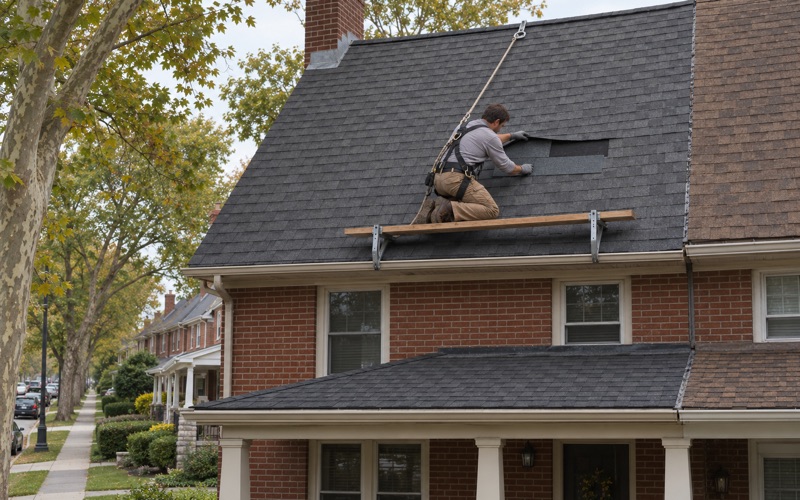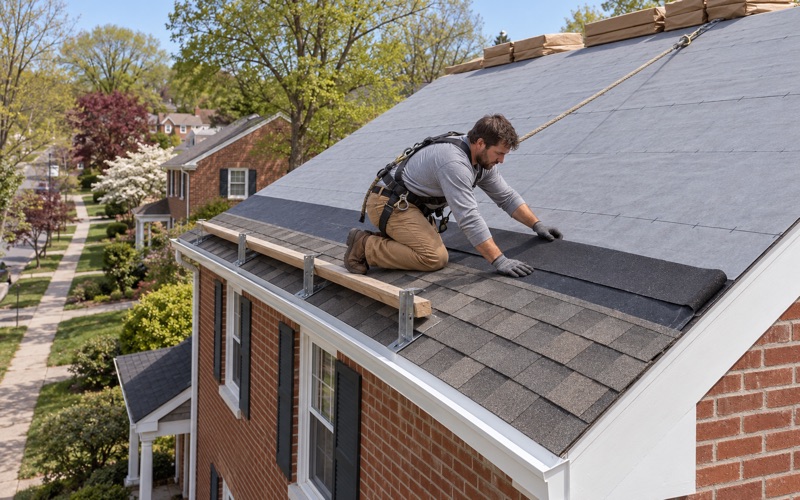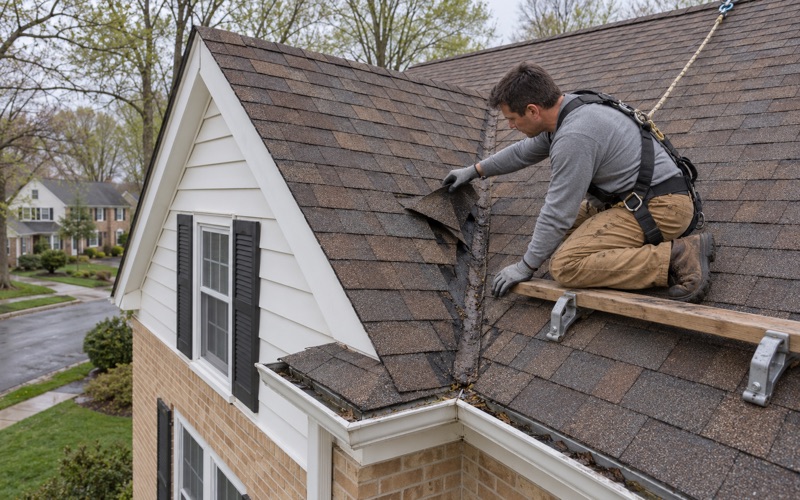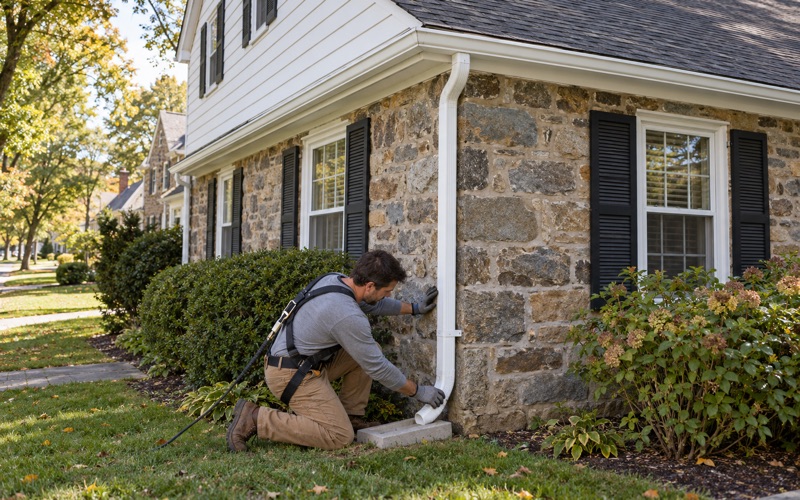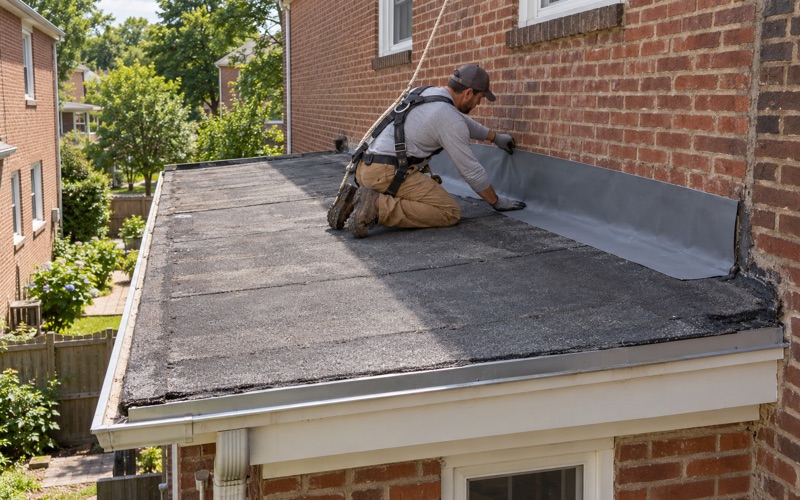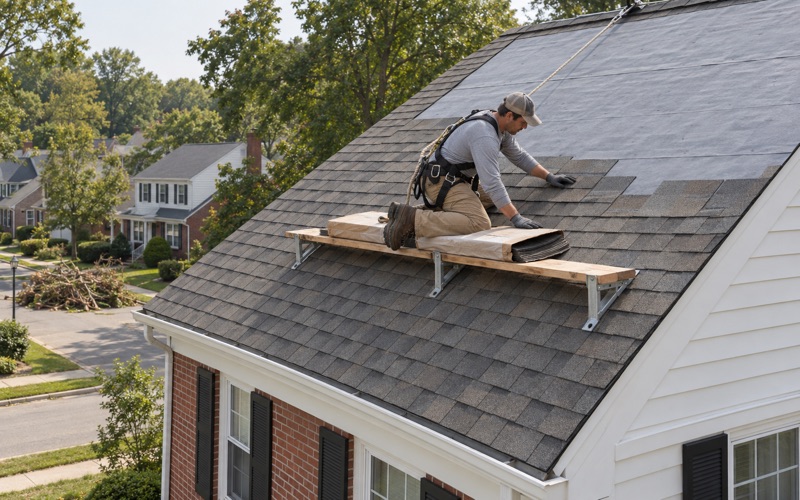
Haverford Roofing has spent more than 20 years on roofing in Plymouth Township and the surrounding part of Montgomery County, and much of the work starts the same way: with a leak, a worn slope or a question about whether the old roof still has years left in it. We answer that question honestly before anyone talks about a new roof.
When water is getting in, we look in the attic as well as on the roof, because the stain on a ceiling is rarely directly under the opening that caused it. Tracing the path first means the price we give covers the actual problem. Our written scopes then break out tear-off, decking, underlayment, flashing, ventilation and gutters as separate lines, so you can set our estimate beside anyone else’s and compare it item by item.
Plymouth Township also has a layer of review that many nearby communities do not. Some houses here sit inside a historic district, and a roof change on one of them can go to a review board before the township grants approval. This page explains how that process works, what the board has looked at, and how we plan a job around it.
Plymouth Meeting’s Historic District and the Joint Review Board
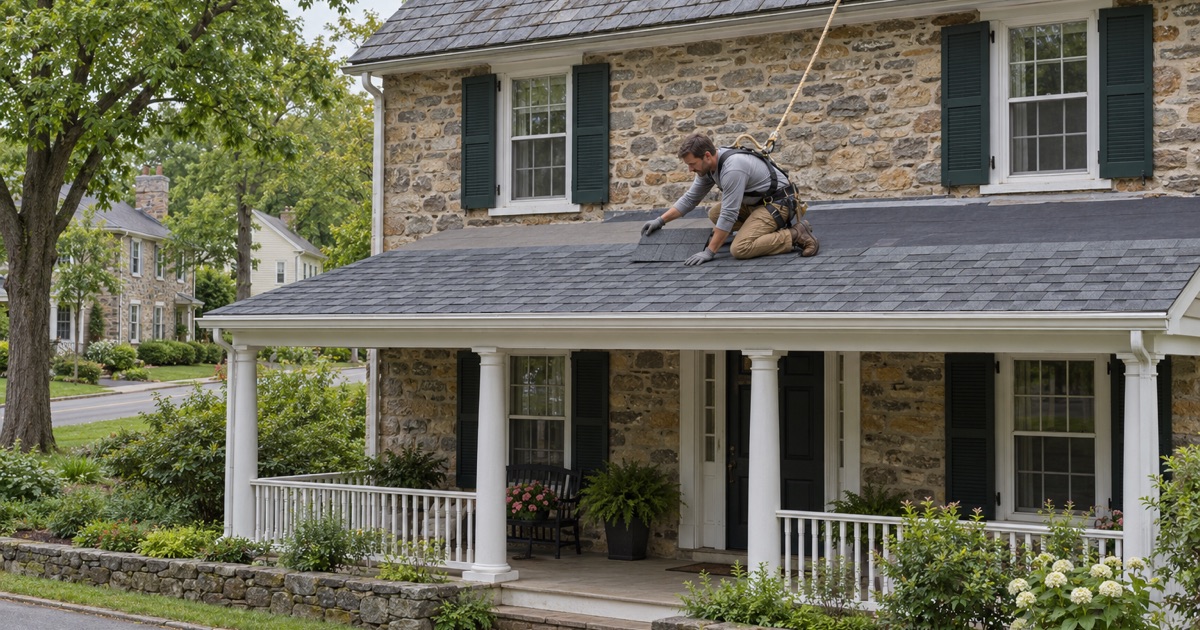
A Village at the Crossroads
The Plymouth Meeting Historic District was listed on the National Register of Historic Places on February 18, 1971. It covers about 200 acres centered on the crossroads of Germantown Pike and Butler Pike, and it spans two municipalities, Plymouth Township and Whitemarsh Township. The Plymouth Friends Meetinghouse at that same intersection was listed separately on the same day.
The village dates to Quaker settlement in 1686, and the Plymouth Meeting Historical Society, founded in 1952, pushed for the listing. For a homeowner, the practical point is simpler than the history: a house in or near this village may fall under local historic review, and that is worth knowing before a roofing crew is booked.
One Board for Two Townships
Rather than each township running its own panel, Plymouth and Whitemarsh share a single Historical Architectural Review Board, known as the HARB. At its August 11, 2021 meeting, the members included Plymouth Township’s zoning officer and Whitemarsh Township’s director of building and codes, with a Plymouth Township Council liaison present.
That mix matters. The board includes zoning and code officials, so a roofing proposal that is clear about materials, scope and appearance gives them what they need to make a recommendation. A vague one invites questions, and questions cost time.
The Local District and the National Listing
One caution we give every owner in this area: the National Register boundary and the boundary the HARB works within are not necessarily the same line. We do not assume a house is covered, or exempt, because of where it sits on a map of the 1971 listing. We confirm it with the township for the specific address.
The same goes for scope. Not every roof in the village area is a historic review case, and not every job on a reviewed house raises the same questions. Checking first keeps a simple repair simple and keeps a larger replacement from stalling after the materials have been ordered.
Looking for roofing closer to Willistown? See Roofing Services in Willistown.
How a Certificate of Appropriateness Works for a Roof
The Board Recommends, the Township Decides
The HARB’s role is advisory. It reviews an application and votes on whether to recommend that the governing body grant a Certificate of Appropriateness, and the governing body then makes the decision. It helps to know that the board’s vote is not the final word; that two-step structure is how the process is set up.
We do not quote a timeline or a fee for that process, because neither is ours to set and both belong to the township. What we can do is make sure the roofing details in an application are complete and accurate, so the board is reviewing a real scope rather than a placeholder.
Where the Permit Rule Fits In
Historic review sits alongside the ordinary permit question, not in place of it. Plymouth Township’s Residential Code Package, revised in April 2022, treats replacement of existing roof material covering no more than 25 percent of the total roof area within any 12-month period as an ordinary repair that does not need a permit.
The same document says any work not on its list requires the appropriate permit from the township, and it names the 2018 International Residential Code among the codes enforced. Because each township in our service area sets its own re-roof rule, we check Plymouth’s before pricing, and Code Enforcement at 700 Belvoir Road is where those questions go.
What a Clear Application Shows
For a roof under review, the useful details are the ones a board member can picture: which slopes are affected, what material comes off, what goes on, and what color and profile it has. Flashing, drip edge and gutter changes that alter what the street sees belong in the description too.
Our line-item scope already lists those pieces separately, which makes it a natural starting point for the owner’s application. We supply product names and photos of the existing roof on request for whoever files the application. A clear package is easier to review than a one-line description of new shingles.
What the Board Has Reviewed: Porch Roofs and Matching Materials
Minutes are the most reliable guide to what the board actually does with a roofing application. The August 2021 meeting is a useful one to read closely, because it took up three roof-related items at one sitting.
A Porch Roof on West Germantown Pike
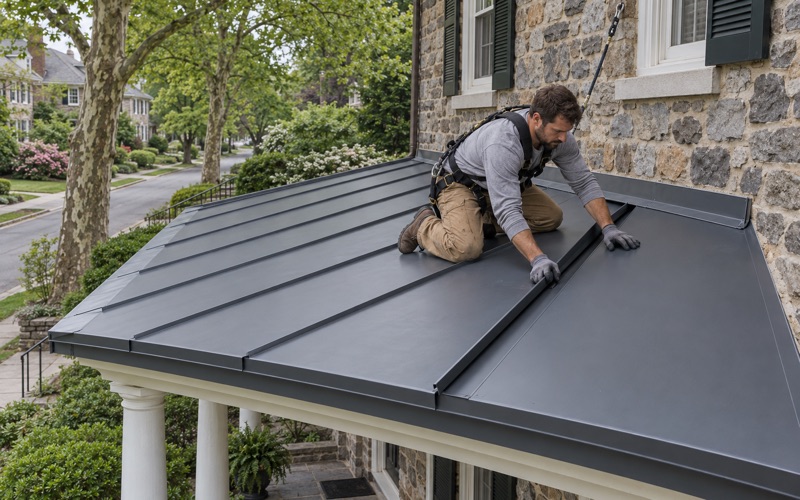
The HARB’s August 11, 2021 minutes give a plain example of a roofing case. The board took up 113 W. Germantown Pike in Plymouth Township, which the zoning officer described as an asphalt roof replacement on the porch at the front of the property. The applicant was not present.
No issues were identified, and the board voted 6-0 to recommend that the governing body approve a Certificate of Appropriateness. That was not our project, but it shows the scale of work that can come before the board: a single porch roof on a front elevation, in asphalt, reviewed and recommended in one meeting.
Matching the Rest of the House
At the same meeting, the board recommended approval of a roofed deck in Whitemarsh Township whose owner wanted to change from a previously approved standing seam metal roof to an asphalt roof matching the roof on the rest of the house. A neighboring application for a 600-square-foot roofed deck with asphalt roofing similar to the house also received a 6-0 recommendation.
We read those minutes as a pattern, not a rule. The board did not call for any particular material in these cases, and what the two deck applications had in common was consistency with the existing house. We treat matching the main roof as a sensible starting point for a proposal, not as a requirement we can promise the board will apply.
Slate, Copper and Older Details
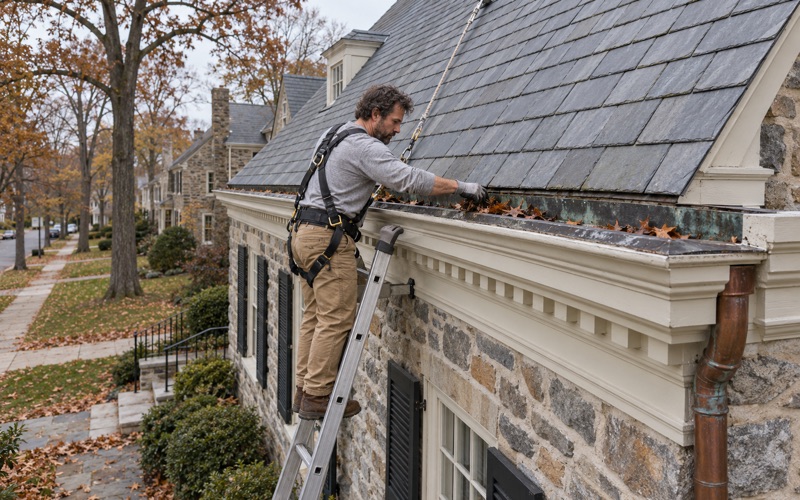
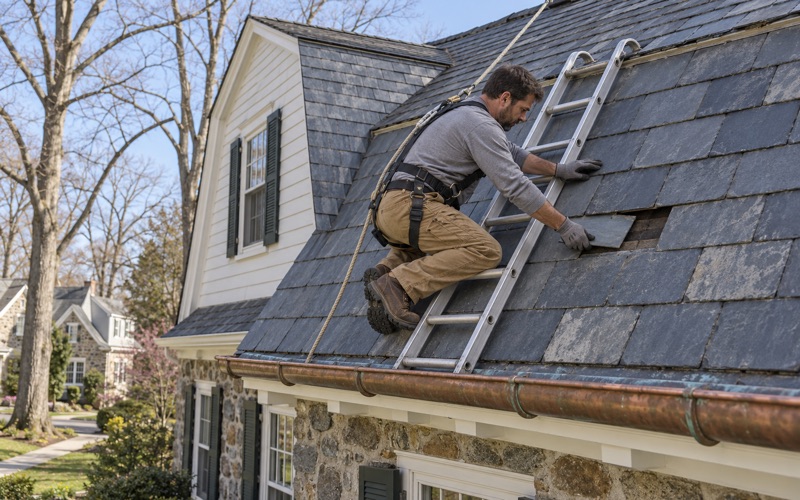
Some older houses near the crossroads may carry slate or copper rather than asphalt. Where a slate roof is sound, we repair it slate by slate with copper nails and slate hooks before anyone suggests tearing it off, and half-round copper gutters are often the right companion for a slate roof.
Nothing in the minutes says the HARB insists on these materials. Repairing what is already there simply tends to be the least disruptive choice on a historic house, and it often avoids a full replacement altogether. That repair-first habit is how we approach slate everywhere, not only inside a historic district.
Older Houses Along Germantown Pike and Planning Around Review
Historic review is one part of the picture. The other is the house itself, and the older ones near the village crossroads tend to reward a careful look before any price is set.
What the Housing Stock Looks Like
Most of Plymouth Township’s housing is postwar, but a real share is older. Census estimates count 518 housing units built in 1939 or earlier and 417 more from the 1940s, out of 8,021 in the township, with the largest share built between 1950 and 1969. The oldest of these are the houses most likely to raise questions about original details.
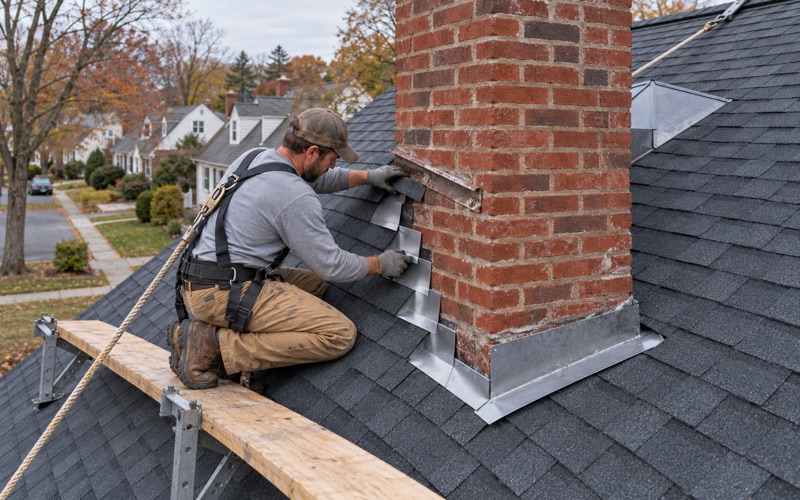
On a house of that age, we expect to find more than one generation of repairs. Step, counter and chimney flashing is replaced with the new roof rather than reused, and any decking that turns out to be damaged once the old roof is off is photographed and shown to you before it is replaced at the per-sheet price written into the contract.
Painted Trim on Pre-1978 Houses
Fascia and trim on houses built before 1978 may carry lead paint, and the EPA’s RRP lead-safe rule governs how that paint is disturbed. On older houses along Germantown Pike and elsewhere in the township, we plan drip edge and fascia work with that rule in mind instead of treating it as a surprise once the ladders are up.
It also affects cleanup. At the end of each work day the driveway, yard and gutters are cleaned, with a magnet sweep for roofing nails, which matters on a busy road frontage where a stray nail ends up in a tire rather than a lawn.
When Storm Damage Hits a Historic Roof
Plymouth Township sits in the National Weather Service’s Eastern Montgomery forecast zone, served by the Mount Holly office, and severe weather warnings for the area come from there. After a storm, we photograph the damage and write it up for your own claim, and we will meet the insurance adjuster on site if you ask, without negotiating the claim for you.
On a house inside the historic district, that write-up also notes what the existing materials and details look like before anything is touched. If the repair ends up as a larger replacement, those photos give the review board a clear record of the roof as it stood.
Sequencing the Job Around the Certificate
For a house that falls under review, we put the order of operations in writing. First we confirm with the township whether the address is in the local district and whether the work needs a permit. Then we prepare the scope and material details for the application, and we hold ordering and scheduling until the governing body has acted.
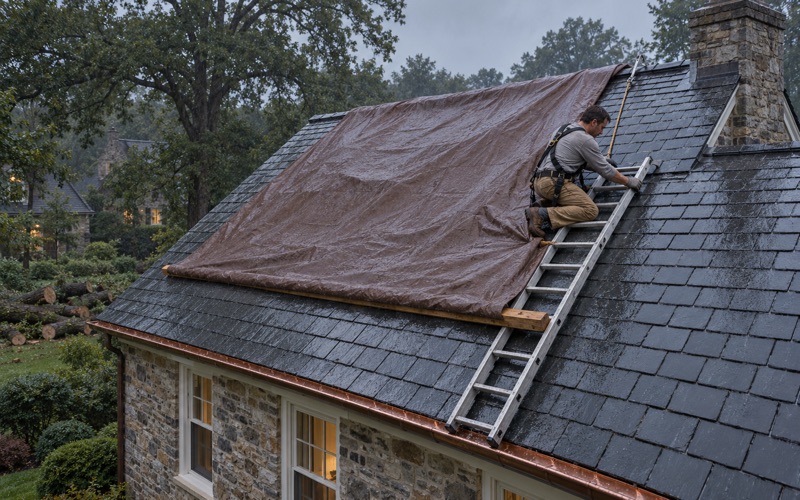
If an active leak cannot wait, we talk through a temporary repair with you, and with the township when it touches what the street sees, so the house stays dry while the application moves. Our contracts follow Pennsylvania’s home improvement law, including the three-business-day cancellation notice and a deposit kept within the legal limit, which limits what you have paid out while a review is pending.
- 20+ Years in Business
- Attic Checked on Every Leak
- Line-Item Written Scopes