
Haverford Roofing provides gutter installation in Haverford, PA, serving surrounding cities including Uwchlan, Yeadon, West Bradford, Upper Providence Township, Nether Providence. We have spent 20+ years working on roofs, and we size and pitch gutters as part of the roof system rather than treating them as something bolted on afterward.
A gutter only works if it catches what the roof sends it. That means the right size for the roof area above, the right slope toward each downspout, and a drip edge and starter course that put the water inside the gutter instead of behind it.
We install seamless aluminum gutters on most houses, half-round copper on slate roofs and older houses that already carry copper, and we reline or rebuild the built-in box gutters found behind the cornices of many prewar homes. Each estimate lists the gutters as their own line, so you can see exactly what you are paying for.
Gutter Types We Install
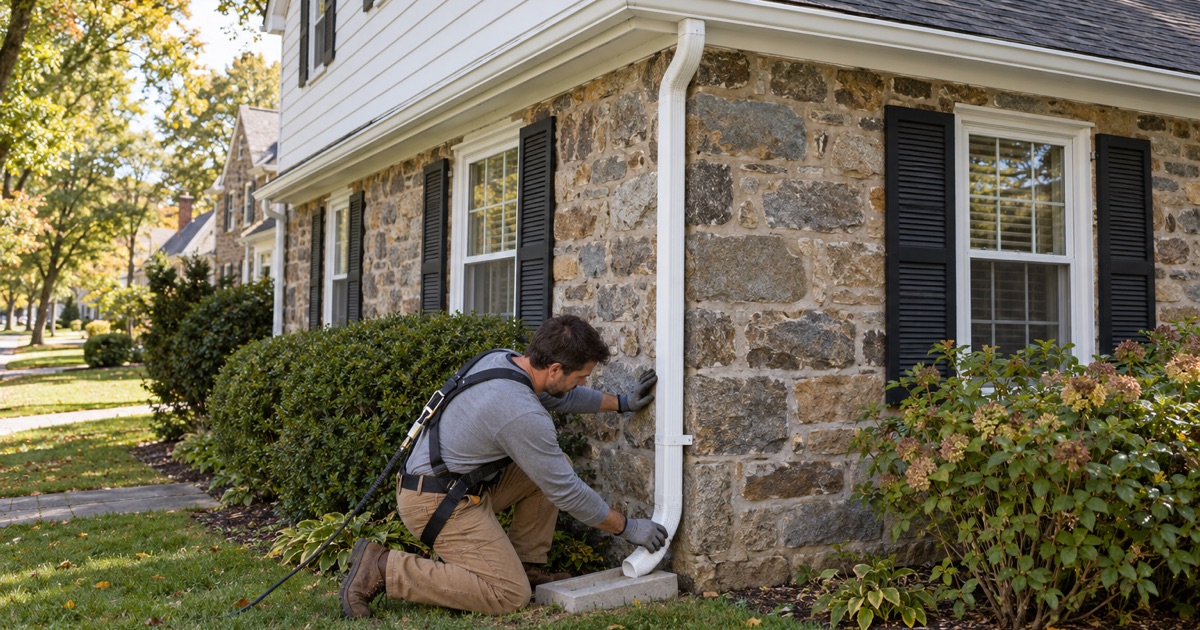
Seamless Aluminum Gutters and Downspouts
Seamless aluminum gutters are formed on site from a continuous coil, cut to the exact length of each run. With no joints along the straight sections, there are fewer places to leak, sag or catch debris.
We choose the gutter size and the number and size of downspouts based on the roof area that drains to each run and how steep the roof is. A steep roof sends water fast, and an undersized gutter overflows at the inside corners where two slopes meet.
Half-Round Copper Gutters
Half-round copper gutters belong on slate roofs and on houses with copper valleys and flashing. They suit the architecture, last for decades and weather to the same color as the copper already on the roof.
We hang copper with copper hangers and join it with soldered seams, so dissimilar metals never touch. Where existing copper gutters are sound, we reseal and rehang them rather than replacing good material.
Box Gutters on Older Houses
Built-in box gutters sit inside the eave behind trim, lined with metal or membrane. They are part of the look of many older stone and brick houses, but a cracked lining sends water straight into the cornice and walls.
We open the box, check the framing behind it and reline it. Where the wood has rotted beyond repair, we lay out the choice between rebuilding the box gutter and converting to a hung gutter, so you can weigh appearance against cost.
Getting the Details Right
Sizing Gutters to the Roof
Gutter size depends on how much roof drains into each run and how fast it arrives. Large, steep roofs and roofs with valleys concentrating water onto one corner need more capacity than a gentle slope over a porch.
We size each run separately and add downspouts where a long run or a valley would otherwise overload the gutter. That prevents the overflow at corners that stains siding and soaks foundations.
Pitch Toward the Downspouts
A gutter that is level holds water, and a gutter pitched the wrong way sends it to the wrong end. Standing water rusts fasteners, breeds mosquitoes and freezes into a heavy block in winter.
We snap a line for each run so it falls steadily toward its downspout, and we keep the slope gentle enough that the gutter still looks straight from the street.
Drip Edge, Fascia and Hangers
The drip edge at the eaves carries roof water past the fascia and into the gutter. Without it, water runs behind the gutter and rots the fascia and soffit, which is one of the most common problems we see on older installations.
We replace rotted fascia before hanging new gutters and fasten them with hidden hangers into solid wood. On a roof replacement, Haverford’s permit addendum asks whether drip edge runs along every eave, and we install it as part of the job.
Kick-Out Flashing Where Roofs Meet Walls
Where a lower roof ends against a wall, water running down the step flashing needs to be turned into the gutter. A small kick-out flashing does that job, and without it water pours down the face of the wall.
We install kick-outs whenever we hang gutters at a roof-to-wall joint. On stucco and stone houses, that one piece of metal can stop years of wall staining and hidden rot.
Downspouts and Drainage
Moving Water Away From the Foundation
Downspouts should carry water away from the house, not dump it beside the foundation where it soaks into the basement. We add extensions, splash blocks or connections to an underground drain where one exists and is working.
We also check that the ground slopes away from the house at each outlet. A downspout aimed at a low spot against the wall undoes most of what the gutter was there to do.
Sump Pump and Downspout Outlets in Haverford
Haverford’s resale Use and Occupancy checklist calls for sump pumps and floor drains connected to the sanitary sewer to be disconnected and discharged outside without icing a public right-of-way. That affects where water can go on a lot that is being sold.
When we plan downspout outlets, we keep that rule in mind so roof water and sump discharge are not both aimed at the sidewalk. It is a small detail that can save trouble at settlement.
Houses Near Creeks and Floodplains
Parts of Haverford Township sit near the Darby Creek, Cobbs Creek and Naylors Run floodplains, where heavy rain already strains drainage. Overflowing gutters and short downspouts add water right where the ground is wettest.
On those properties we pay extra attention to gutter capacity and to where each downspout discharges. Getting water away from the house is the cheapest flood protection a homeowner has.
Gutter Guards and Maintenance
Choosing a Gutter Guard
Gutter guards reduce cleaning but never eliminate it, and some designs let water overshoot the gutter in a downpour. Mesh guards handle small debris such as pine needles, while hood styles work better under large leaves.
We recommend a guard based on the trees around your house and the pitch of the roof. Under heavy tree cover a good guard often pays for itself, and in open yards it may not be worth the cost.
Keeping Gutters Working
Gutters should be cleaned at least after leaf fall in autumn and checked again in spring, more often under heavy tree cover. Clogged outlets are the most common reason a well-installed gutter overflows.
When we work on a roof, we clean the gutters at the end of every work day, including a magnet sweep for roofing nails, so debris from the job never ends up blocking a downspout.
Our Step-by-Step Gutter Installation Process
Step 1: Roof Edge and Drainage Survey
We walk the house to measure each run, note the roof area and pitch above it, and look at the fascia, soffits and drip edge for rot or gaps. We also check where every downspout discharges today and where the ground carries that water.
Step 2: Written Gutter Scope
You receive a scope listing gutter type, size, downspout locations, fascia repairs, kick-out flashing and any guards as separate items. If gutters are being done with a roof, they appear as their own line on the roof estimate rather than buried in the total.
Step 3: Fascia Repair and Installation
Rotted fascia is replaced first, then the drip edge is checked or installed. Seamless runs are formed on site, hung on hidden hangers into solid wood, and pitched along a snapped line toward each outlet.
Step 4: Water Test and Cleanup
We run water through each run to confirm it drains to the downspouts with nothing standing in the trough. Then the yard and driveway are cleaned, and you get photos of the finished installation.
- 20+ Years in Business
- Attic Checked on Every Leak
- Line-Item Written Scopes