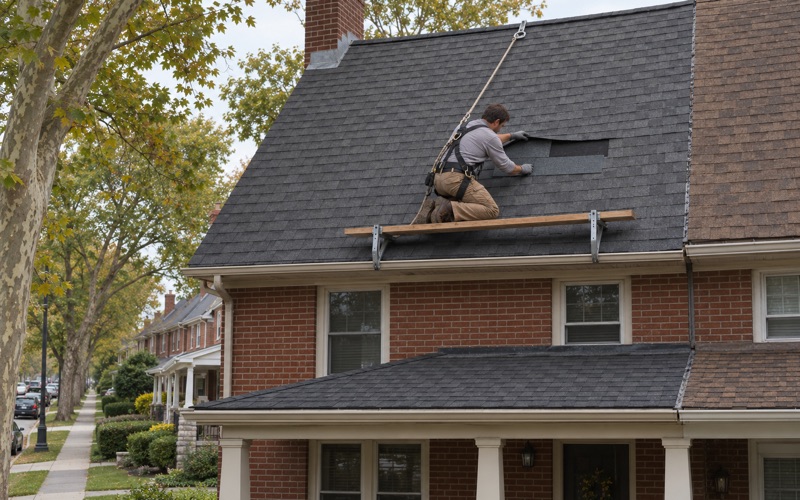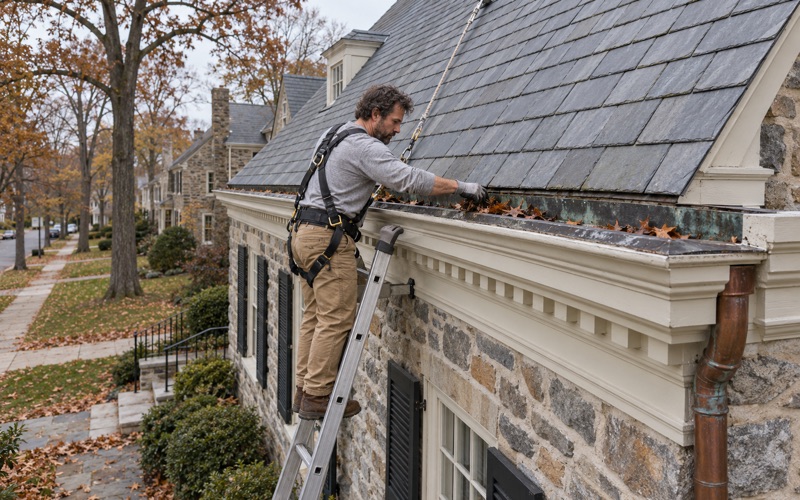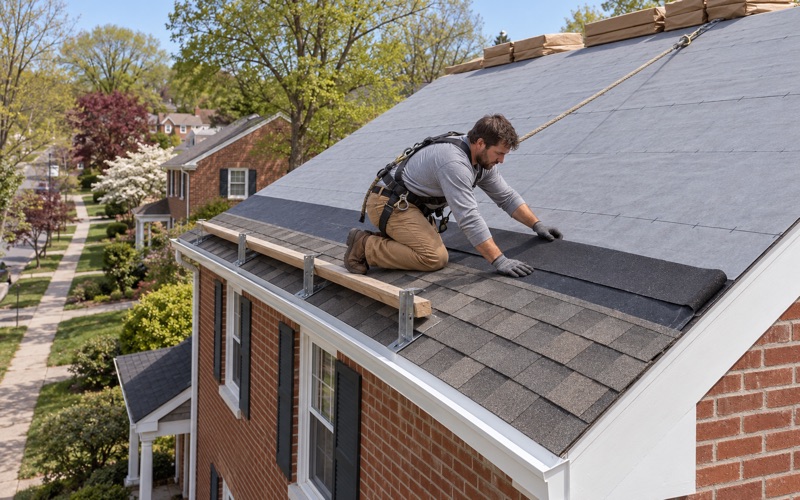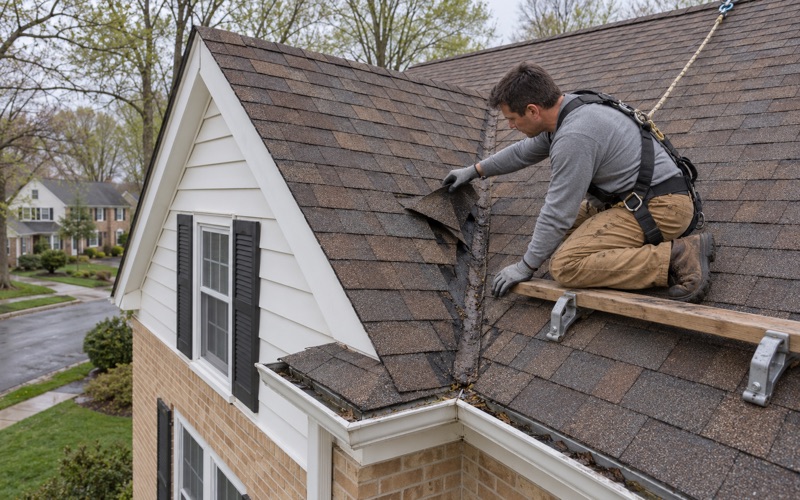
Haverford Roofing has spent more than 20 years on roofing in Easttown, and the first thing we do on any call is find out what is actually wrong. A leak gets a look from inside the attic as well as from the roof surface, so we know where the water enters before we put a number on anything.
Once we know the cause, you get a plain answer on whether the roof can be repaired. Replacement only comes up when repair would not hold, and when it does, the written scope breaks out tear-off, decking, underlayment, flashing, ventilation and gutters as separate lines so you can set our estimate beside anyone else’s and compare them item by item.
Easttown work has a few local wrinkles worth knowing before a crew arrives. Every township we serve writes its own re-roof permit rule, so we confirm the rule for the property’s own township before we price the job. That matters more here than most places, because the township covers houses, twins and the commercial buildings along its main business street.
Berwyn’s Lancaster Avenue Village and Its Roof Rules
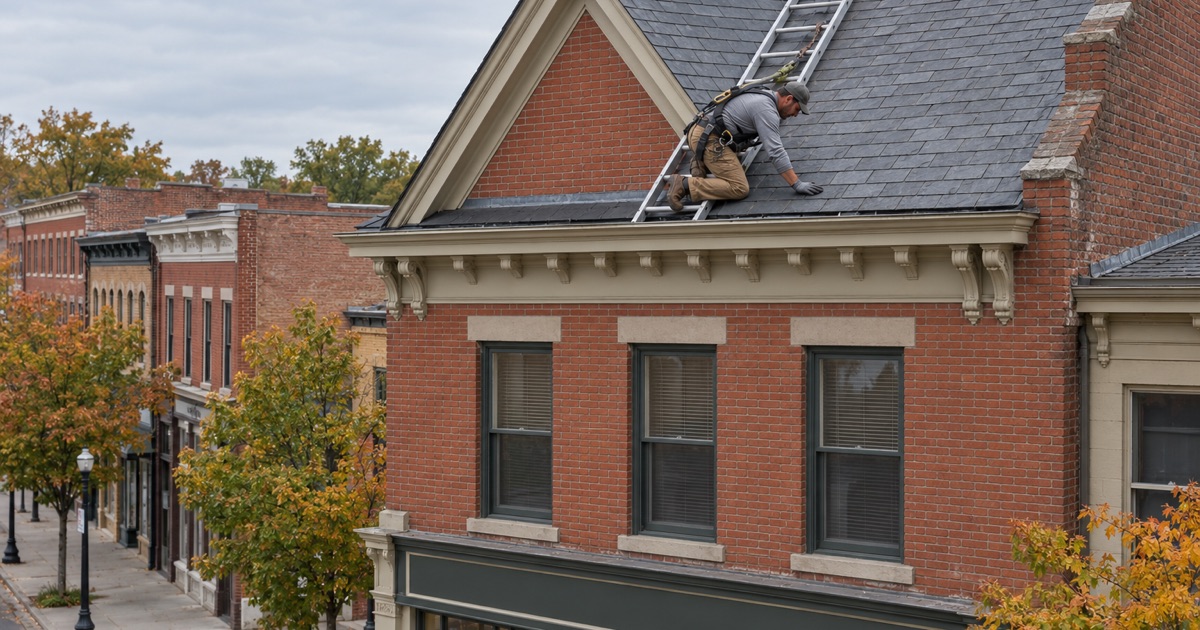
Easttown Township, in Chester County, is made up mostly of parts of Devon and Berwyn, with a small corner carrying a Paoli address. The stretch of Lancaster Avenue that runs through Berwyn is zoned as a village of its own under Article V of the township zoning code, and that is the part of Easttown where roof shape shows up in the zoning text itself.
Three Village Districts
Article V divides the Berwyn village into three zones: a Village Business District, a Village Transition District and a Village Residential District. Together they make up what the code calls the Village of Berwyn districts. If a building you own falls inside any of the three, the rules that shaped it differ from those covering a detached house elsewhere in Easttown.
The township states its purpose plainly: to encourage economic development “while promoting the traditional main street development form along Lancaster Avenue,” and to protect existing structures of historical or architectural significance. For the owner of an older building on the avenue, that reads as a reason to keep the existing roof sound rather than let it slide.
Street Walls, a Fourth Story and the 14:12 Cap
In the business district, the building height table in section 455-24J sets a two-story minimum and caps the street wall at three stories and 42 feet. A building can reach four stories and 55 feet in total. The fourth story must step back 10 feet from the street wall, unless it is built within the roof architecture, in which case no stepback is required.
That exception comes with a condition. When the fourth story sits inside the roof, the code says the roof pitch shall not exceed a slope of 14:12, meaning 14 inches of rise for every 12 inches of run. Easttown, in other words, writes the form of the roof into its main-street rules rather than leaving it to the designer.
What the Cap Does and Does Not Govern
The 14:12 figure is a zoning height standard for buildings that put a fourth story under the roof. It describes how a new or expanded building may be shaped, and it is not a rule about replacing the covering on a roof that already exists. A re-roof keeps the pitch the building already has, so the cap is background rather than a hurdle for most owners.
Where it does matter is on a project that changes the roof’s shape, such as adding usable space under a new roof on a business-district building. That is a design and zoning question for the owner’s architect and the township, and we would want those decisions settled before we price the roofing that goes on top.
Looking for roofing closer to Plymouth Township? See Roofing in Plymouth Township.
Storefront Buildings and the Roofs Above Them
A commercial building on Lancaster Avenue in Berwyn can have a shop at street level and other tenants above, and the roof protects all of them at once. We do not assume what any particular storefront is covered with. Main-street roofs vary from one property to the next, so the first visit is about seeing what is actually up there before anything is recommended.
Tracing a Leak Through an Occupied Building
A stain on a second-floor ceiling above a shop rarely sits directly under the opening that caused it. Water runs along decking, framing and flashing before it shows, so we check the attic or roof cavity as well as the surface above. On a building with tenants, that inspection also tells the owner which space needs access before the repair day.
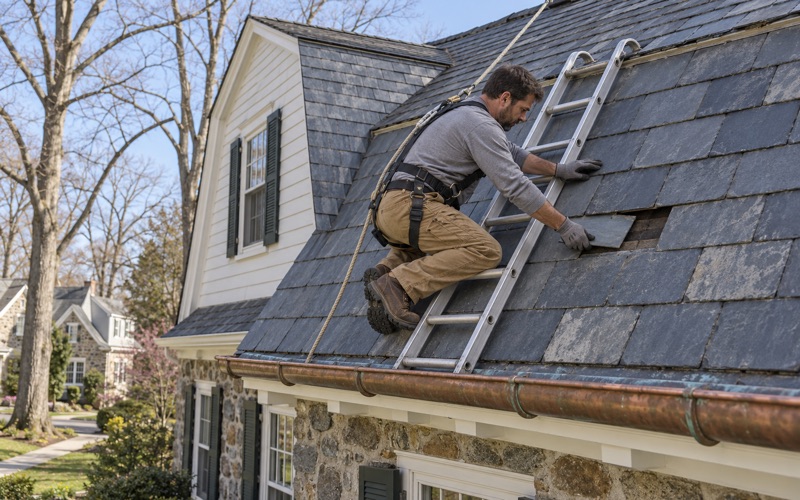
We say whether the problem is a repair before we talk about anything larger. A failed flashing joint or a worn section near a wall can often be fixed on its own, and an owner deserves to hear that first.
Party Walls and Neighboring Roofs
Where a building shares a wall with its neighbor, the roof edge at that wall is a common entry point for water. We plan that junction with the adjoining roof in mind, so new flashing ties into what is next door instead of stopping short of it. The same thinking applies to Easttown’s attached houses, which number 467 in the latest Census survey.
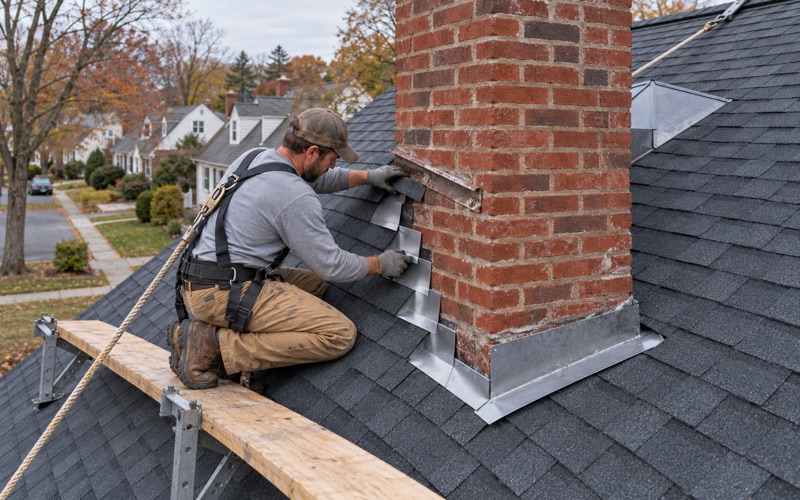
Flashing along those walls, at chimneys and around any rooftop penetration is replaced with the roof rather than reused under new material. Old step and counter flashing that has already been bent, sealed and resealed rarely seats properly a second time.
Keeping the Street Open for Business
Roof work over an operating shop means planning around customers on the sidewalk below. We clean the work area at the end of every day, including a magnet sweep for roofing nails, so the entrance, sidewalk and any rear lot are clear when the business opens the next morning.
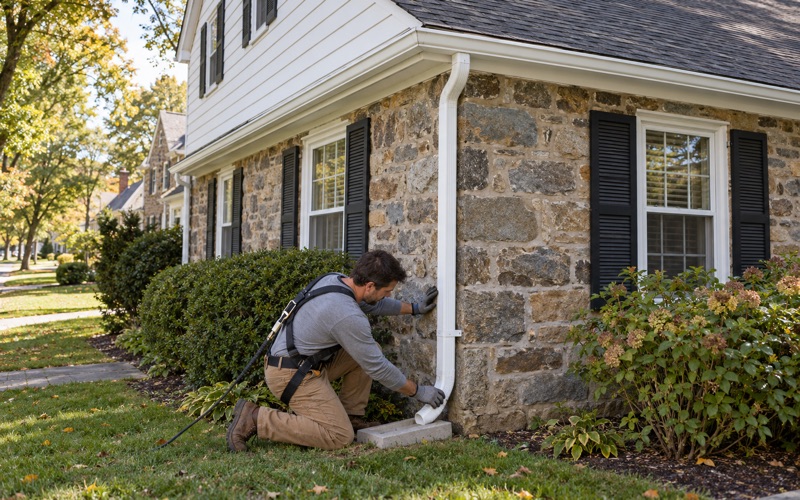
Gutters and downspouts get sized and pitched along with the roof, not added as an afterthought. On a building that fronts a public sidewalk, where the water lands after it leaves the roof is part of the job.
Re-Roofing a Commercial Building in Berwyn or Devon
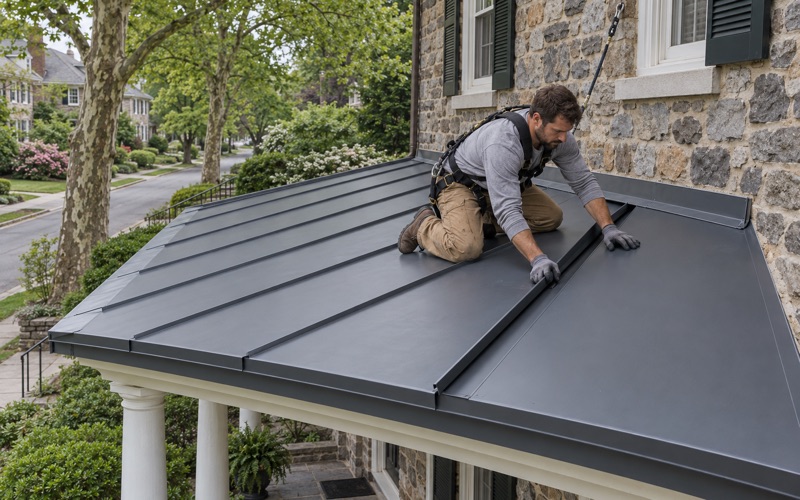
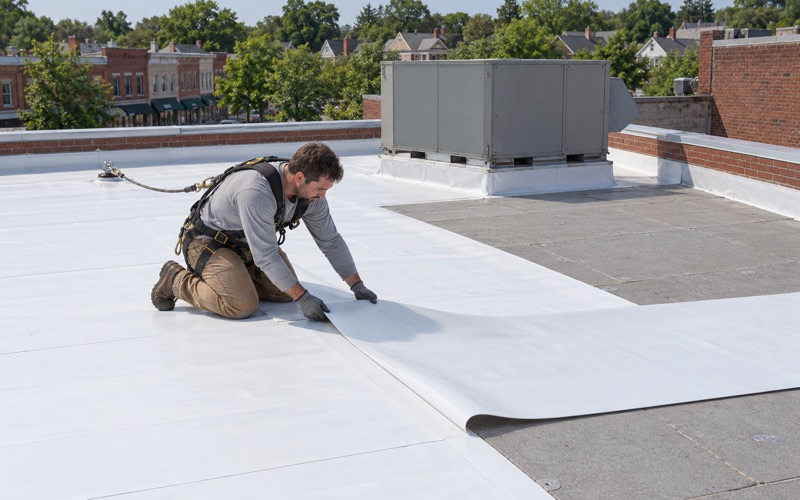
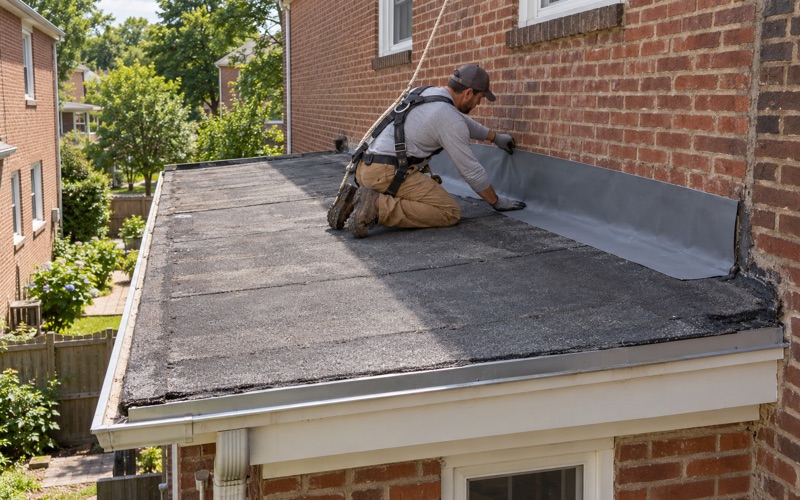
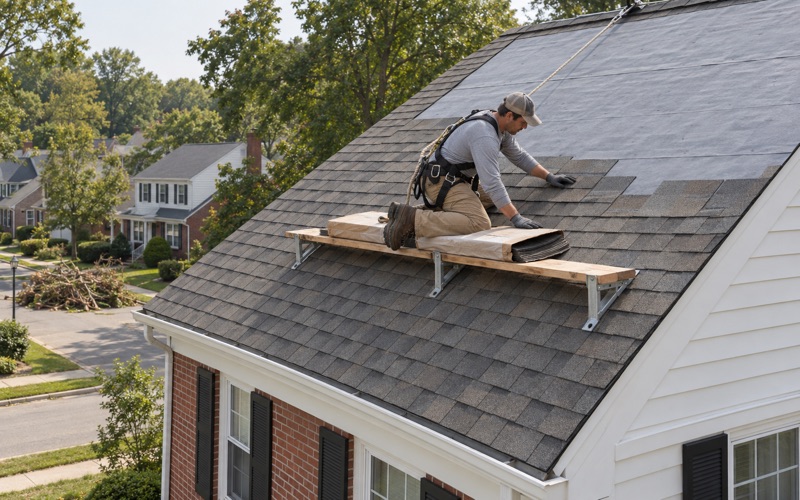
When a repair will not hold, the replacement plan starts with the roof’s own slope and the material it carries now. Low-slope sections on commercial buildings commonly take EPDM rubber, TPO or modified bitumen, while pitched sections take architectural shingles or standing seam metal. We match the system to the roof we find, not to a template.
Decking Found Under the Old Roof
Nobody can see the decking until the old covering comes off. When we find damaged sheathing, we photograph it and show the owner before replacing anything, and the per-sheet price is already written into the contract. That keeps a surprise from turning into a dispute halfway through the job.
Older buildings tend to hide more of this than newer ones. In Easttown, 638 housing units, about 15.5 percent of the total, were built in 1939 or earlier, so a roof that has been covered more than once is a real possibility on the older stock.
Devon and Its Overlay District
Devon has its own zoning layer. The township added a Devon Center Overlay District by Ordinance 427-16 in December 2016, and a proposal for a unified retail and restaurant development of 49,220 square feet at Lancaster Avenue and Devon Boulevard, near South Waterloo Road, sought conditional-use approval under it.
We do not treat a zoning overlay as a roofing permit, and the overlay is not a reason to skip one. For an owner of a commercial property in Devon, the practical step is the same as in Berwyn: confirm the township’s building-permit requirement for the roof work before the crew is booked.
Solar Panels on the Roof
If panels are mounted on the roof being replaced, their removal and reinstallation go into the schedule from the start. Discovering the reinstall question on the morning of tear-off costs a building owner days, and on a commercial property those days can mean a tenant working under a tarp.
Easttown’s Permit for Roof Work on Lancaster Avenue
A re-roof on a Berwyn storefront building is Easttown building-permit work, the same as a re-roof on a house. The township’s Permit Guidance lists building permits as including mechanical and re-roof work, and it gives roof replacement or repair as an example of a project that needs one.
Fees and Timing
The township FAQ says all building permits, re-roofing included, carry an application fee. Published summaries of that FAQ list a residential application fee of $75 as of December 2022 and a permit fee of 2 percent of project cost, so we confirm the current figures with the township before they go into an estimate.
A permit also has a clock on it. Under the same FAQ, a building permit becomes invalid unless the authorized work begins within 180 days, which matters when a commercial owner wants to line the job up around a lease or a slow season.
Emergency Repairs
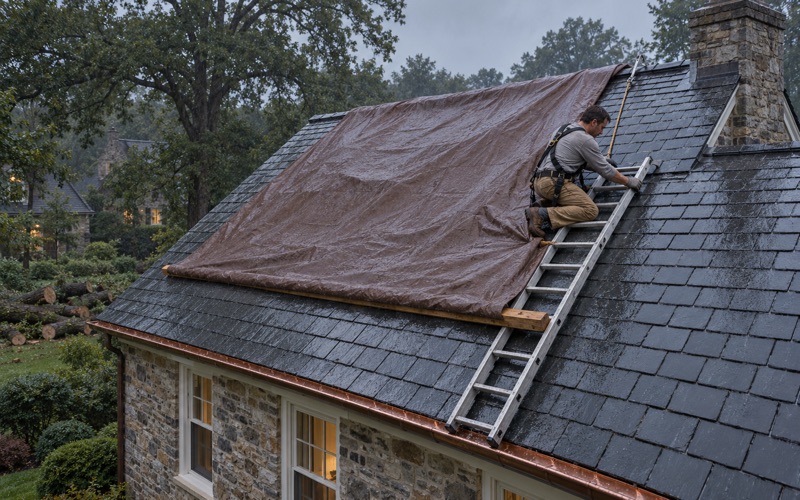
Easttown allows emergency repairs to be made without first applying for a permit, provided the application follows within three business days. After a storm opens a roof over an occupied building, we can make it watertight first and then file the paperwork inside that window.
Storm damage gets photographed and written up for the owner’s own insurance claim. If you ask, our crew will meet the adjuster on site, but the claim itself stays yours to negotiate.
Berwyn Addresses That Are Not in Easttown
Berwyn is a Census-designated place that extends beyond Easttown into a neighboring township, and that township’s rules are its own. A Berwyn mailing address does not settle which permit applies, so we confirm the property’s actual township before pricing the work.
Contracts and Deposits
Our contracts follow Pennsylvania’s Home Improvement Consumer Protection Act, including the three-business-day cancellation notice and a deposit kept within the legal limit. Combined with the itemized scope and the per-sheet decking price, that gives an Easttown owner a clear record of what was agreed before any tear-off begins.
- 20+ Years in Business
- Attic Checked on Every Leak
- Line-Item Written Scopes