Haverford Roofing has spent more than 20 years on roofing in East Whiteland and the rest of our service area, and the first thing we ask on any call here is who owns the roof. For a house, that answer is usually simple. For a large apartment building, it is a management decision, and we plan the work that way from the first visit.
We start every job the same way. When a leak brings us out, we check the attic or top-floor ceiling space as well as the roof surface, so the water is followed to its real entry point before a price is written. Then we tell the owner plainly whether a repair will hold, and only after that do we talk about replacement.
Our written scopes break the job into separate lines for tear-off, decking, underlayment, flashing, ventilation and gutters. That format matters to a homeowner comparing two bids, and it matters even more to a property manager who has to defend a number to an owner or a board. Every line can be checked against another contractor’s estimate, item by item.
East Whiteland’s Apartment Buildings and Who Decides on the Roof
East Whiteland’s rental housing is weighted toward big buildings. Census figures from the 2024 American Community Survey count 610 housing units in buildings of 50 or more units, and 603 of those are rented. Across the township, 1,584 of 5,737 housing units, or 27.6%, sit in buildings of five or more units.
That shapes how a roofing call comes in. In a building of that size, a tenant who sees a stain on the ceiling reports it to the office, and the office decides what happens next. The roof is the owner’s asset and the manager’s responsibility, and it is priced and scheduled like a commercial-scale project rather than a single-family job.
The Property Manager Is Our Point of Contact
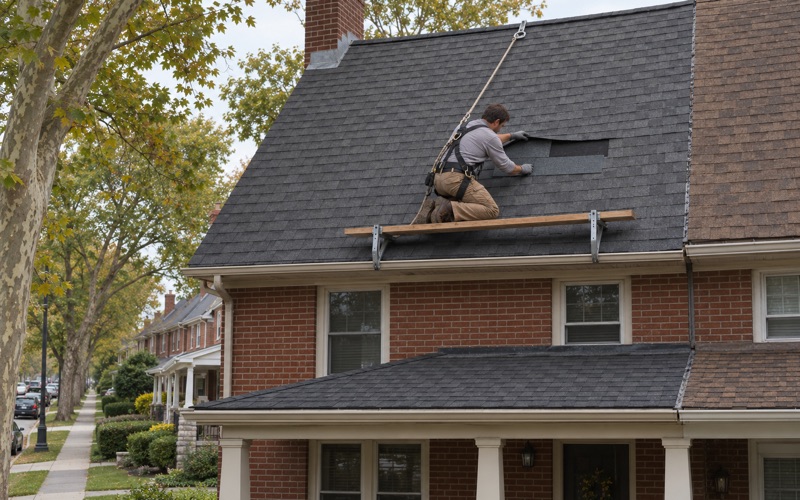
When we work on an apartment building, we deal with the property manager or the owner’s representative, not with individual tenants. We walk the roof with that person, trace any active leak back from the top-floor unit where it showed up, and put our findings in writing. Photos go with the report so the manager can forward them up the chain without us in the room.
A manager usually needs two answers: whether the roof can be repaired for now, and when a full replacement belongs in the capital budget. We give the repair answer first and honestly. If a few seasons of patching would only defer a bigger bill, we say so, and we lay out what a re-roof would involve so the budget conversation starts with real numbers.
Owners, Boards and Tenants
Tenants in these buildings feel a roof problem first but rarely have any say in fixing it. We keep that in mind on site: a crew working over occupied apartments is a crew working over someone’s home, and the manager should know exactly when we will be up there. The decision itself stays with the people who own the building.
Not every East Whiteland rental is in a large building. The same census tables count 439 rented detached houses and 273 rented attached homes, where the landlord, not a management company, may be the one calling. For those owners we work the same way: attic first, repair answer before replacement, and a scope with every item on its own line.
Newer Stock Still Needs a Plan
Much of East Whiteland’s housing is recent. Census figures put 1,799 housing units, about 31.4% of the total, in buildings finished in 2010 or later. A roof only a decade or so old rarely needs replacing, but it still needs inspections, and the flashing and penetrations are where a young roof usually starts to leak.
For a manager of a newer building, the useful step is a baseline: a documented inspection now, with photos, so later changes are easy to spot. We trace any leak from the inside as well as the outside, and if a repair will solve it, that is what we recommend.
Looking for roofing closer to East Brandywine? See East Brandywine Roofing.
Four-Story Buildings on Swedesford Road
The clearest example of East Whiteland’s apartment growth sits on East Swedesford Road. Arlo, developed by LCOR at 54-58 E. Swedesford Road with a Malvern mailing address, put 244 studio to three-bedroom apartments into two 4-story buildings with a standalone clubhouse. Philadelphia Magazine reported its first tenants moving in during December 2019.
The site was earlier known as Swedesford Square Apartments, under a township conditional use decision dated 7/13/16. We have not seen what Arlo’s roofs are made of, and we would not guess. What the project does show is the direction of the township’s housing: taller, more closely spaced buildings than the two-story garden complexes of earlier decades.
A 220-Unit Proposal Next Door
In January 2025, a township public hearing notice described a conditional use application by 52 E. Swedesford Partners, LP for a 220-unit apartment complex of one- and two-bedroom units at 52 E. Swedesford Road, with about 12,000 square feet each of retail and office space. The Board of Supervisors set a possible vote for January 21, 2025.
We have not read the outcome of that application, so we treat it as a proposal and nothing more. The point for an owner is simpler. In rental buildings of this size, East Whiteland’s roof decisions are made in management offices, on capital schedules, with residents living underneath the work.
What a Four-Story Roof Changes
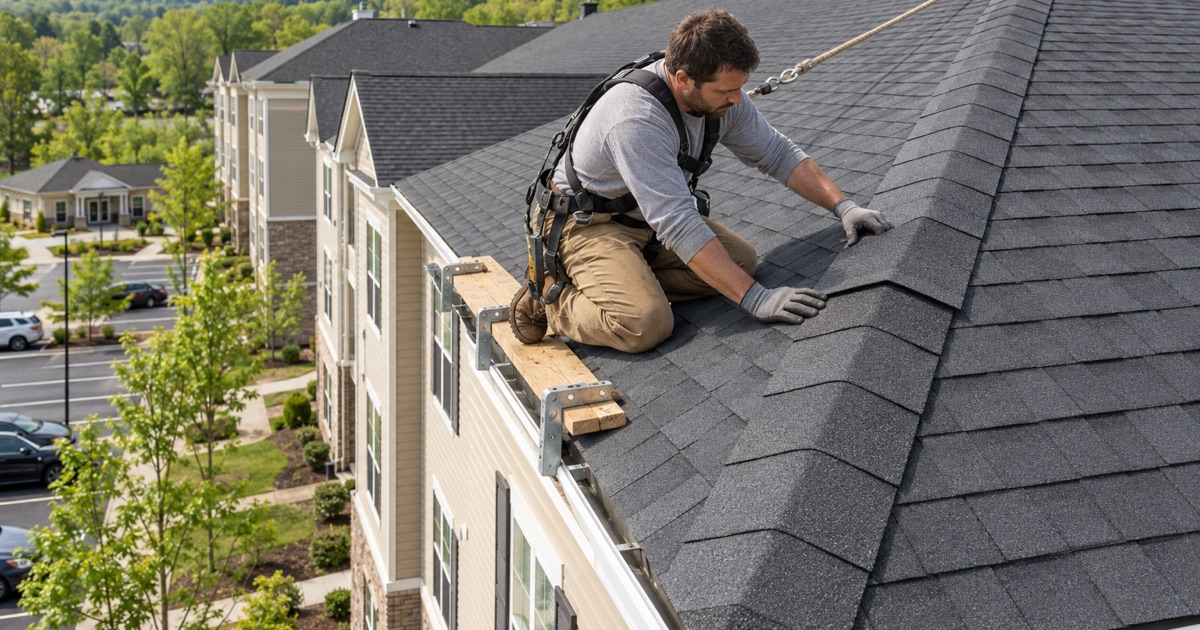
Height changes the logistics before it changes anything else. Materials have to reach the roof by hoist or lift rather than by a ladder against the eave, debris needs a controlled path down, and the staging area has to share space with parking lots and resident walkways. We plan all of that with the manager before the first day, not on it.
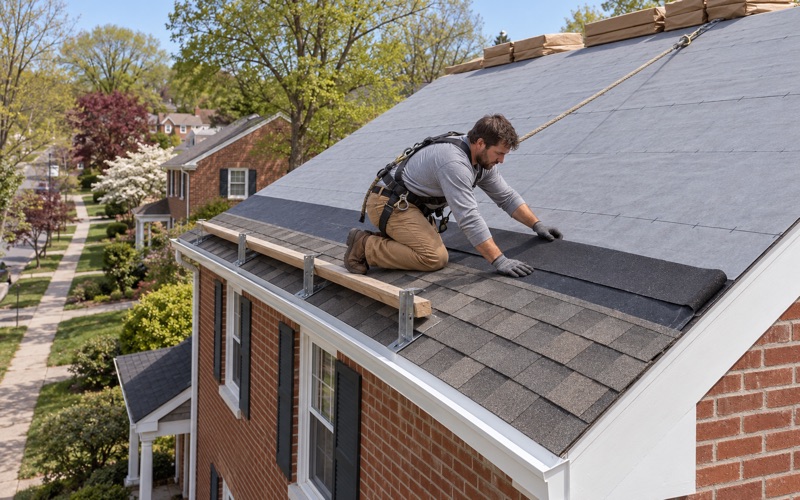
Fall protection is the other constant. OSHA’s construction rule calls for fall protection at 6 feet on residential roofing work, and on a four-story building every edge is a serious one. Our crews set that protection up as part of the job plan, and it is figured into the schedule rather than added once the crew arrives.
Planning a Multifamily Re-Roof Around Residents
Re-roofing an occupied apartment building is a different job from re-roofing an empty one. People are home during the day, cars fill the lots, and every unit on the top floor sits directly under the work. A good plan protects the building and keeps the residents informed, and the property manager is the one who carries that plan to them.
Phasing the Work Section by Section
On a large building we usually break the roof into sections, so no area is left open longer than the crew can dry it in by the end of the day. The manager gets a sequence showing which sections come first and roughly when, which lets the office warn the top-floor units under each stage before it starts.
When the old roof comes off and damaged decking shows up, we photograph it and show the owner’s representative before anything is replaced. The per-sheet price for that decking is set in the contract in advance, so a surprise under the old roof does not become a surprise on the invoice.
Flashing, Gutters and Penetrations
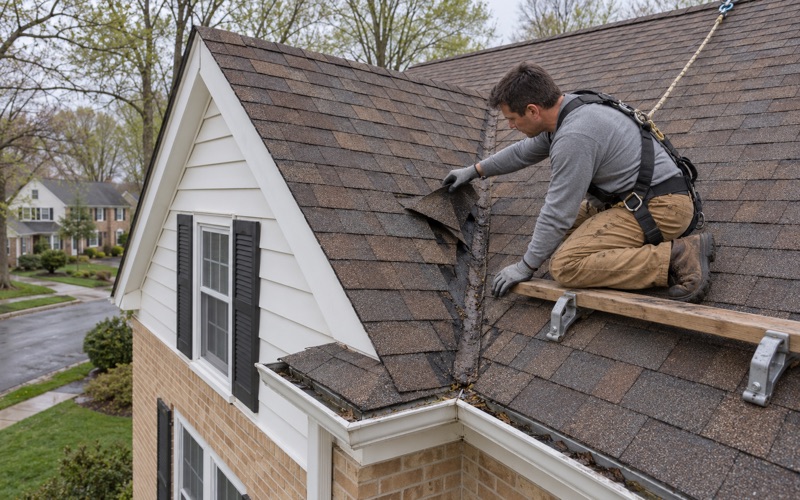
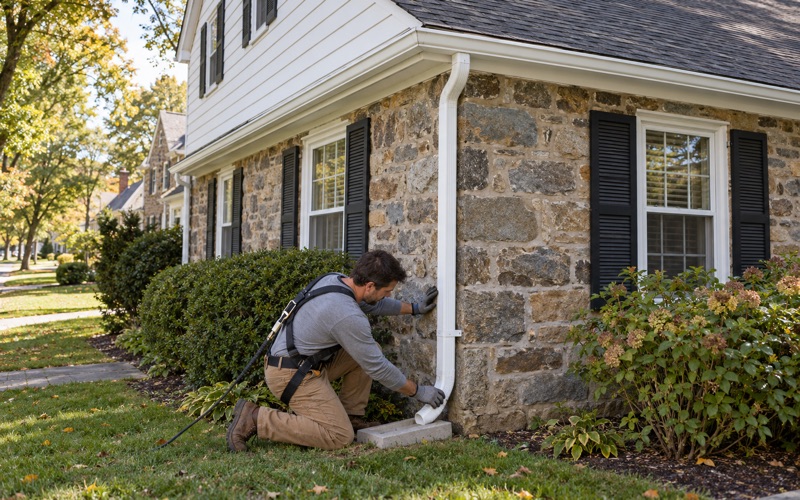
Apartment roofs tend to carry more penetrations than a house: plumbing vents for every stack of units, exhaust fans, and whatever equipment the building needs. We replace step, counter and other flashing with the new roof instead of reusing old metal under new material, and every pipe boot is part of the scope.
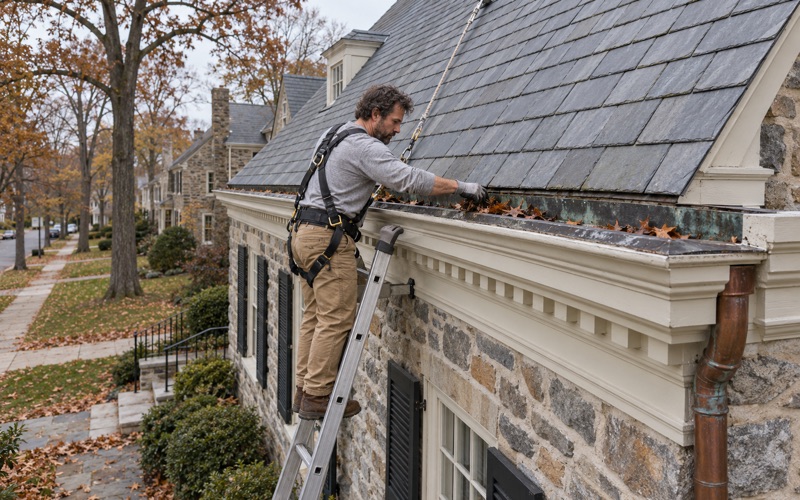
Gutters and downspouts are sized and pitched as part of the roof plan, because a long building sheds a lot of water onto entrances and paths residents use daily. At the end of every work day the crew cleans the grounds, gutters and walkways and runs a magnet sweep for roofing nails, which matters more in a parking lot full of residents’ tires.
Storm Damage on a Rental Building
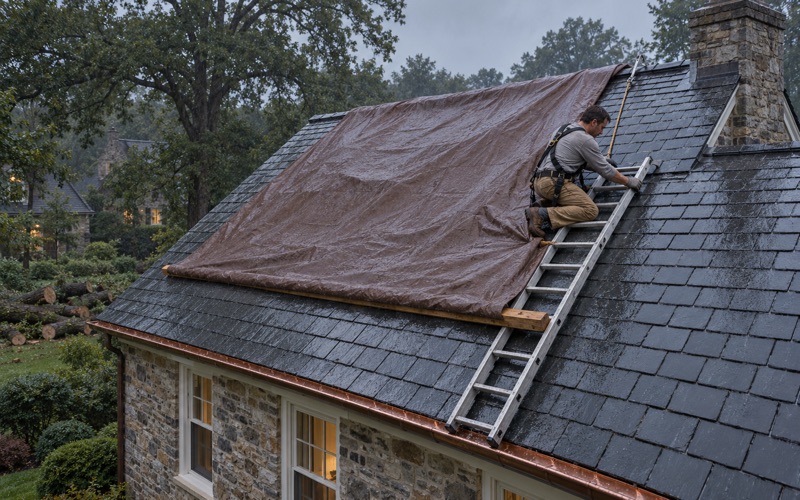
Storms reach East Whiteland too. On the evening of March 16, 2026, the Storm Prediction Center logged two reports of trees falling into houses in the township, with trees and wires down in East Malvern. Those reports gave no wind speed and no roof detail, but they are a reminder that damage can land on any building here.
After a storm we photograph the damage and write it up so the owner can file its own claim, and we will meet the insurance adjuster on site when asked. We do not negotiate the claim; that stays between the owner and the insurer. For a manager, a clear written record is what moves a claim and a repair forward together.
Permits, Fees and Contractor Registration in East Whiteland
East Whiteland’s Codes Department sets out re-roof fees in its 2026 fee schedule, revised January 2, 2026. Re-roofs are priced at 2% of the cost under both the non-residential line, with a $100.00 minimum, and the residential line for one- and two-family dwellings, with a $50.00 minimum. A state education fee is added to construction permits.
Where an Apartment Re-Roof Fits on the Schedule
The residential re-roof line covers only one- and two-family dwellings. Reading the schedule’s headings, a re-roof on an apartment building would fall under the non-residential line instead, and the schedule separately lists roofs on non-residential uses among work priced at 2% of total cost. That is our reading of the headings, not a statement from the township, so we confirm it with the Codes Department for each building.
The schedule prices the work; it does not by itself say which re-roofs need a permit. Every township in our service area sets its own rule, so we check East Whiteland’s requirement for the specific building before we price the job, and the answer goes into the written scope.
Contractor Registration for Commercial Work
The township’s contractor page states that all commercial work requires contractor registration for all contractors working on site. The all-trades registration fee is $75.00 per calendar year, paid before permits are issued. A contractor pulling permits for home improvement work does not have to register if it provides a copy of its Pennsylvania Home Improvement Contractor registration.
For a property manager, that line is worth checking on every bid. A multifamily re-roof is a commercial-scale project, so it is fair to ask any contractor proposing one whether it holds that township registration. Our own contracts follow Pennsylvania’s home improvement law where it applies, with the three-business-day cancellation notice and deposits held within the legal limit.
- 20+ Years in Business
- Attic Checked on Every Leak
- Line-Item Written Scopes