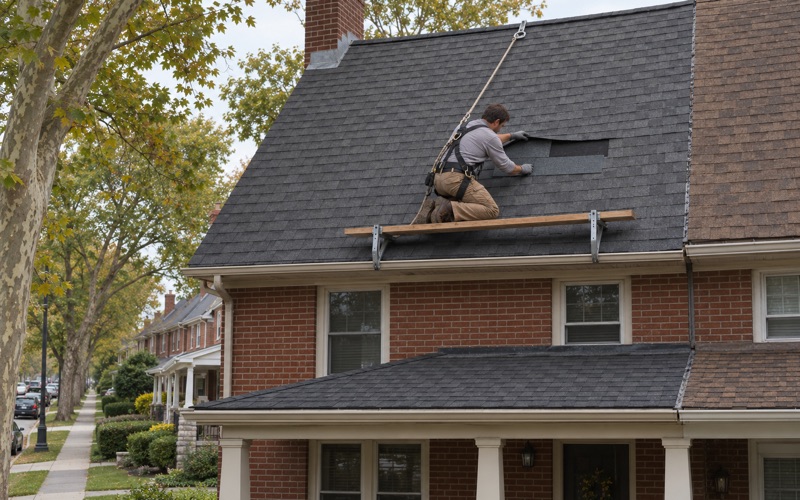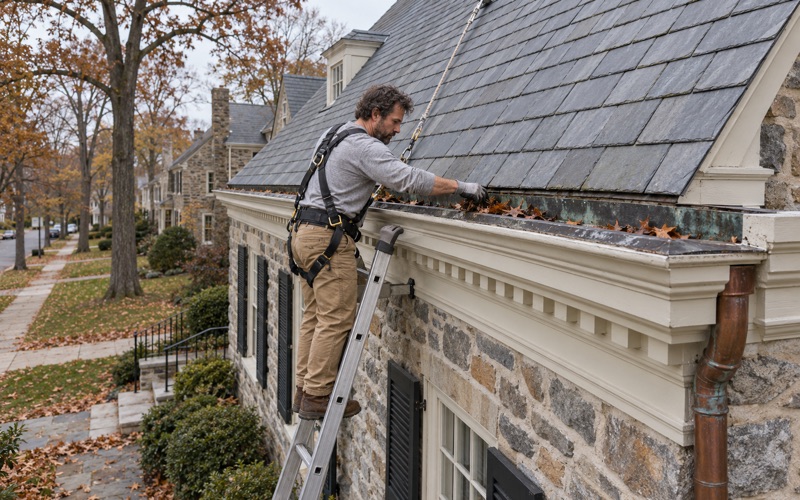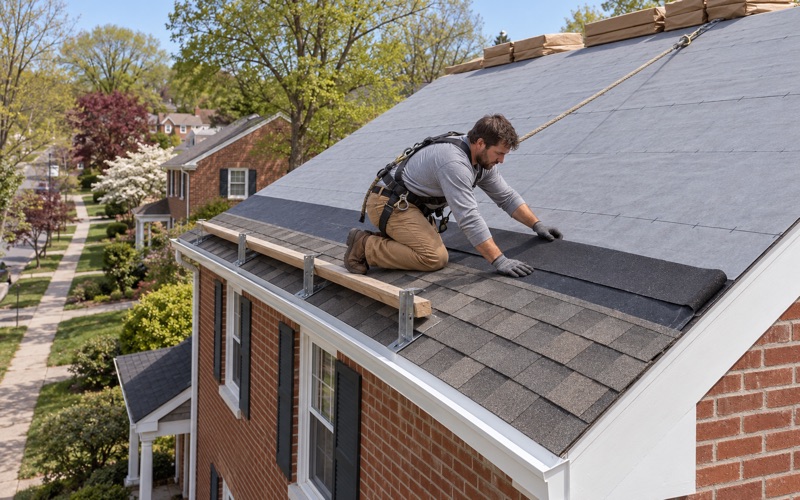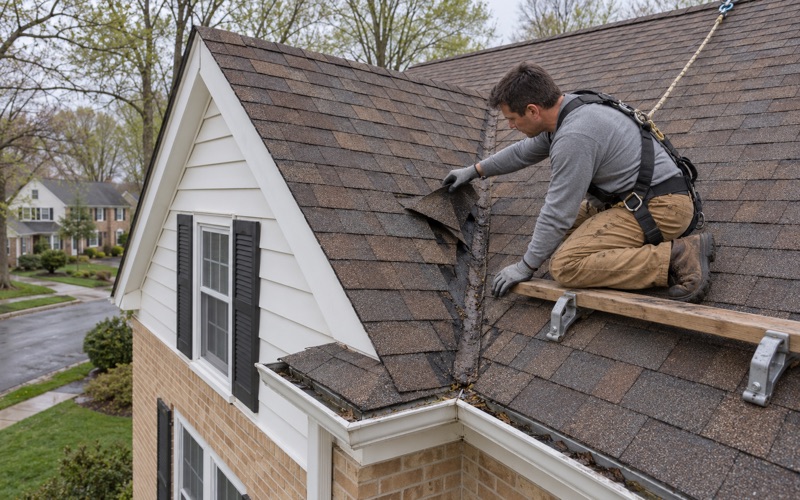
Haverford Roofing brings more than 20 years of work to roofing in East Norriton, and on a house with a flat or low-slope section the decision that matters most is not the shingle color. It is how to cover that section, whether it sits over a porch, a rear addition or a sunroom, where shingles do not belong. In this township, that choice changes the paperwork as well as the price.
A torch-applied membrane brings a second township permit into the job, on top of the ordinary building permit for the roof. A self-adhered or cold-applied membrane does not use an open flame at all. We lay out both options, with what each costs to install and to permit, before anyone signs anything, so the material is chosen with the whole cost in view.
The same approach runs through the rest of a roof. Every leak call starts in the attic as well as on the roof deck, so we find where water actually enters before quoting a fix. If a repair will hold, we say so before replacement comes up, and our written scopes break tear-off, decking, underlayment, flashing, ventilation and gutters into separate lines.
Two Permits for a Torch-Down Roof in East Norriton
The Building Permit for the Roof Itself
East Norriton treats re-roofing as permit work rather than leaving it to the owner’s judgment. The township’s fee schedule, effective January 5, 2026, prices residential roofing under the same line as siding and stucco, and its building permit application carries a line for the number of squares being roofed. That count is the basis for the fee, so it is the first number we pin down on any estimate here.
The same application asks for the contractor’s PA Contractor Registration number, and it notes that the applicant may be asked for additional documentation, truss drawings among the examples. We fill in the roofing section from our own measurements so the square count on the permit matches the square count on the contract. A mismatch between the two is an easy thing for a homeowner to miss and a hard thing to explain later.
The Hot Work Permit for Open Flame
The second permit sits in a different part of the fee schedule, among the fire code operational permits. Section 105.6.23, hot work operations, lists several activities that require it, and item five reads: application of roof coverings with the use of an open-flame device. It carries its own fee, listed apart from the building permit line for roofing.
The schedule prints an exception for work done under a construction permit, but it sits under item two, which covers portable hot work equipment used inside a structure, not under the roof-covering item. We read the township’s list as written and do not assume one permit stands in for the other. When a torch is part of the plan, both fees go on the estimate.
Why the Membrane Choice Comes First
Because the second permit follows the flame rather than the roof, the material decision has to be made before the permit paperwork is started. A shingled main roof with no torch work carries the building permit alone. Add a torch-applied section over a porch or addition, and the job takes on the hot work permit as well, even if that section is only a few squares.
That is why we look at the low-slope sections early in an East Norriton estimate, usually on the first visit. We check the pitch, the drainage, the condition of the deck and what meets the wall, then explain which membrane suits it. The owner gets the comparison in writing before deciding, not a single price that has already made the choice for them.
Looking for roofing closer to Upper Chichester? See Upper Chichester Roofing.
Torch-Applied or Self-Adhered on Flat and Low-Slope Sections
Torch-Down Modified Bitumen
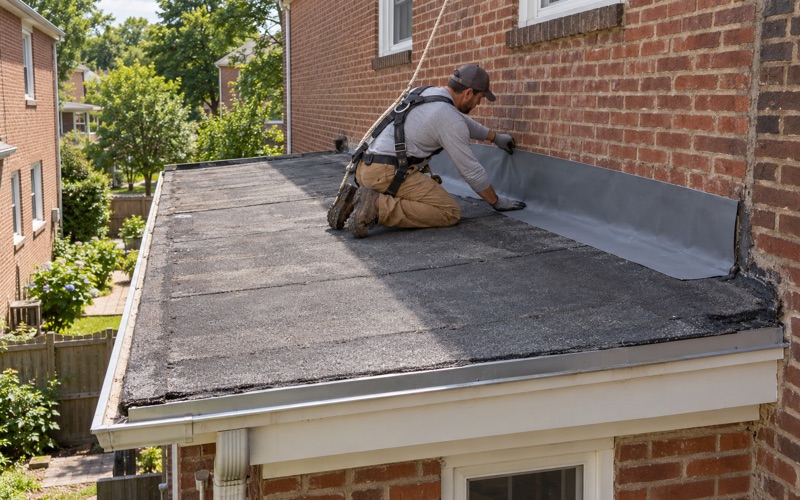
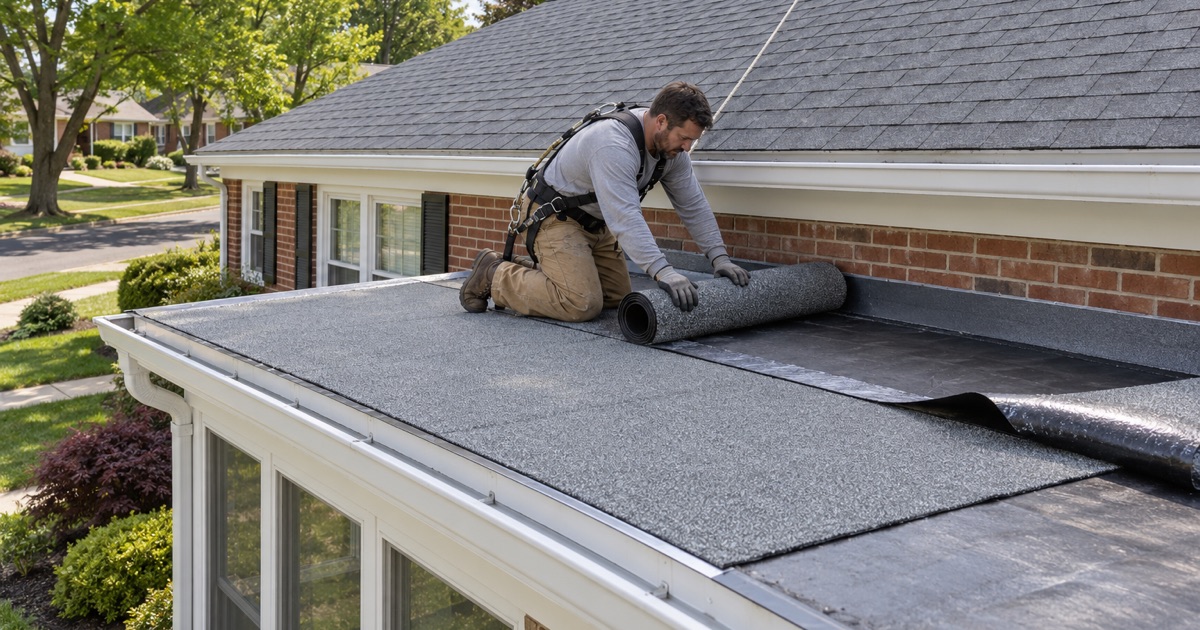
Torch-down modified bitumen is a rolled roofing made of asphalt blended with SBS or APP polymers and reinforced with a mat. The installer heats the underside of each roll with a propane torch until the asphalt flows, then presses it onto the base sheet so the layers fuse. Done well, it forms a tough, continuous surface that handles foot traffic and standing water better than shingles ever could.
The open flame is also its drawback. On a residential job the torch works close to wood fascia, siding and the framing of the wall the porch roof meets, and seams at those edges need the most heat. That flame is what puts the work on East Norriton’s hot work list, and it is why we weigh torch-down carefully against flame-free membranes on a house.
Self-Adhered Membranes
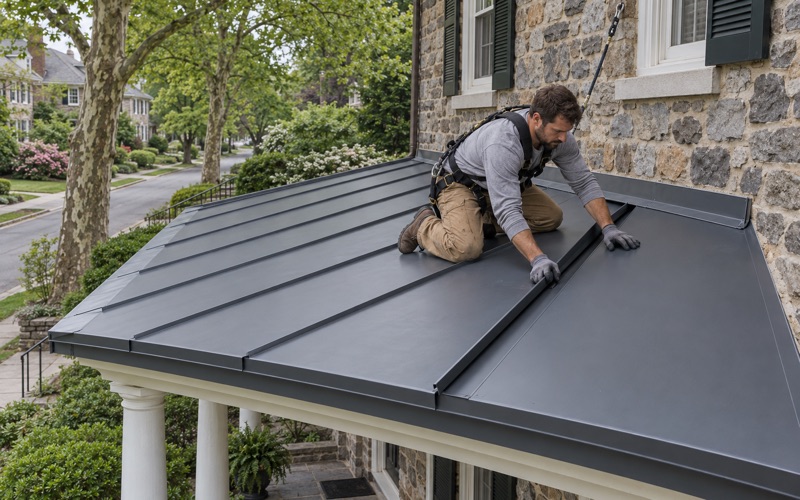
A self-adhered membrane does the same job without a torch. Its underside carries a factory-applied adhesive under a release film, so the installer peels the film and rolls the sheet into place, then seals the laps with pressure and, where the manufacturer calls for it, a primer. Self-adhered modified bitumen cap and base sheets are common on porch roofs and small additions.
The tradeoffs are temperature and preparation. Adhesive bonds want a clean, dry deck and mild weather, so a self-adhered section is scheduled for a stretch of days that suits it rather than squeezed into a cold morning. In return, no open-flame device ever comes onto the job, which is the point of choosing it on a house with wood trim close to the roof.
Cold-Applied and Single-Ply Options
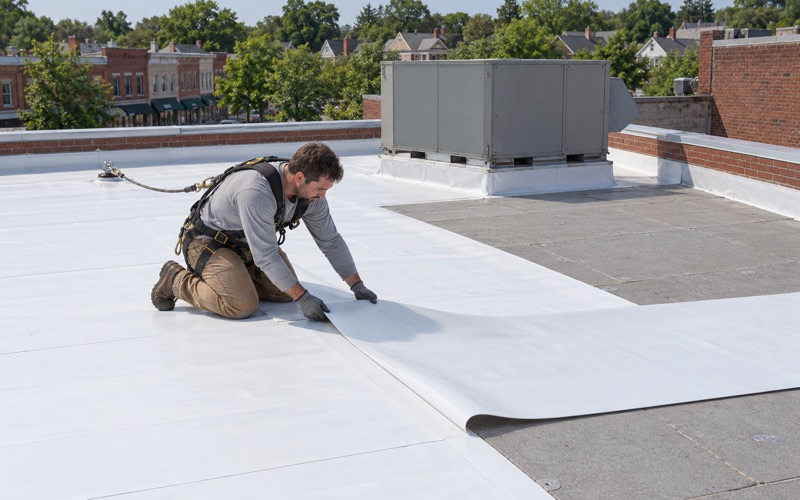
Cold-applied systems set modified bitumen sheets in a liquid adhesive or build the membrane from coats of liquid material with reinforcing fabric between them. Single-ply EPDM rubber, and TPO or PVC where the section is larger, are other flame-free routes, with EPDM glued down and TPO or PVC seams welded with hot air rather than a torch.
Which one fits depends on the section itself: its pitch, how water leaves it, what penetrates it and how it meets the main roof and walls. We price the realistic options side by side, with the permit lines included, and say plainly which one we would choose for that section and why. If the existing section can be repaired instead, that answer comes first.
What East Norriton Charges per Square
The Per-Square Rate and the Minimum
The 2026 schedule sets residential roofing at $3.50 per square, with a $150 minimum, and adds a $75 permit application fee. A square is 100 square feet of roof surface, the same unit roofers use to order material and price labor. The commercial table lists the same rate and minimum.
The minimum often matters more than the rate. At $3.50 a square, a roof has to pass about 43 squares before the per-square figure climbs above $150, so a porch section, a rear addition or a full roof on a modest house all land on the minimum. With the application fee, that puts the building permit side of many jobs at $225.
Adding the Torch to the Total
Put a torch-applied section on the same job and the $100 hot work permit stacks on top. For a house at the minimum, that is $325 in township fees rather than $225, before any failed-inspection charge. The difference is not large against the price of a roof, but it is real, and it belongs on the estimate where the owner can see it.
We list permit fees as their own lines in every written scope. That way two estimates for the same East Norriton house can be compared item by item, and a lower bid that quietly leaves out the hot work permit shows up as a gap instead of a bargain. It also keeps the permit cost from hiding inside a general overhead figure.
Where the Paperwork Goes
The building permit application is a township form, addressed to the township building at 2501 Stanbridge Street, phone 610-275-2800. Code Enforcement lists a Building Inspector and a Permits/Inspections Clerk, and the township’s codes in effect include the 2018 IRC, IBC and IEBC.
Each township we serve sets its own re-roof permit rule, and we never carry one township’s rule into another. We confirm the rule for the house’s own municipality before the job is priced, so an East Norriton estimate reflects this township’s fee schedule and forms rather than habits from somewhere else.
Inspections, Failed Inspections and Permit Timing
When an Inspection Fails
East Norriton’s schedule charges $100 for each failed inspection, so a roof that has to be inspected twice costs more than the permit itself suggested. On a re-roof, the details that matter most are the ones that disappear under the next layer: ice barrier at the eaves, drip edge along the rakes, and flashing at walls and chimneys.
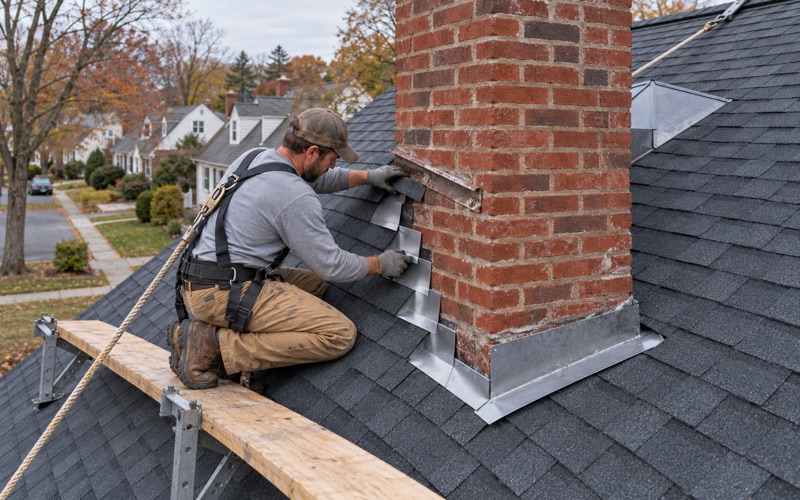
We replace step, counter and chimney flashing with the roof instead of bending old metal back into place under new material. Where the old roof comes off and the decking underneath is damaged, we photograph it and show the owner before replacing it, at the per-sheet price already written into the contract. Nothing about the deck is a surprise on the invoice.
Starting Without a Permit
The same schedule sets the penalty for failing to obtain a permit at twice the normal permit fee, at the discretion of the building code official. Skipping the filing does not save that fee; it risks doubling it. We file before the tear-off starts and give the owner a copy of the permit.
If a job runs long, the schedule allows a permit extension for 50% of the original permit fee, with a $125 minimum, per request. Weather on flat and low-slope sections can push a start date, especially for adhesive-set membranes, so we build realistic timing into the schedule rather than counting on an extension.
Planning Around East Norriton’s Older Houses
Much of the township’s housing dates from the middle of the last century: Census estimates count 1,270 housing units built in the 1950s and 1,118 in the 1960s. On a house that age, we expect to find earlier work under the current roof, and we check for it before quoting rather than discovering it during tear-off.
The township also has 858 attached homes, and on a twin or row house the roof is planned with the neighbor’s roof and the shared wall in mind, especially where a torch would work near the party line. Contracts follow Pennsylvania’s home improvement law, with the three-business-day cancellation notice. At the end of each day we clean the driveway, yard and gutters and run a magnet sweep for nails.
- 20+ Years in Business
- Attic Checked on Every Leak
- Line-Item Written Scopes