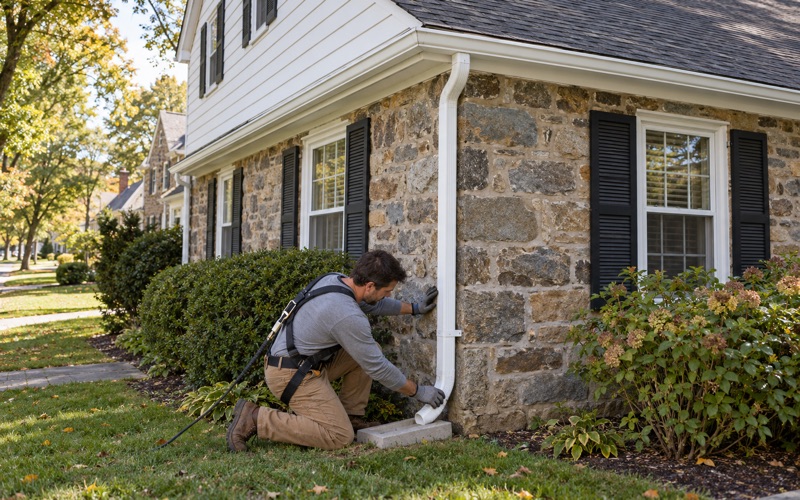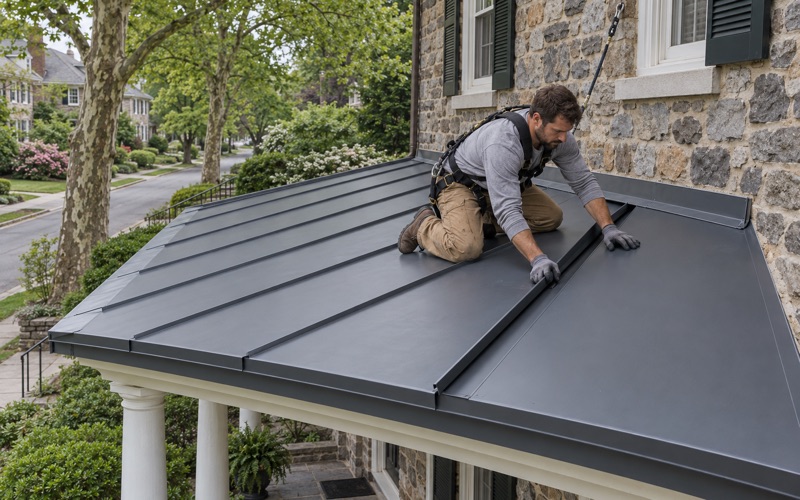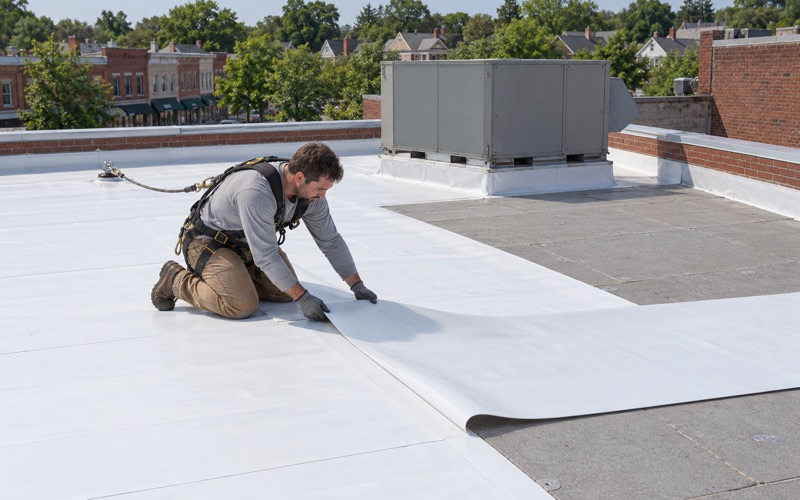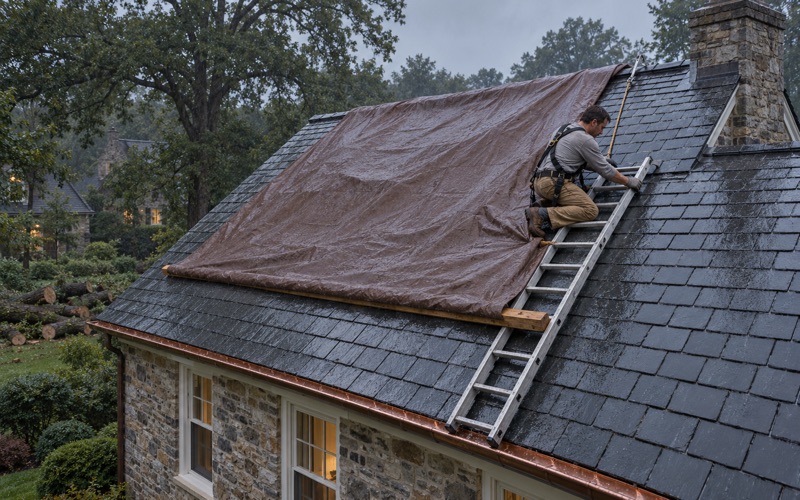
Haverford Roofing brings more than 20 years in the trade to roofing in East Goshen, and the first thing we do on any job here is find out who has a say in it. On a detached house that is usually the owner and the township. On an attached home inside a 55+ community, the list can be longer, and we sort that out before anyone climbs a ladder.
Every leak we look at gets checked from the attic as well as from the roof surface, because water rarely enters where the stain appears. Once we know where it gets in, we tell you plainly whether a repair will hold, and only then do we talk about replacement. That order matters more on a shared roof, where one unit’s leak can start above the house next door.
Our written scopes break the job into separate lines for tear-off, decking, underlayment, flashing, ventilation and gutters. That format helps any owner compare two bids, and it helps a village association read exactly what is being proposed on a building it may have a stake in. Because each township in our service area sets its own re-roof permit rule, we confirm East Goshen’s before we price the work.
Roofing in Hershey’s Mill and East Goshen’s 55+ Villages
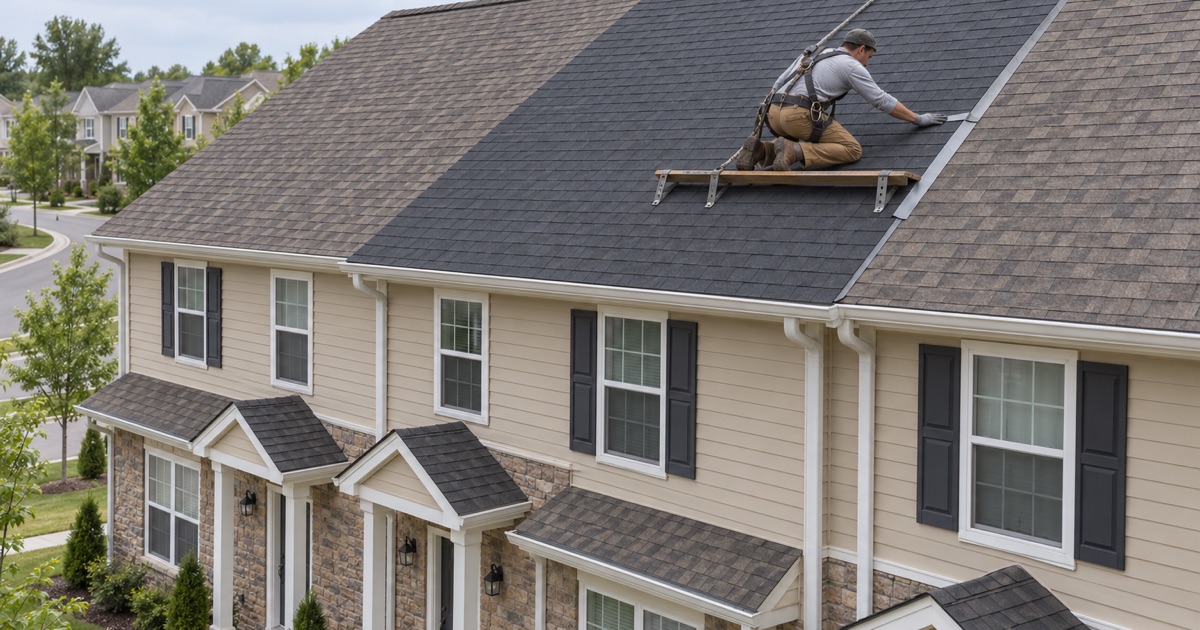
East Goshen Township is a Chester County township of 18,421 people at the 2020 census, and a large share of its housing went up in the 1970s and 1980s. Census estimates put 4,715 of its 9,073 housing units in that twenty-year span, and 2,303 of the total are single-family attached homes. Those numbers explain a good deal of the roofing work we are asked about here.
A Gated Community of 1,720 Attached Homes
Hershey’s Mill is a gated 55+ community in East Goshen with about 1,720 attached homes. Development began in the late 1970s and was completed in 2005, with multiple builders working across 25 separate villages. Every home there is a resale, so the roof a buyer inherits may be original or may have been replaced along the way.
Listing sites describe the community as having low-maintenance exteriors, but that phrase does not say who maintains them. We treat it as a question to answer, not an answer. A roof that looks the same as its neighbors from the street can sit under very different arrangements depending on which village it belongs to.
Why the Age Spread Matters on the Roof
A village built in 1978 and one built near 2005 are a generation apart in roofing materials and in wear. A resale listing in the Village of Brighton, built in 1978, notes that its roof was replaced in 2019, so age alone does not tell you where a given building stands. We look at what is actually on the roof before we say anything about its remaining life.
On a building that has never been re-roofed, we check whether a second layer is even an option or whether a tear-off is the honest scope. On one that has, we look at how the last job tied into the shared walls and the neighboring roof sections, because that is where older replacements tend to show their seams.
Looking for roofing closer to Concord Township? See Concord Township Roofing.
Village, Master Association or Owner: Reading the Documents First
Hershey’s Mill runs on two tiers of association. The same Village of Brighton listing charges a one-time Village Capital Contribution of $4,134 and a separate one-time Master HOA Capital Contribution of $2,614 at resale. Two contributions to two bodies is a good sign that roofing decisions may involve more than one set of rules.
What the Listings Say and What They Leave Out
Several Hershey’s Mill listings include exterior building maintenance in the association fee. A Devonshire Village listing shows a monthly condo fee of $687 with exterior building maintenance included, and a Chatham Way townhome lists quarterly fees of $2,180 with the same item. None of those listings says whether a full roof replacement comes out of that fee, out of a reserve, or from the owner.
That gap is the reason we do not guess. Maintenance and replacement are often treated differently in association documents, and the line between them is drawn in the declaration, not in a listing summary. Until the village’s own documents are in hand, nobody on our crew can tell you who pays for a new roof on your building.
Where to Start Before You Call Anyone
Responsibility for roofs in Hershey’s Mill is set village by village, so the first step is your own village’s declaration and rules, followed by a conversation with the village association. Ask whether roof work is handled by the village, by the master association, or left to the owner, and whether any approval is needed before a contractor sets foot on the building.
If the documents put the roof with the owner, we are glad to inspect it and write a scope. If they put it with an association, we can still give you an independent read on the roof’s condition to bring to that association. Either way, we have no standing arrangement with any village or with the master association, and we will say so up front.
Resale Timing and the Township Inspection
If a sale is on the horizon, timing matters. Since February 1, 2025, East Goshen requires a Use and Occupancy inspection on every property transfer, with a $150.00 fee and 15 business days of processing, and the township reviews the property for open permits and open violations. No roof item is named in that review, but an open permit left from unfinished roof work is the kind of loose end that can slow a sale.
Whatever permit a job carries, we see it through to close-out rather than leaving it open on the township’s books. If the documents send the work through an association, we coordinate the schedule with whoever they name so the paperwork and the roof finish together.
Attached Homes and the Roofs They Share
An attached home rarely has a roof that stops cleanly at its own walls. Shingle courses, ridge lines, valleys and flashing run across the shared wall, and the water that lands on one unit can travel along that line before it finds a way in. We plan every twin and attached-home roof with the neighbor’s section and the party wall in mind.
Where the Seams Usually Are
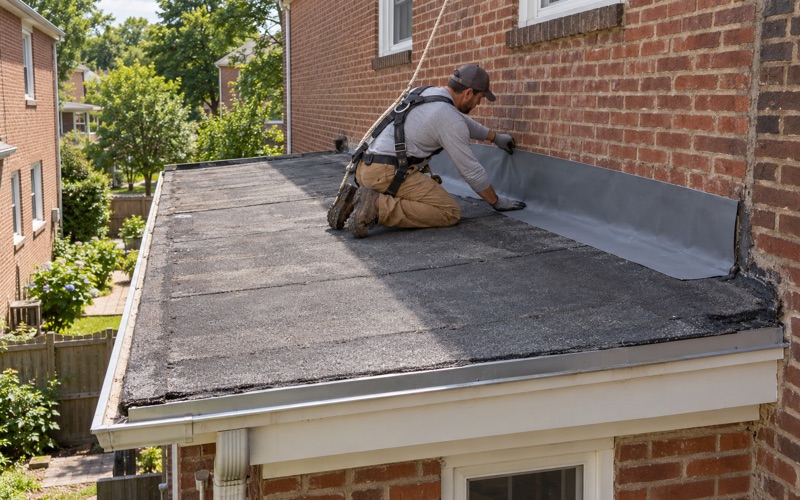
On attached buildings, the places we inspect most closely are the junctions: where one unit’s roof meets the next, where a firewall or parapet breaks the roofline, and where step flashing runs up a sidewall. A leak that shows inside one home can begin at any of these points on the building, which is why our attic check matters here.
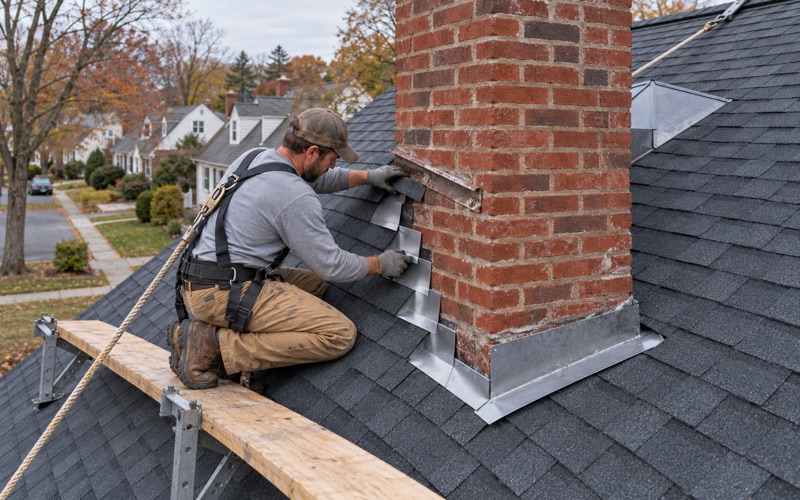
Step and counter flashing is replaced with the roof instead of being reused under new shingles. On an attached building that choice affects more than one household, so we explain in the scope exactly where our flashing work starts and stops.
Matching Materials Across a Building
When only part of a building is being re-roofed, the new section has to meet the old one without a weak joint. We identify what the neighboring sections carry, whether that is an architectural shingle like GAF Timberline HDZ, Owens Corning Duration or CertainTeed Landmark or something else, and plan the tie-in so the transition sheds water rather than catching it.
Matching color is a separate question from matching performance, and some villages may have a view on it. That is another reason to read the documents first: if an association sets standards for exterior appearance, the shingle choice belongs in that conversation before an order is placed.
Ventilation and Gutters on Shared Buildings
Ridge vent with soffit intake only works when the net free area adds up across the attic it serves, and on an attached building that attic may be divided by party walls. We size ventilation for each section rather than assuming a single figure fits the whole building.
Gutters and downspouts get the same treatment. We size and pitch them with the roof, and on a row of attached homes we pay attention to where one unit’s runoff is being carried past or onto the next, so a new roof does not move a drainage problem next door.
Coordinating a Replacement With Neighbors and the Association
A replacement on an attached home is a shared event even when only one unit is being done. Neighbors hear it, park around it and sometimes have their own roof edge disturbed by it. We build the schedule with that in mind, and we put the plan in writing for everyone who has a stake in the building.
Before the Work Starts
Once the documents say who decides, we provide the itemized scope to that person or body, along with the start window and the areas of the building we will need to reach. Our contracts follow Pennsylvania’s home improvement law, including the three-business-day cancellation notice and a deposit kept within the legal limit.
If the work touches the roofline next door at any point, we ask that the neighbor be told before the crew arrives. A short note about noise, ladders and where the dumpster will sit avoids most of the friction that would otherwise surface on the first morning.
When Old Decking Turns Up
On buildings from 1978 onward, the decking under the first or second roof is decades old. When the old roof comes off and a sheet is damaged, we photograph it and show you before anything is replaced, at the per-sheet price written into the contract.
Where an association is the party paying, the same photos go to whoever the documents name. That keeps the decision with the right people and leaves a record that outlasts the job.
Each Day’s Cleanup
On attached homes, stray debris does not stay one household’s problem. At the end of every work day we clean the driveway, yard and gutters, and we run a magnet sweep for roofing nails along the paths neighbors use as well as our own work area.
Storm damage is handled the same careful way. We photograph it and write it up for the owner’s own claim, and if asked we will meet the adjuster on site, though we do not negotiate the claim. Our Hershey’s Mill work starts the same way every time: with the village documents, then the attic, then the roof.
- 20+ Years in Business
- Attic Checked on Every Leak
- Line-Item Written Scopes