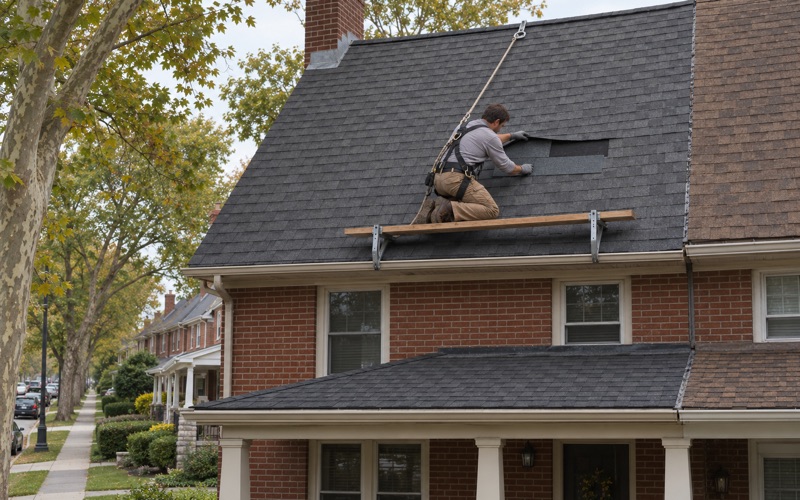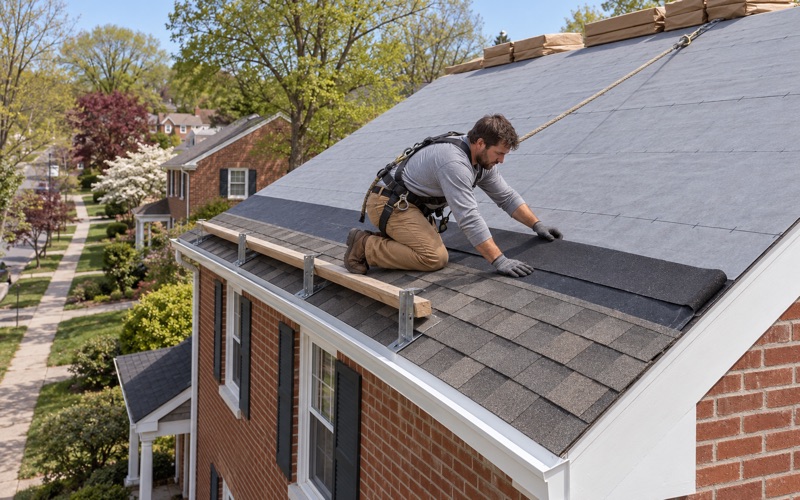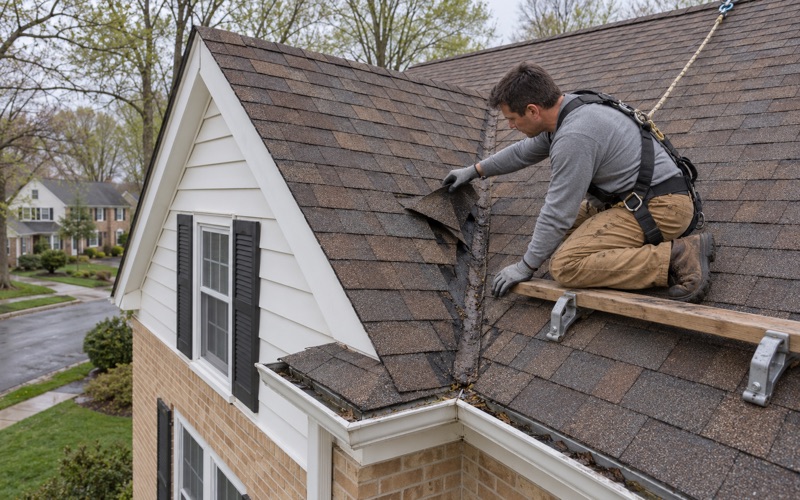
Haverford Roofing brings more than 20 years of experience to roofing in Coatesville, and much of our work here lands on rowhouses, twins and rental units. When a landlord or owner calls about a leak, we start in the attic and finish on the roof, so the water is followed to its actual entry point before we price a thing. That order matters on a rental, where a stain on a tenant’s ceiling can sit several feet away from the opening that caused it.
We also give a straight answer on repair before replacement ever comes up. Plenty of older Coatesville roofs need flashing, a section of shingles or a rebuilt valley rather than a full tear-off, and we say so plainly. When a roof truly has reached the end of its life, the written scope shows why, line by line.
For landlords, a roof problem in this city carries a second clock. Coatesville ties every rental to a license and a passing inspection, so a leak that shows up between tenants can hold up the next lease. The sections below cover how that system works, what it means for roofs and gutters, and how we schedule around it.
Coatesville’s Rental License and the Codes Department
Coatesville is the only city in Chester County, and its housing is mostly rented. The 2024 American Community Survey counts 3,041 renter households among 5,065 occupied homes, or 60 percent, and 1,242 of those rentals are attached rowhouse or twin units. That is a lot of roofs whose condition is tied to a landlord’s paperwork.
Every Rental Unit Needs a License
Under the city’s Rental License Application, revised in January 2025, every dwelling or rooming unit offered for rent must be licensed, with a separate application and license for each parcel. The annual fee is $65 per rental unit, due by March 31, and a fee paid on or after April 1 is doubled plus interest. The license is also non-transferable.
We mention the license because it shapes when an owner can afford to have a roof crew on site. A license only issues with a current passing inspection for all units and common areas, so roof work that is still open when an inspection comes due is a scheduling problem, not just a construction one.
Initial, Tenant Change and Biennial Inspections
The Codes Department must inspect every newly licensed property, any licensed unit that becomes vacant before it is re-occupied, and units on a biennial cycle. The inspection form lists those three types as Initial, Tenant Change and Biennial. The fee is $105 per unit including one reinspection, and each additional reinspection is $80.
The form also warns that an inspection after occupancy adds a $500 penalty and a citation, and the owner or a designated agent, not a tenant, has to be there. For a roof, the practical lesson is simple: any leak or loose gutter you know about is easier to settle before the inspector’s visit than after it.
Calling the Codes Department First
The Codes Department sits at 1 City Hall Place and answers at (610) 384-0300, option 3, Monday through Friday from 8:30 a.m. to 4:00 p.m. Its own page tells homeowners to contact the department first to learn whether planned work needs a permit, and we follow that advice on every Coatesville job. We check the answer for the specific house before the estimate is priced, rather than assuming a rule from another town carries over.
Looking for roofing closer to Lower Pottsgrove? See Roofing in Lower Pottsgrove.
What the Property Maintenance Code Expects of a Roof
Coatesville runs its rental inspections under Chapter 136, Housing Standards, and the International Property Maintenance Code, and the city’s codes page cites the 2018 edition of that code. We have not read the city’s own Chapter 136 text, so we work from the model code and leave the official reading to the inspector.
Sound, Tight and Free of Leaks
Section 304.7 of the model property maintenance code says the roof and flashing shall be sound, tight and free of defects that admit rain. In plain terms, under that language a roof that lets water into a living space is a maintenance problem as well as a repair, even if the stain is small and the tenant has not complained.
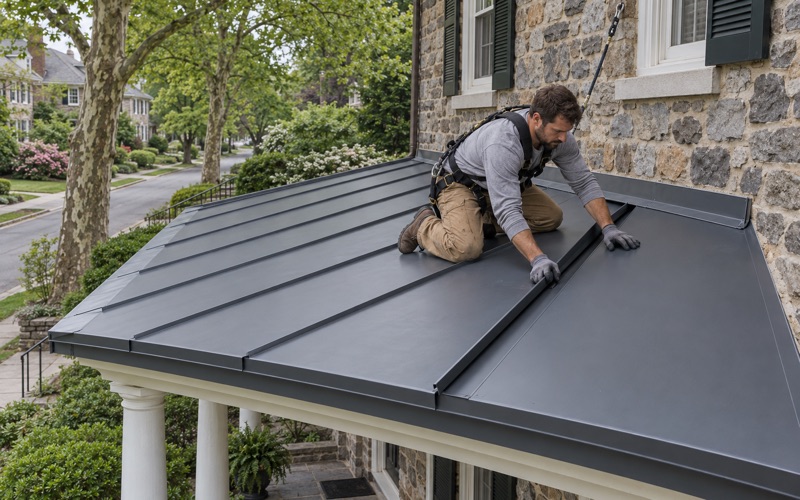
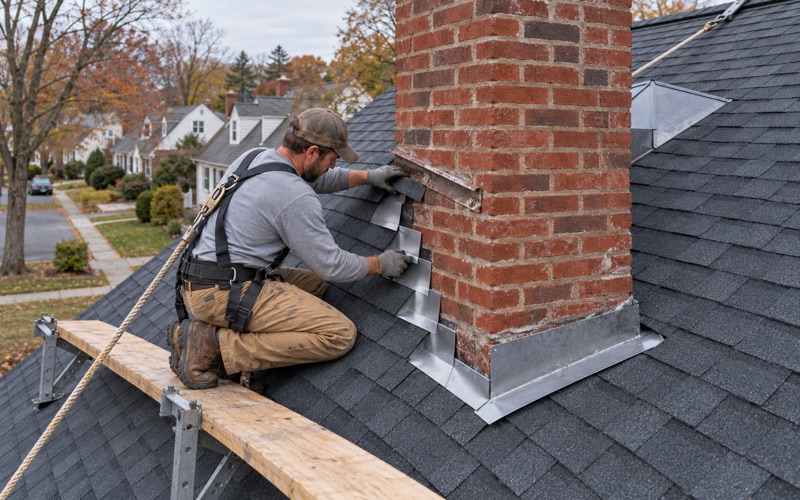
Flashing is where we look hardest. On an older attached house the step flashing along a party wall, the counter flashing at a chimney and the apron where a porch roof meets the front wall are the usual entry points. When we re-roof, that flashing is replaced with the roof rather than reused under new material.
Gutters and Downspouts in Good Repair
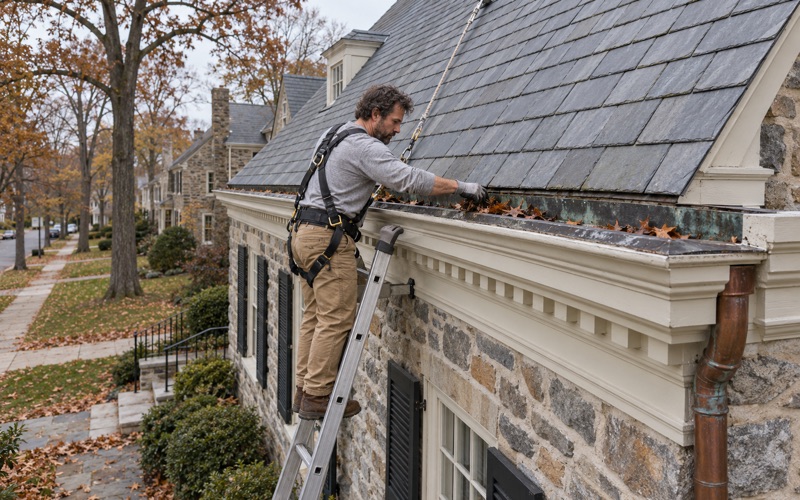
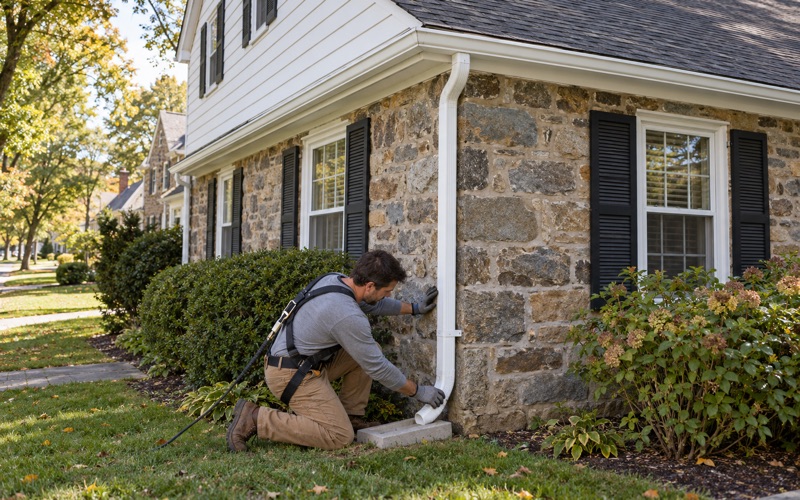
The same model section requires roof drains, gutters and downspouts to be maintained in good repair and free from obstructions. A clogged gutter on a rowhouse does more than overflow; it can push water back under the first course of shingles or down a wall and into the house next door.
We size and pitch gutters and downspouts with the roof instead of treating them as an afterthought. On a rental that means checking where each downspout lets out, since water dumped against a foundation or across a shared walk becomes the next complaint the landlord hears about. A short extension or a re-pitched run often solves it for little cost.
What We Can and Cannot Promise
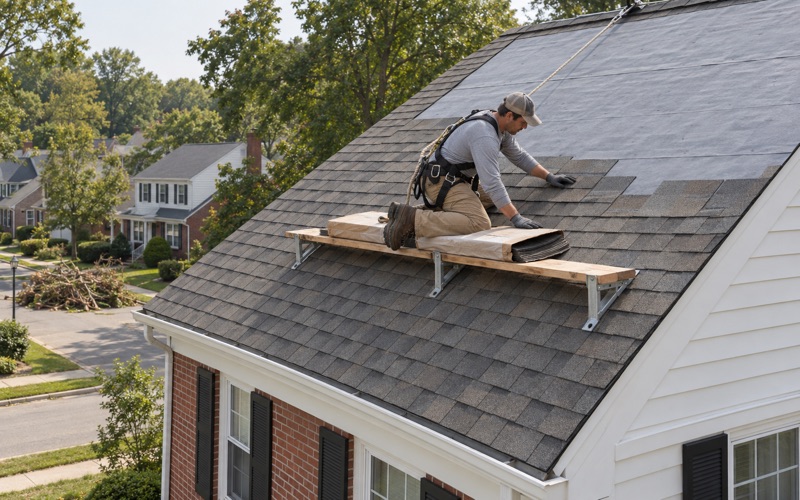
We can make a roof watertight, replace failed flashing and put gutters back in working order. We cannot speak for the inspector, and no roofer can promise an outcome that belongs to the city. What we hand an owner is a written scope with tear-off, decking, underlayment, flashing, ventilation and gutters on separate lines, a useful record to have when the inspection is scheduled.
Roofs on Coatesville’s Prewar Rowhouses and Twins
The housing stock here is old. Of 5,449 housing units in the city, 2,037 were built in 1939 or earlier, about 37 percent, and attached homes are the largest single type. Coatesville grew along the Philadelphia and Lancaster Turnpike from the late 18th century, and today U.S. Route 30 runs through it.
Shared Walls and Neighboring Roofs
A rowhouse or twin roof never really stands alone. The roof deck may run continuously across the party wall, the gutter may be shared, and a seam between two owners’ roofing is a common place for water to get in. We plan every attached-home job with the neighbor’s roof and the shared wall in mind.
In practice that means tying new material into the adjoining roof cleanly at the line, rather than stopping short and leaving a gap for sealant to cover. It also means talking through access and timing before the crew arrives, because the family next door lives with the noise and the ladders too.
Low-Slope Rear Roofs and Porches
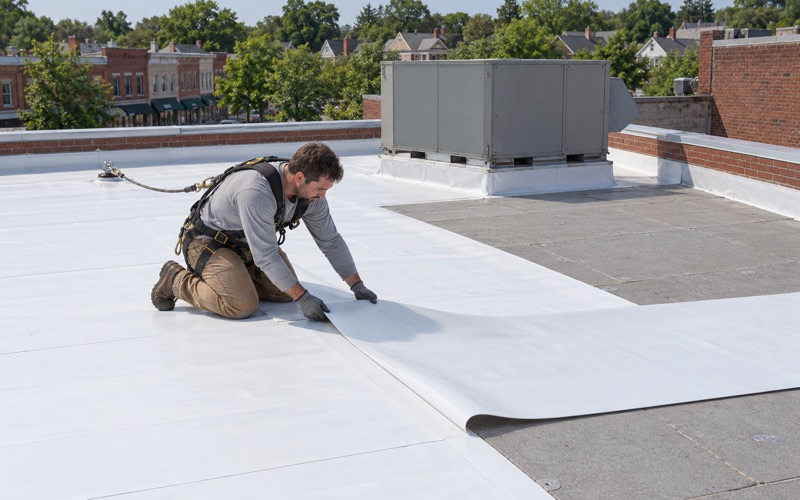
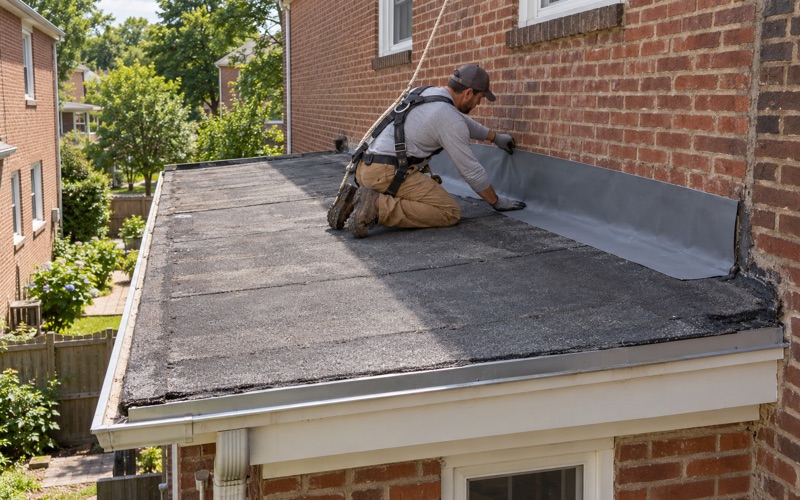
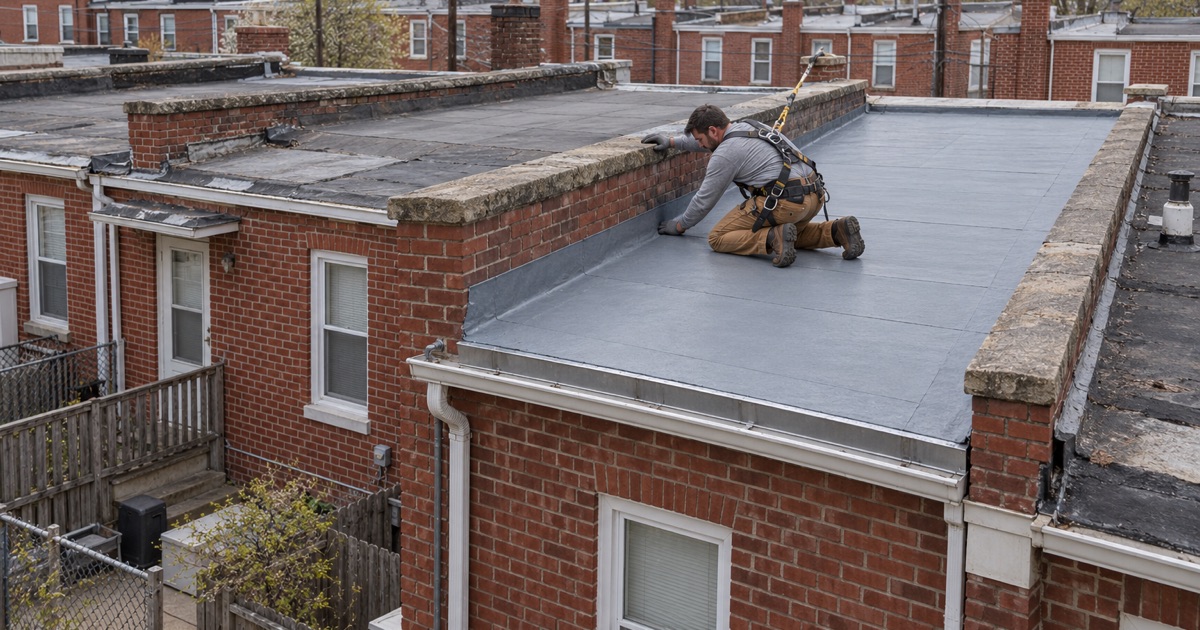
Many attached houses carry a nearly flat rear roof or porch roof behind a sloped front. Those low-slope sections usually take a membrane such as torch-down modified bitumen, EPDM rubber or TPO rather than shingles, and they are where ponding water and tired seams tend to show up first.
We inspect these from inside as well as from the top, since the stain a tenant reports in a back bedroom may trace to a seam several feet away. Where the membrane is sound and only a seam or a pipe boot has failed, we repair it and tell the owner so.
Decking, Ventilation and Slate on Older Houses
Houses this old can hide soft or patched decking under more than one layer of roofing. When the old roof comes off and damaged boards turn up, we photograph them and show the owner before replacing anything, at the per-sheet price already written into the contract.
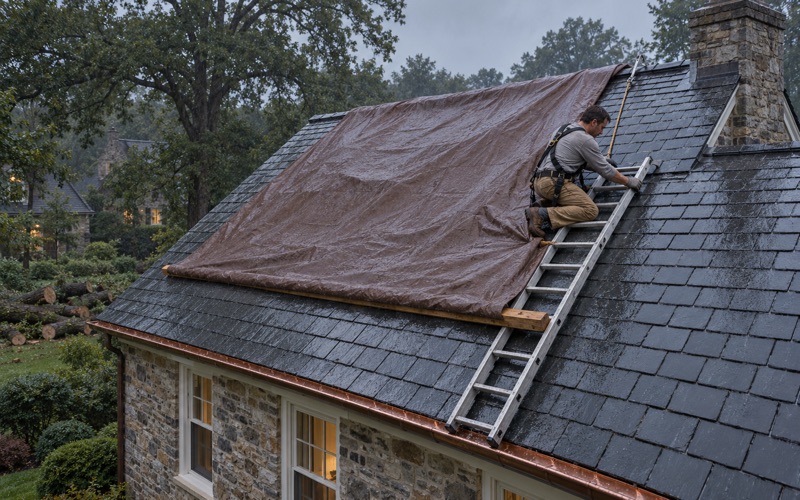
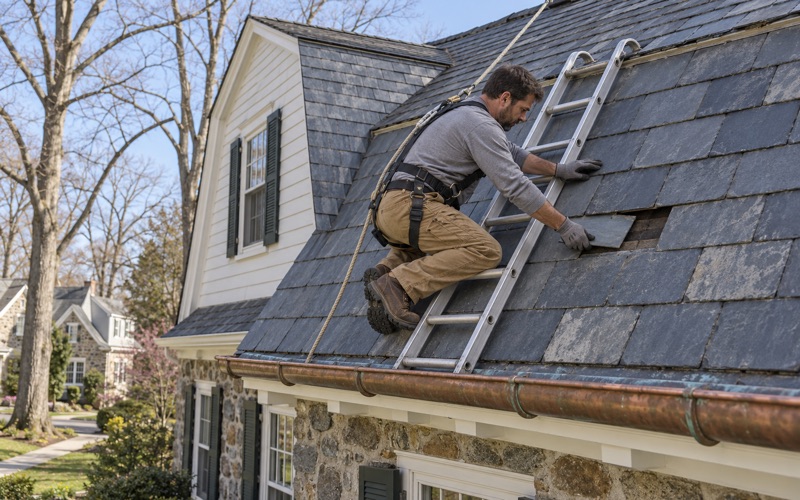
Ventilation gets its own line in the scope, because an attic with no soffit intake bakes shingles from below and holds moisture in winter. Where an older home still has slate, we repair it slate by slate with copper nails and slate hooks before anyone suggests tearing off a sound slate roof.
Planning Roof Work Around Tenant Turnover
Because a unit that turns over has to be inspected again before the next tenant moves in, the weeks between leases are often the best window for roof work on a rental. We try to fit the job into that gap so the owner is not juggling a crew and an inspector at the same time.
Before the Unit Goes Vacant
The most useful call comes a few weeks before a lease ends. That gives us time to trace any known leak from the attic, write a scope with each item on its own line, and order materials, so work can start the day the unit empties instead of after the inspection is already on the calendar.
If the roof is on a twin or a row, we also want to know whether the neighbor’s roof is in similar shape. Sometimes two owners decide to do the work together, which can mean one clean tie-in instead of two patched seams. That is the owners’ call, and we price it either way.
When a Tenant Is Still Living There
Not every leak waits for a vacancy. When a unit is occupied, we coordinate access with the owner or the manager, keep work days as short as the job allows, and clean the yard, walk and gutters at the end of each day, including a magnet sweep for roofing nails.
On a rental, nails left in a shared walk or a small yard are a hazard for tenants and children, not just a nuisance. A temporary repair that stops water now, followed by a permanent fix scheduled for the next turnover, is sometimes the sensible plan, and we will say when it is.
Storm Damage on Rental Roofs
Coatesville sits in the National Weather Service’s Western Chester forecast zone, served by the Mount Holly office, and that zone’s warnings are the ones to watch for wind and heavy rain. After a storm, we photograph the damage and write it up for the owner’s own insurance claim.
When asked, our crew will meet the adjuster on site to point out what we found, though we do not negotiate the claim. For a landlord, that documentation also helps show the repair was handled promptly, which matters on a property that answers to a rental license.
- 20+ Years in Business
- Attic Checked on Every Leak
- Line-Item Written Scopes