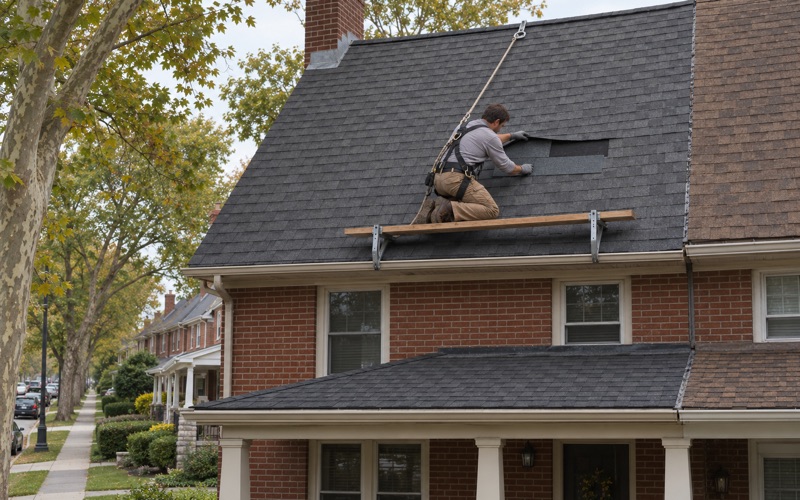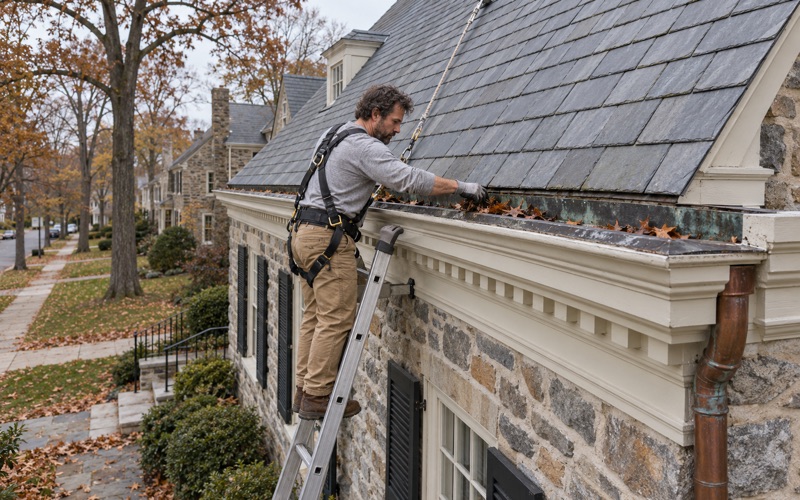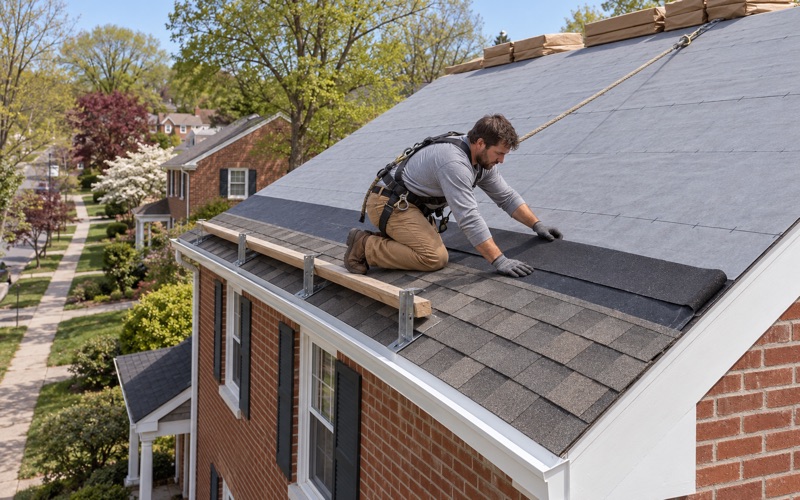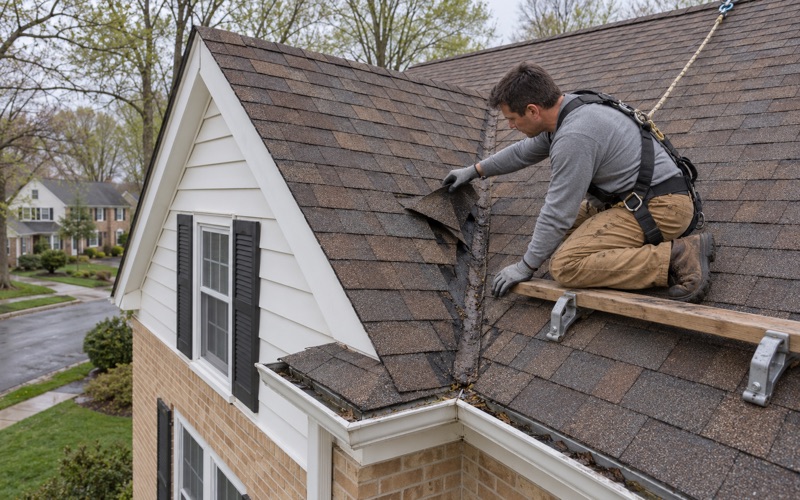
Haverford Roofing handles roofing in Cinnaminson with a habit that matters more than any sales pitch: we find out who actually owns a roof before we tell anyone what it needs. On a detached house that answer is simple. On a condominium building it is not, and getting it wrong sends an owner chasing a repair that was never theirs to order.
That question shapes this page. Most of what follows is about a single kind of building in the township, the shared roof over owners who live stacked above each other, because that is where the question of who to call gets confusing. We explain who maintains that roof under state law, how replacement gets scheduled, and what to do when water shows up on a ceiling.
For the detached houses across Cinnaminson, the work looks like it does anywhere we go. Every leak call includes a trip into the attic as well as onto the roof, and we tell you plainly whether a repair will hold before replacement comes up at all. Those details come later on this page, after the condominium question.
Westfield Leas, Cinnaminson’s 55-and-Over Condominium
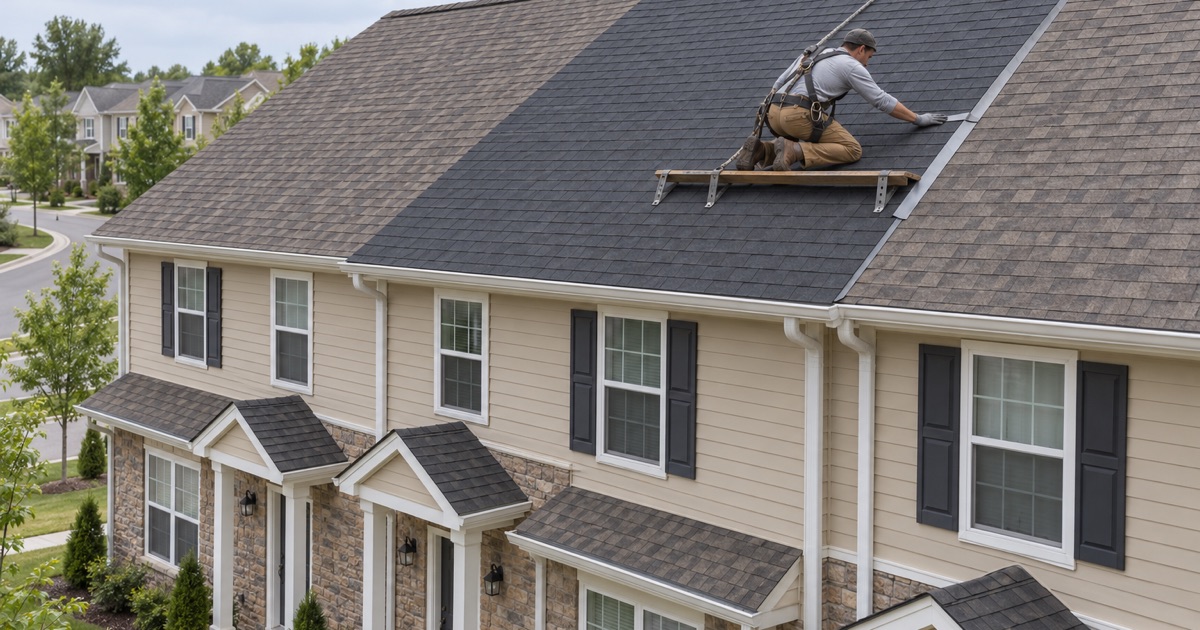
Two-Story Buildings Off Westfield Drive
Westfield Leas sits off Westfield Drive and is described in real estate listings as a 55-and-over community. Its homes are condominiums in two-story buildings, and listing page text dates the community to about 1987. That makes it much younger than the post-war detached houses that fill most Cinnaminson streets, where roughly half of all homes were built between 1950 and 1969.
Age-restricted housing is growing in the township. Cinnaminson’s May 30, 2025 housing plan lists a proposed 153-unit age-restricted community at Cinnaminson Harbor, but that is a separate project whose ownership form and roof arrangements we have not seen. Everything below concerns Westfield Leas only.
One Roof, an Upstairs Owner and a Downstairs Owner
Listings describe Westfield Leas homes as either first-floor or second-story condominiums. In practice that means each roof covers at least two separately owned homes stacked one above the other. The second-story owner lives directly under the roof deck and attic, while the first-floor owner may never see the roof at all, yet both depend on it equally.
This is why a roof there cannot be treated as one person’s project. A patch, a new layer of shingles or a change in ventilation affects the neighbor below as much as the owner above. The census counts 164 owner-occupied homes in Cinnaminson buildings of five to nine units, a category that fits condominium buildings like these, though that match is our reading rather than a published figure.
What Listing Text Says the Fee Covers
One Westfield Leas listing says its monthly association fee takes care of lawn work, snow removal, tree trimming, roof replacement, full exterior building painting and gutter cleaning, among other items. Another listing says the fee covers the buildings’ exterior. Neither is the governing document, and fees and coverage are set by the association, not by a sales description.
Still, the pattern is consistent with how New Jersey law treats condominium roofs by default. A unit owner reading those listings should expect the roof over their home to be an association matter, then confirm it in the master deed and bylaws, which we have not read. Those documents decide the question, not us.
Looking for roofing closer to Mantua? See Roofing in Mantua.
Who Maintains the Roof Under New Jersey’s Condominium Act
Roofs Are Common Elements by Default
New Jersey’s Condominium Act defines common elements to include, as to any improvement, the foundations, structural and bearing parts, supports, main walls, roofs and basements, along with halls, corridors, stairways and entrances. The same section excludes any of those specifically reserved or limited to a particular unit or group of units. Unless something is reserved that way, the roof is shared property.
The Act then gives the association the duty of maintaining and repairing the common elements. Put together, those two provisions mean that on a typical New Jersey condominium building, the roof belongs to everyone and the association looks after it. Individual owners pay toward that work through their fees and any assessments, rather than hiring a roofer on their own.
Where the Master Deed Can Change the Answer
The Act’s definition is a default, and the master deed can alter it by reserving an element to a unit or designating additional common elements. That is why we never tell a Westfield Leas owner flatly who pays for a roof. We have read the listing text and the statute, but not the community’s master deed, bylaws or reserve study.
If you own a unit and want certainty, ask the association or its manager for the master deed provisions on roofs and limited common elements. Read alongside the bylaws, they settle whether anything on the roof, such as a skylight or a vent serving one home, is treated differently from the roof as a whole.
Reserve Studies and the Re-Roof Schedule
A New Jersey law approved on January 8, 2024 requires every planned real estate development association to undertake and fund a capital reserve study. A credentialed reserve specialist or a State-licensed engineer or architect must perform or oversee it, and it covers the physical condition of the common-area components plus a proposed 30-year funding plan.
The study has to be conducted and reviewed at least once every five years, and it does not apply to associations with less than $25,000 in common-area capital assets. The statute is about planning and funding, not about ordering any particular repair. For a Westfield Leas owner, the practical point is that the timing of a replacement is the association’s to set, informed by its own reserve planning.
Reporting a Leak in a Westfield Leas Building
Call the Association Before Anyone Climbs a Ladder
When water stains a ceiling in a Westfield Leas unit, the first call goes to the association or whoever manages it, not to a roofer. If the roof is a common element, the association is responsible for repairing it, and work an owner orders privately on a shared roof can create problems with the neighbor below and with the association itself.
Put the report in writing, with the date the stain appeared, the room it is in and whether it grows after rain. Photographs help. The upstairs owner usually sees roof leaks first, but a first-floor owner can see water too if it travels down through the building, so both neighbors should know what has been reported.
Not Every Ceiling Stain Is the Roof
A stain on a second-story ceiling can come from the roof, from condensation in an attic with poor ventilation, from a bathroom fan venting into the attic, or from plumbing. On a first-floor ceiling, the upstairs unit’s plumbing is often a likelier source than the roof. Naming the right source matters, because a plumbing leak inside a unit may fall under different rules than the roof.
This is where our habit of checking the attic as well as the roof earns its keep. Water traced to its real entry point is a cheaper fix for whoever ends up paying, and it keeps an association from re-shingling a section that was never the problem. It also gives the board something concrete to act on.
What We Do When a Unit Owner Calls Us
If a Westfield Leas owner calls us anyway, we start by asking whether the association has been told and whether it has authorized anyone to inspect. We do not work on a shared condominium roof without the association’s go-ahead. What we can do is explain what we would look for and why, so your report to the board is specific.
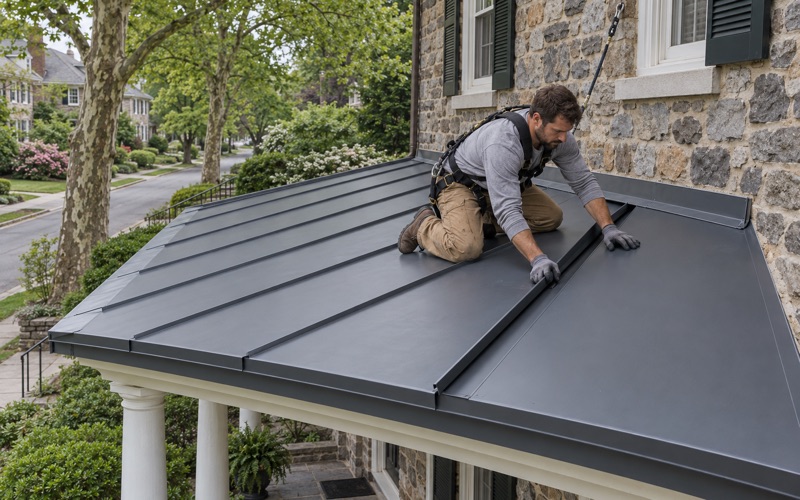
If an association asks us for a price on its own, our written scope lists tear-off, decking, underlayment, flashing, ventilation and gutters as separate lines. On a building with an upstairs and a downstairs owner, that itemization lets a board compare bids line by line and see exactly what each one includes.
Roofing Cinnaminson’s Detached Houses
Outside the condominiums, the owner of a detached Cinnaminson house makes the roofing decisions alone, and the questions shift to the condition of the decking, the flashing, and whether a repair will carry the roof a few more years. Most of the township’s housing stock falls in this group.
Repair Answered Before Replacement
We tell an owner whether a roof can be repaired before replacement enters the conversation. A lifted shingle tab, a failed pipe boot or a cracked flashing seam is a repair, and we price it as one. When the decking is soft across a slope or the shingles have lost their granules everywhere, we say so plainly and explain why patching would only delay the bill.
If a replacement does go ahead and the old roof comes off to reveal damaged decking, we photograph it and show you before any sheet is replaced, at a per-sheet price already written into the contract. Nothing about the decking is a surprise on the invoice.
Flashing, Gutters and the Daily Cleanup
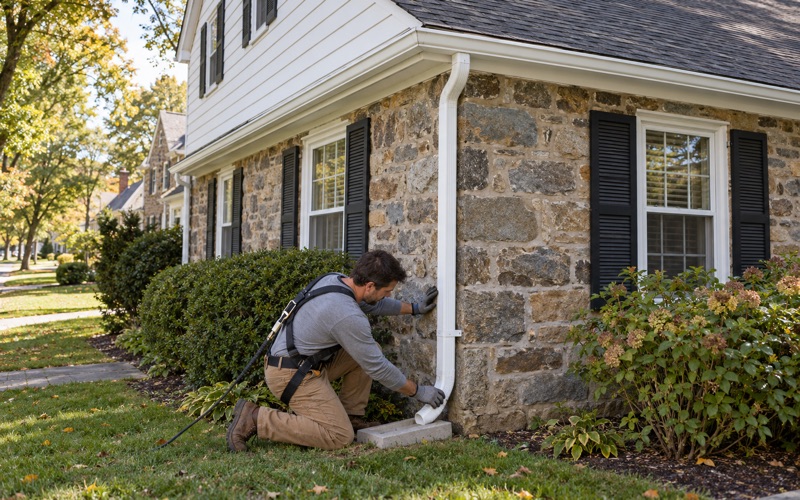
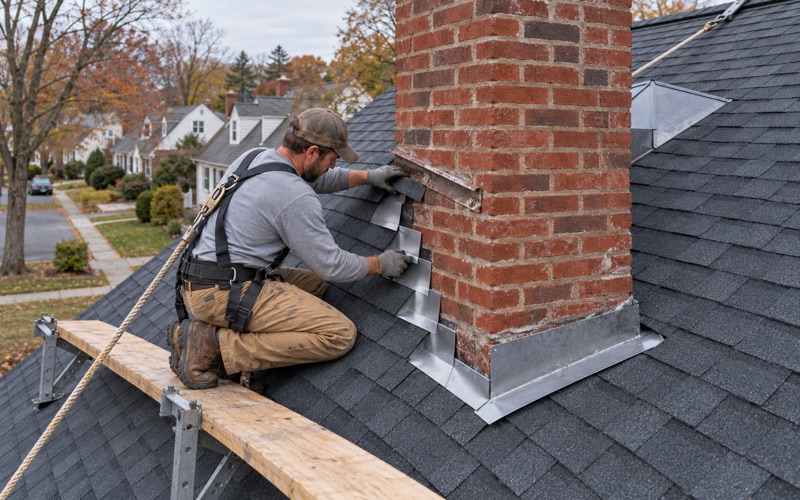
Step, counter and chimney flashing is replaced with the roof, never reused under new shingles. Gutters and downspouts are sized and pitched as part of the same plan, since a new roof that dumps water into undersized gutters just moves the leak to the fascia. Drip edge goes on at the eaves and rakes so water clears the edge cleanly.
At the end of each work day we clean the driveway, yard and gutters and run a magnet across the lawn for roofing nails. A stray nail in a lawn or a tire is the mess an owner remembers longest, so the sweep happens daily rather than once at the end.
Storm Damage and Your Own Claim
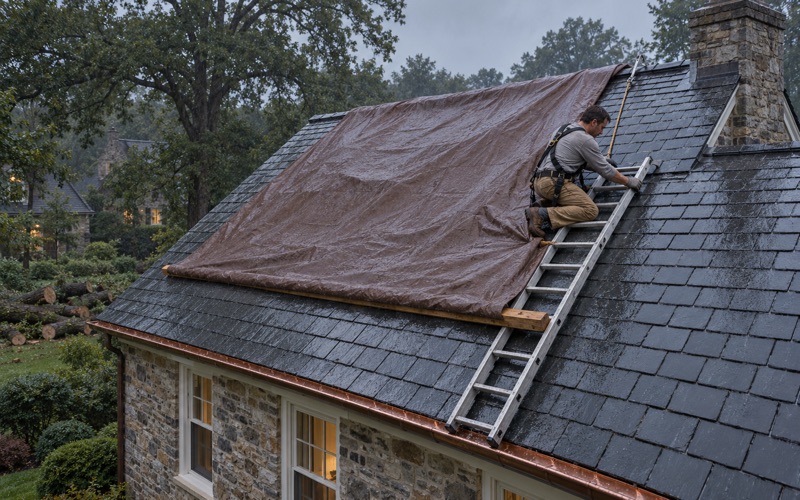
Cinnaminson sits in the National Weather Service’s Northwestern Burlington forecast zone, NJZ019, served by the Mount Holly office. When a storm passes through, we photograph the damage and write it up for your own claim, and we will meet the insurance adjuster on site if you ask. We do not negotiate the claim; that stays between you and your insurer.
For a Westfield Leas unit, storm damage to the roof itself is generally an association matter, while damage inside the unit may fall to the owner’s own policy. Check both before calling anyone, and let the association know first if the building’s roof took the hit.
- 20+ Years in Business
- Attic Checked on Every Leak
- Line-Item Written Scopes