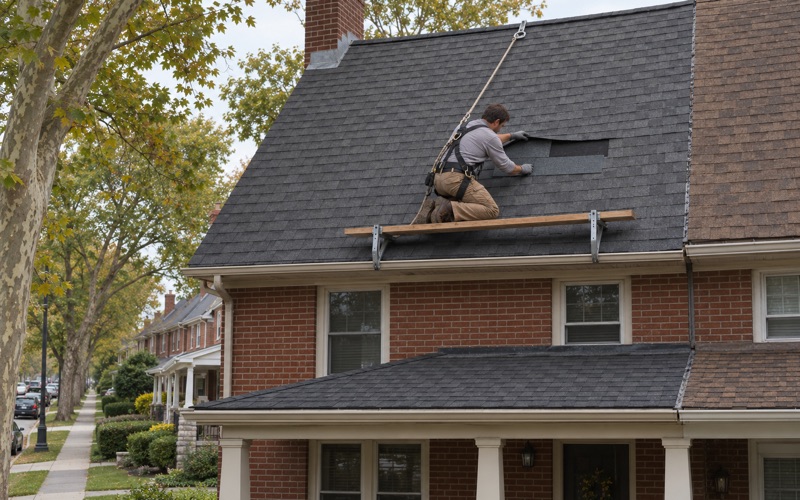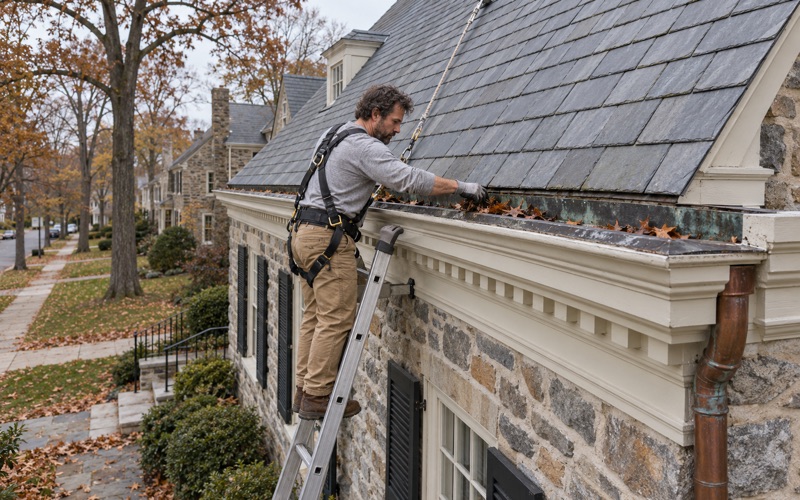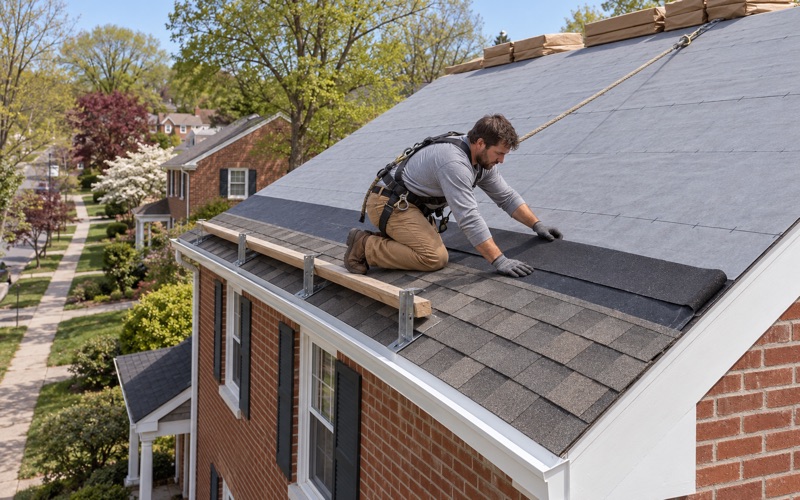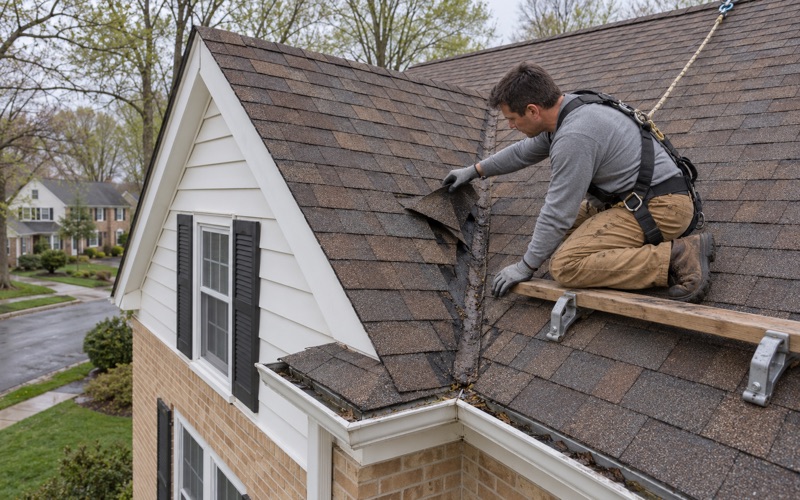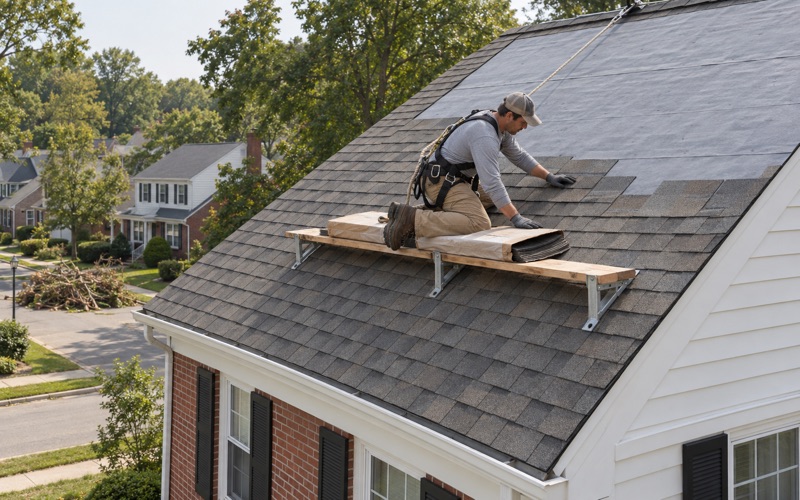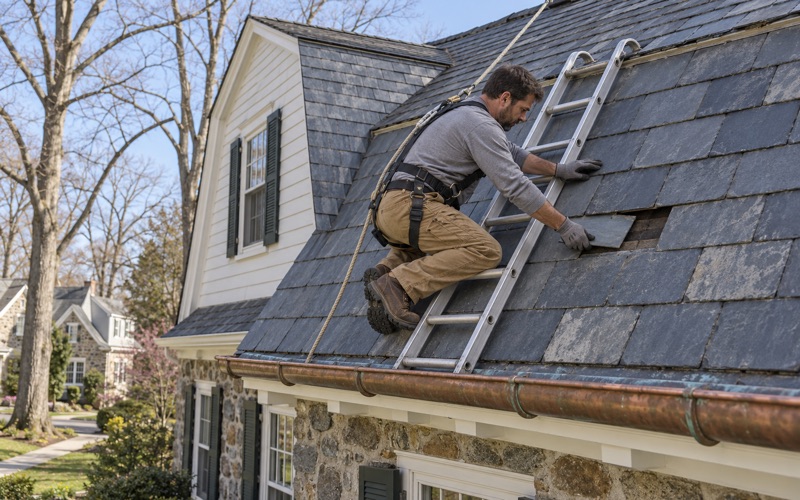
Haverford Roofing brings more than 20 years in the trade to roofing in Caln, working on the flat commercial roofs along the township’s main corridor and the pitched roofs over the neighborhoods behind it. The two jobs share almost nothing beyond the ladder. A low-slope membrane fails differently from a shingle field, and we plan and price each one on its own terms.
Every call about a leak starts with two inspections, one on the roof and one from the attic or ceiling space below it, so we know where the water actually enters before a number is written down. Then we tell the owner plainly whether the roof can be repaired. Replacement only comes up after that answer, never ahead of it.
Our written scopes break the work into separate lines for tear-off, decking, underlayment, flashing, ventilation and gutters, so a property owner holding two bids can compare them line against line. If rotten decking turns up once the old roof is off, we photograph it and show it to the owner before replacing it, at the per-sheet price already set in the contract.
Low-Slope Roofs on the Lincoln Highway Commercial Strip
Most of Caln’s commercial roofing sits along Lincoln Highway, the old road that carries US Business Route 30 through the south and southeast of the township. The buildings there are retail, service and office boxes, and many of them carry low-slope roofs rather than the steep shingle roofs found on the side streets.
Membrane Choices for Flat Commercial Roofs
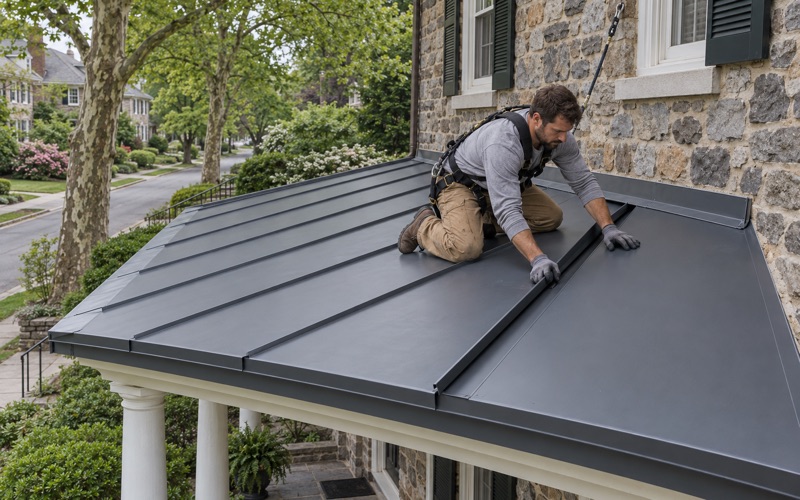
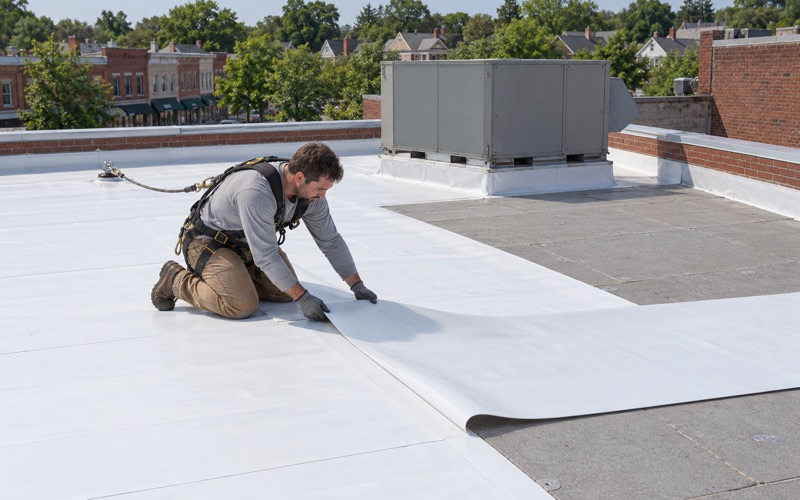
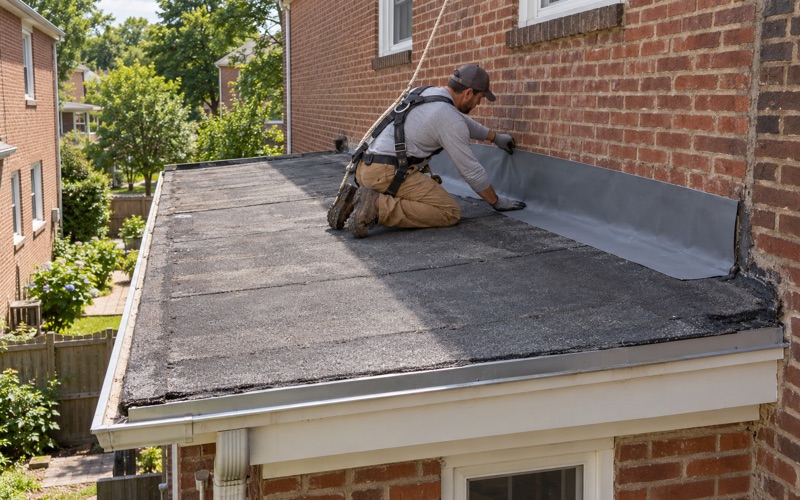
A low-slope roof is only as good as its membrane and its seams. We work with EPDM rubber, TPO and PVC single-ply sheets, and torch-down modified bitumen in both SBS and APP formulations, and the right choice depends on what the building does, what sits on the roof and how much foot traffic the surface will see.
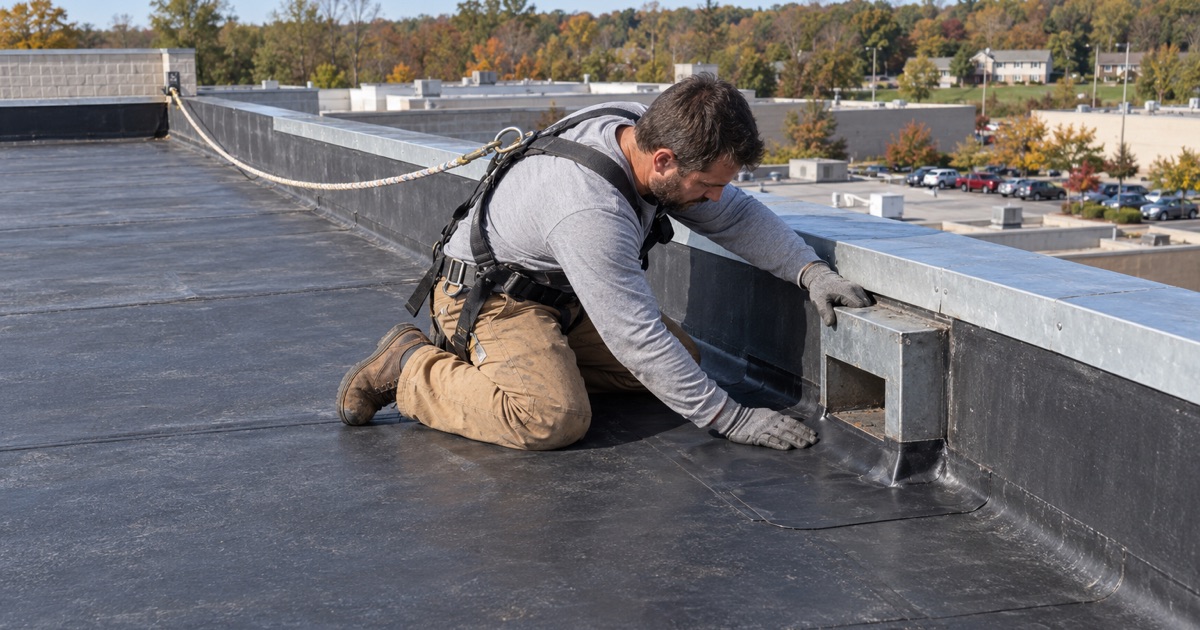
Rooftop units, exhaust curbs and sign brackets are where flat roofs most often leak, because every penetration is a seam the membrane has to wrap. We inspect those details first, then the field, and we check from inside the building as well so a stain on a drop ceiling is traced back to the curb or drain actually feeding it.
Drainage and Ponding
Water that sits on a flat roof for days after a storm wears the membrane faster and finds any weak seam. We look at how the roof drains to its scuppers, gutters and internal drains, and where the deck has settled into low spots. Tapered insulation or added drains can often fix ponding as part of a replacement rather than as a separate project.
Gutters and downspouts on a commercial building get sized with the roof, not after it. A low-slope roof that sheds a large area into one undersized downspout simply moves the problem to the sidewalk, the parking lot or the wall below, and we would rather settle that in the scope than in a callback.
Working Around an Open Business
A storefront usually stays open while its roof is worked on. We plan staging, material drops and dumpster placement around customer parking and entrances, and we schedule the noisiest tear-off hours with the tenant. At the end of each work day the lot, walks and gutters are cleaned, with a magnet sweep for loose roofing nails.
Looking for roofing closer to Coatesville? See Coatesville Roofing.
Thorndale and a Corridor in Transition
Thorndale is Caln’s commercial center, with a SEPTA station and a run of retail along Lincoln Highway. The strip is turning over one building at a time, and that turnover changes what an owner needs from a roofer. A roof on a building that may be sold, demolished or expanded next year is a different decision from a roof on a building that will be held for twenty.
Zoning That Shapes the Strip
The Caln Township Zoning Ordinance of 2005 places Zone 1 and Zone 2 of the Lincoln Highway Overlay District along the corridor. The overlay encourages mixed-use buildings with businesses on the ground floor and homes above, and a building that is nonconforming on height or setbacks may expand by up to 25% without a variance, provided the nonconformity does not grow.
That rulebook may change. A proposed ordinance that would replace the 2005 ordinance, along with a new Zoning Map, went to a public hearing on April 30, 2026. We have not confirmed what followed the hearing, so when an owner is weighing an addition or a second story along with a new roof, we suggest checking the current zoning with the township first.
Redevelopment Is Already Under Way
The turnover is visible. A January 2026 conditional-use hearing covered a plan to demolish the Rite Aid at 3807 E. Lincoln Highway, in the Thorndale Village district, and build a 6,139-square-foot Sheetz with a drive-through and a fuel canopy. Elsewhere in the township, the former Brandywine Hospital campus, closed in 2022, was sold in 2025 to a buyer planning redevelopment.
We have no part in either project, and we mention them only because they show how fast the strip moves. When a nearby corner changes hands, an owner may start asking whether their own roof should be replaced now, patched for a few years, or left alone until they know what the building will become.
Planning a Roof When a Building Changes Hands or Use
A sale, a new tenant or a change of use is often the moment a commercial roof finally gets looked at closely. Buyers want to know what they are inheriting, sellers want to know what to fix, and a tenant moving in wants to know the roof will not drip on new fixtures. We approach each of those questions a little differently.
Condition Reports Before a Sale
For a building changing hands, we walk the roof and the space beneath it and write up what we find: membrane condition, seam and flashing failures, wet insulation, ponding areas and the state of the drains. Each item is written as its own line, so a buyer or seller can see which issues are urgent and which can wait for a later budget.
Repair, Restore or Replace
A building that may be demolished or heavily reworked in a few years rarely justifies a full new membrane. In that case we say so, and we price targeted repairs to the seams, curbs and flashings that keep it dry in the meantime. When an owner plans to hold the building, a full tear-off and new system can cost less over the long run than repeated patching.
Additions, Second Stories and Mixed Use
Because the overlay favors shops below and apartments above, an owner may look at adding a floor or an addition on the strip. A new story or wing ties into the existing roof somewhere, and that joint is where water gets in if it is not detailed with proper flashing, crickets and drip edge. We plan the tie-in with the owner’s builder before the old roof is opened.
Re-roof rules are set township by township, so we confirm what Caln’s own rule requires for the specific job before it is priced. For commercial buildings, that check sits alongside the zoning question above rather than replacing it.
Caln Homes: 1970s and 1980s Roofs Coming Due
Away from the commercial strip, Caln’s roofing work is mostly residential. Census estimates count 1,075 homes built in the 1970s and 1,186 built in the 1980s, the two largest decades in the township’s housing stock. A house from either decade has likely seen at least one replacement already, and the next one raises questions about layers, decking and ventilation.
Tear-Off, Layers and Decking
The reroofing section of the International Residential Code, R908, limits a roof to two layers, and we count what is already on a house before writing a scope. When a tear-off is needed, the scope says so up front. Stripping to the deck also lets us check sheathing that may have sat under more than one roof since the house was built.
On the new roof we install drip edge at the eaves and rakes, a self-adhering ice barrier where the code calls for one, and a synthetic underlayment over the rest of the deck. Architectural shingles such as GAF Timberline HDZ, Owens Corning Duration or CertainTeed Landmark are a common choice on houses of this age, with wind ratings listed in the scope.
Flashing and Ventilation
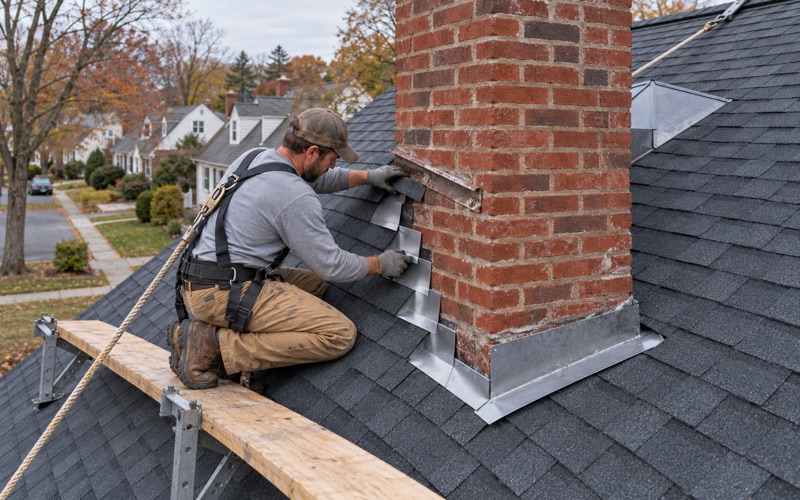
We replace step flashing, counter flashing and chimney flashing with the roof instead of bending old metal back into place under new shingles. Where a chimney sits wide across the slope, we build a cricket behind it, and kick-out flashing goes in where a roof edge meets a wall so water lands in the gutter instead of behind the siding.
Houses from the 1970s and 1980s can have attics that run warm because the soffit vents were painted over or blocked by insulation. We balance ridge vent exhaust against soffit intake by net free area, which helps the new shingles last and cuts down on winter ice along the eaves.
Townhouses, Twins and Rentals
Attached homes are a large share of Caln’s housing, with the census counting 1,401 single-family attached units. A townhouse or twin roof shares a wall line and often a continuous roof plane with the neighbor, so we plan the seam at the property line, the flashing at the party wall and the schedule with both households in mind.
About 30% of occupied homes in Caln are rented, and 849 rental units sit in buildings of five or more units. Landlords and property managers get the same itemized scope as an owner-occupant, and we coordinate access with tenants so a roof replacement does not turn into a week of surprise noise.
Storm Damage, Contracts and Scheduling
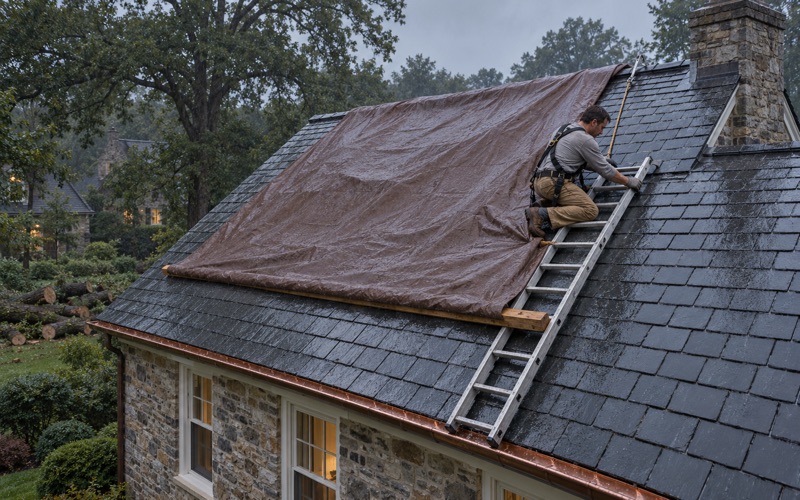
Caln falls in the National Weather Service’s Western Chester forecast zone, served by the Mount Holly office, and when a storm warning there turns into missing shingles or a lifted membrane edge, we photograph the damage and write it up for the owner’s own claim. If the owner asks, we meet the adjuster on site, but we leave the negotiating to the owner and the insurer.
Contracts for home roofing follow Pennsylvania’s home improvement law, including the three-business-day cancellation notice and a deposit kept within the legal limit. Where solar panels sit on the roof, their removal and reinstallation are written into the schedule rather than discovered the morning the crew arrives.
- 20+ Years in Business
- Attic Checked on Every Leak
- Line-Item Written Scopes