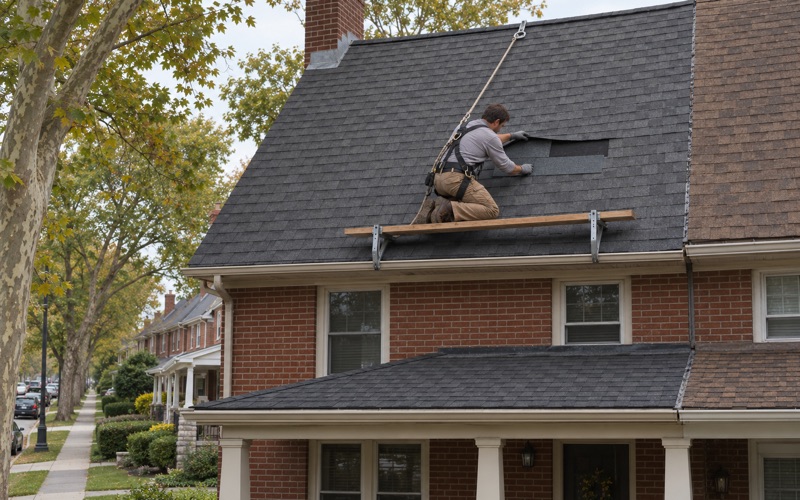
Haverford Roofing has spent more than 20 years on roofing in Aston and the townships around our Haverford base, and the work here starts the same way every time. When a ceiling stains, we climb into the attic as well as onto the roof, because water seldom enters where it finally shows. Only after the path is traced do we put a number on anything.
Most Aston roofs we see sit on single-family houses, and the first conversation on any of them is about options. We tell an owner plainly whether the existing roof can be repaired, and we only talk about replacement once that answer is no.
Every written scope we hand over breaks the job into separate lines for tear-off, decking, underlayment, flashing, ventilation and gutters. Two estimates can then be laid side by side and compared item by item, which is the fairest test any homeowner can give a roofer.
Neumann University and the Our Lady of Angels Convent
The biggest buildings in Aston are not houses. Neumann University, founded in 1965 as Our Lady of Angels College by the Sisters of St. Francis of Philadelphia, agreed on June 30, 2021 to buy the sisters’ neighboring Our Lady of Angels Convent and about 63 acres. The campus has since grown to 133 acres, up from about 70.
The sale took in more than the convent itself, a 152,000-square-foot building from the late 1800s. It also included St. Elizabeth House, two residential homes and Our Lady of Angels Cemetery, and it transfers to the university in stages. The sisters living there may stay through 2030.
A convent that became student housing
Students began moving into one wing of the convent in fall 2022, and the plan called for up to 60 residents at first and 100 to 120 within three years. The building is meant to become the university’s administrative hub as well. A late nineteenth-century religious house is turning into a working dormitory and office building at once.
We have no relationship with the university, and we describe its campus only because it shapes how Aston looks from the road. It also shows how far institutional roofing sits from the work on the streets around it.
Domes, towers and a chapel steeple
The convent’s dome and clock tower are landmarks visible from miles away, and a steeple rises above Our Lady of Angels Chapel. The university’s own magazine calls the convent one of the most recognized and beloved buildings in the Aston area. No public source we found describes what any of those roofs are made of or what condition they are in.
What the shapes alone tell a roofer is that curved and vertical surfaces like these are a different trade from shingling a house. A dome has no straight courses to follow, a tower puts every flashing joint high in the wind, and a steeple needs access equipment most residential crews never set up. Work like that belongs with firms that specialize in historic institutional buildings.
Looking for roofing closer to West Norriton? See Roofing in West Norriton.
Low-Slope Halls and a Campus That Stays Occupied
Next to the convent, the newer side of campus is built at a different scale. The Mirenda Center, a 72,000-square-foot athletic complex built in 2012, is the sort of large hall that is usually covered with a low-slope membrane rather than shingles. That is an inference from the building type, since its actual roof system is not described anywhere we looked.
What a membrane roof asks for
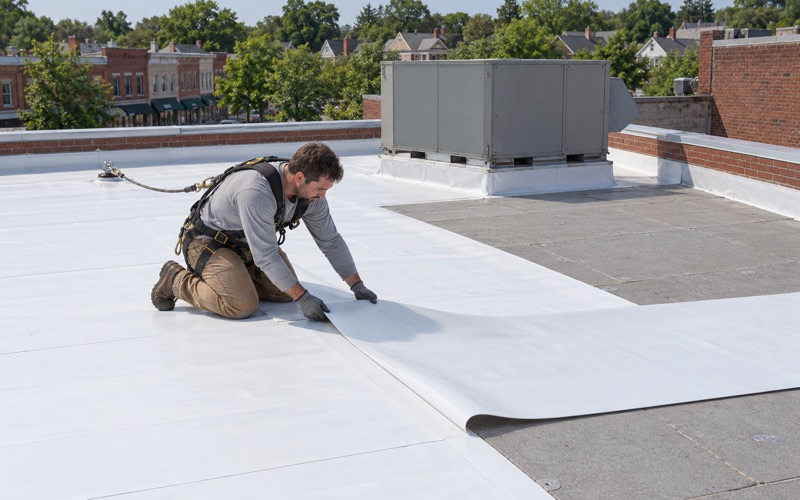
Low-slope buildings of that size are generally roofed in single-ply TPO or PVC, EPDM rubber, or torch-down SBS and APP modified bitumen. Each depends on sealed seams, often tapered insulation that moves water to drains, and careful flashing wherever a curb, vent or wall meets the field. A missed seam on a roof that broad can send water a long way before it drips.
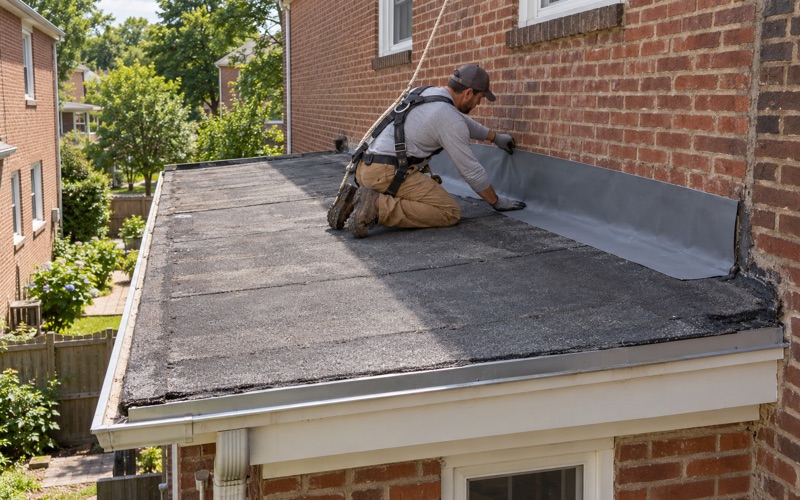
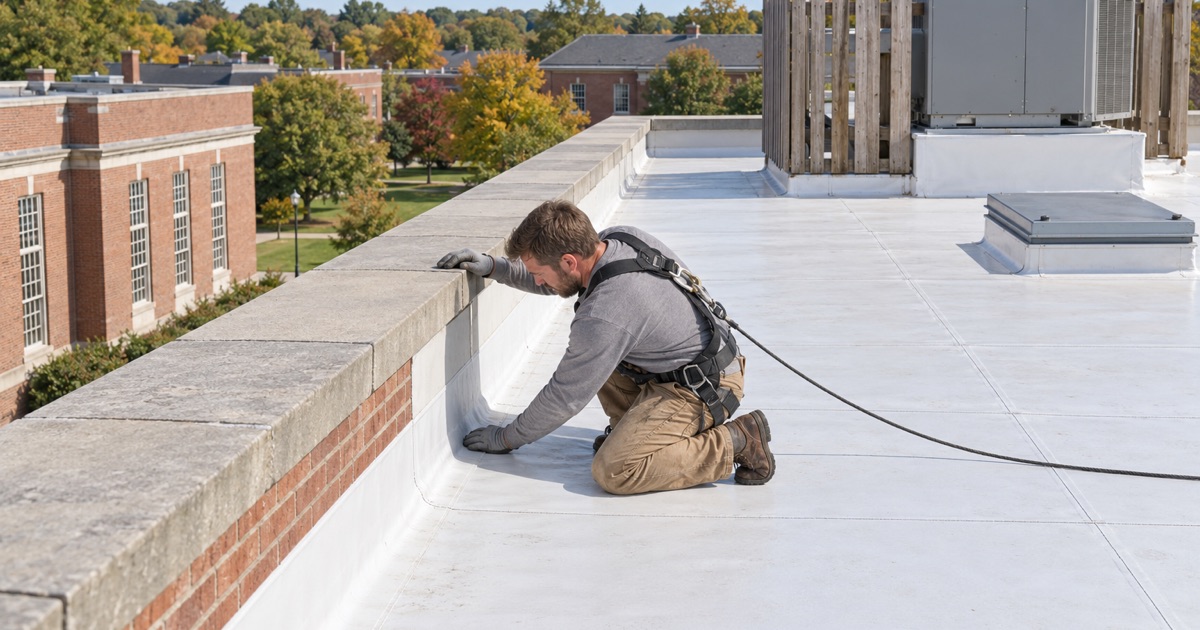
The same membranes cover smaller roofs on houses too: flat porch roofs, rear additions and the low sections of some attached homes. We install and repair them on homes here, and the attic-and-roof inspection matters even more on a low slope, where a leak can travel along the deck before it finds a seam in the ceiling below.
Working around people who live and study there
A campus where students live in part of a convent never really closes, and roof work on a building like that has to be staged around the people inside. The 15-year master plan adds a student union, an ice rink, a track and new residence halls, so construction and occupied buildings are likely to sit side by side for years.
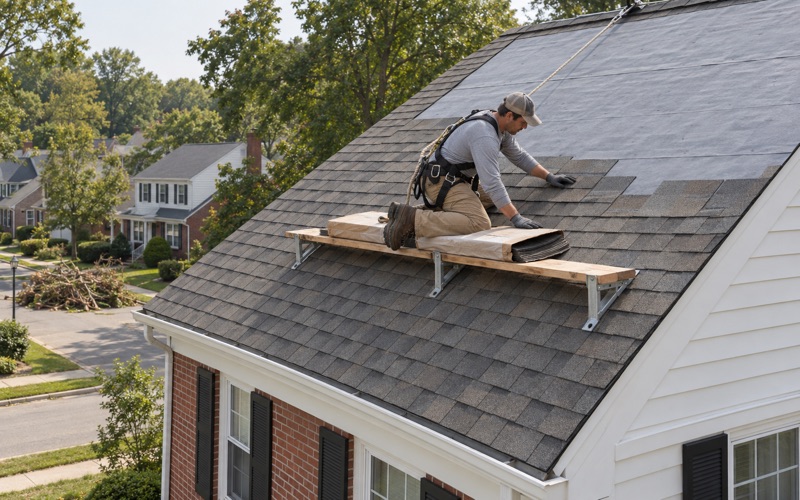
Houses are lived in too, and our crews treat them the same way at a smaller scale. Ladders, tear-off chutes and dumpsters are placed to keep doors and driveways usable, and at the end of each work day we clean the driveway, yard and gutters and run a magnet across the ground for roofing nails.
Aston’s Houses Beside the Campus
Away from Neumann University, Aston is mostly a post-war township of owner-occupied houses. Its population climbed from 5,576 in 1950 to 10,595 in 1960, a 90 percent jump in one decade. Of the township’s 6,341 housing units, 1,604 were built in the 1950s, more than in any other decade, and only 299 predate 1940.
About three in four housing units are detached, and 5,615 of the 6,153 occupied homes are lived in by their owners. A house from that era has very likely been re-roofed at least once, but how many layers sit on it, or what shape the deck underneath is in, is something we find out on the roof rather than assume.
Aston’s own permit rule
Aston’s Building Code Department lists roofing among the work that needs a building permit, even for a single layer. Emergency repairs can go ahead if the application follows within three business days.
Because each township in our service area writes its own re-roof rule, we read Aston’s before we price an Aston job, and the scope states it. Roll-off containers are another local detail: Aston publishes its own dumpster permit, which asks for the container’s area, the materials going into it and the drop-off and pick-up dates.
Layers, decking and what the tear-off shows
On a house built in the 1950s, the tear-off is where the real condition shows. When damaged decking turns up under the old roof, we photograph it and show the owner before any sheet is replaced, and the per-sheet price is already written into the contract, so the surprise is the rot and never the bill.
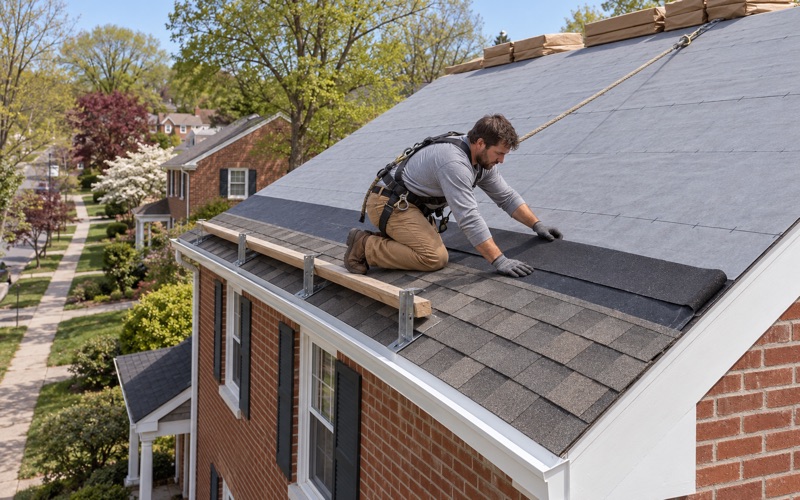
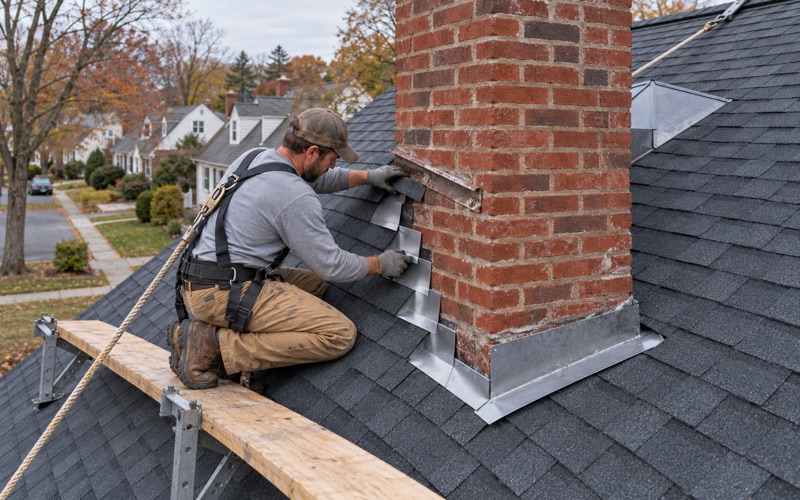
We replace step, counter and chimney flashing along with the roof instead of reusing it under new shingles. Old flashing that has already moved with decades of seasons rarely seals properly against fresh material. Drip edge at the eaves and rakes and a self-adhering ice and water barrier along the eaves go on as part of the same job.
Twins, attached homes and gutters
Aston has 973 attached housing units alongside its detached houses. On a twin or row home, we plan the roof with the neighbor’s roof and the shared wall in mind, because the seam between two roofs is where a careless job leaks into somebody else’s house.
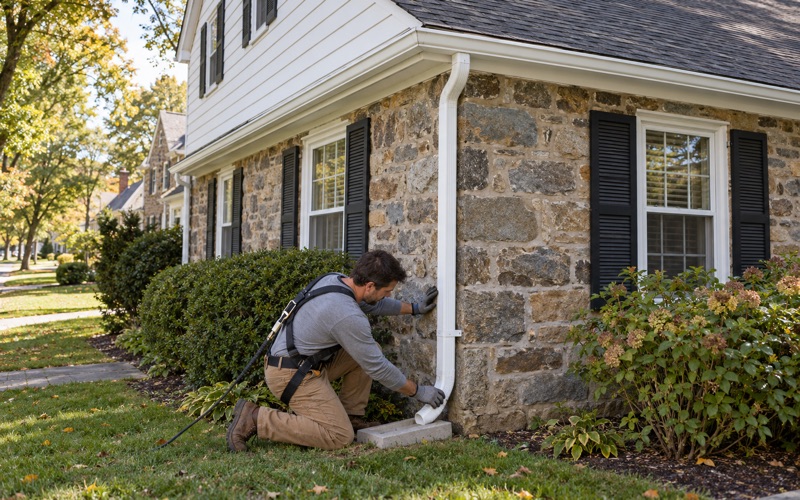
Gutters and downspouts are sized and pitched together with the roof rather than bolted on afterward. In Aston that matters for the permit too, since the township lists gutter work as permit work in its own right, and we include it in the same scope so nothing at the roof edge is left out.
Repairs, Storms and Contracts in Aston
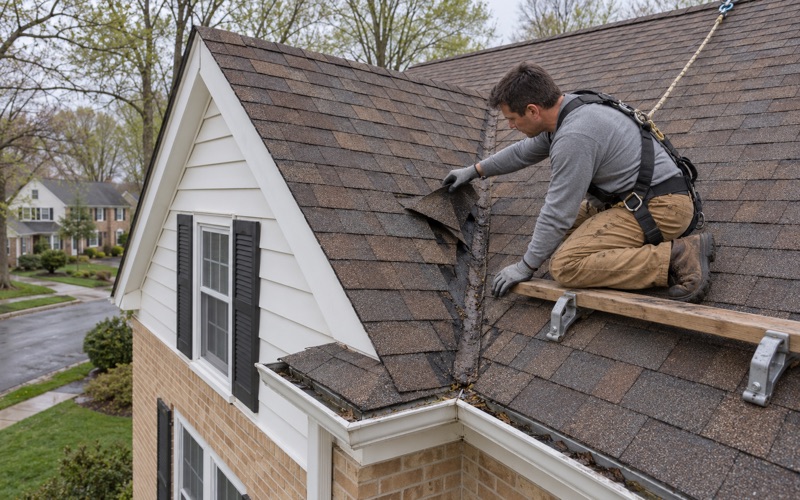
A leak call often starts with a single drip, and many end with a repair. A lifted shingle, a cracked pipe boot or a gap at a kick-out flashing can put water into a ceiling without the roof as a whole being finished. We say so when that is the case.
When replacement is the answer
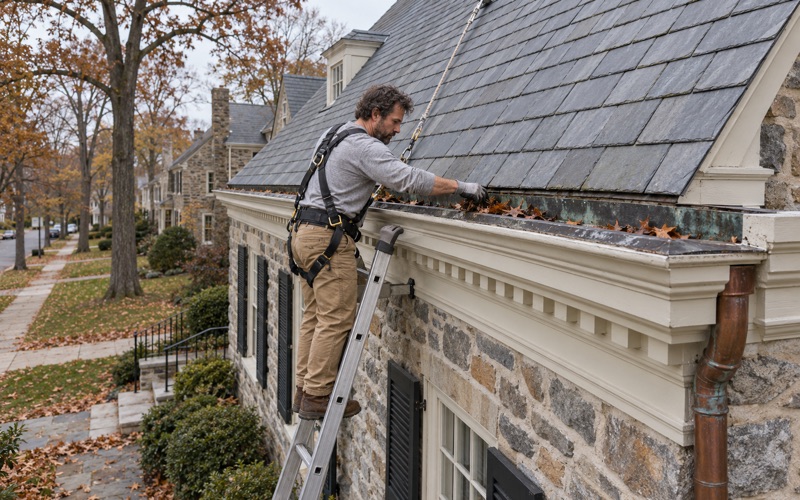
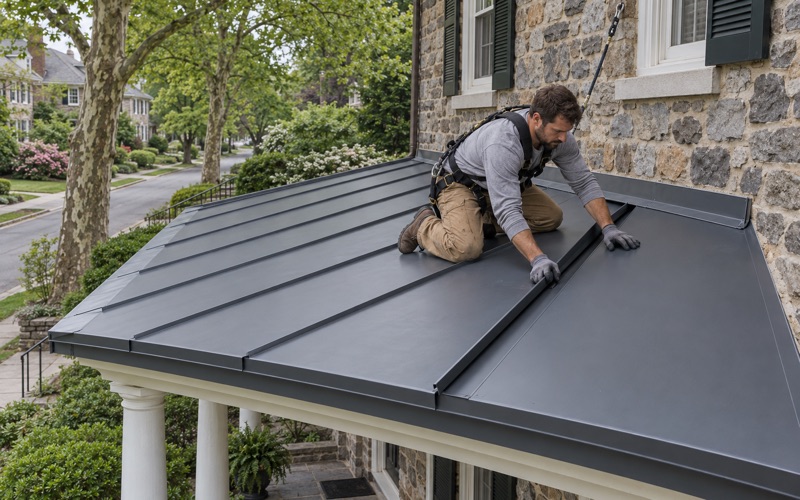
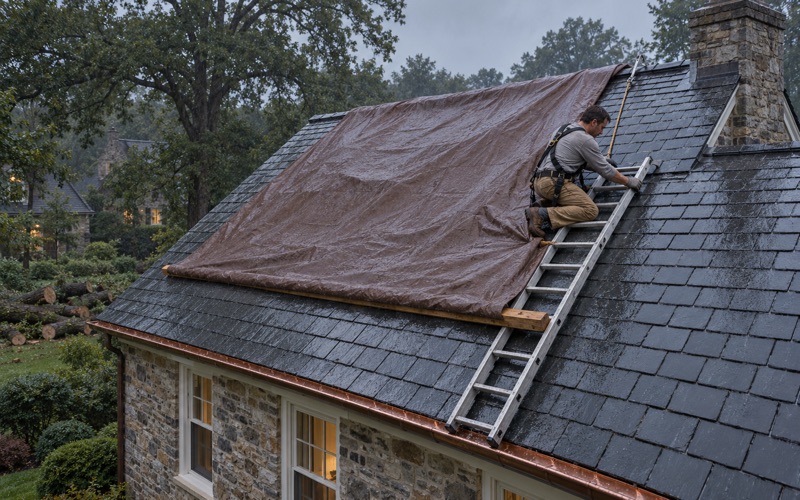
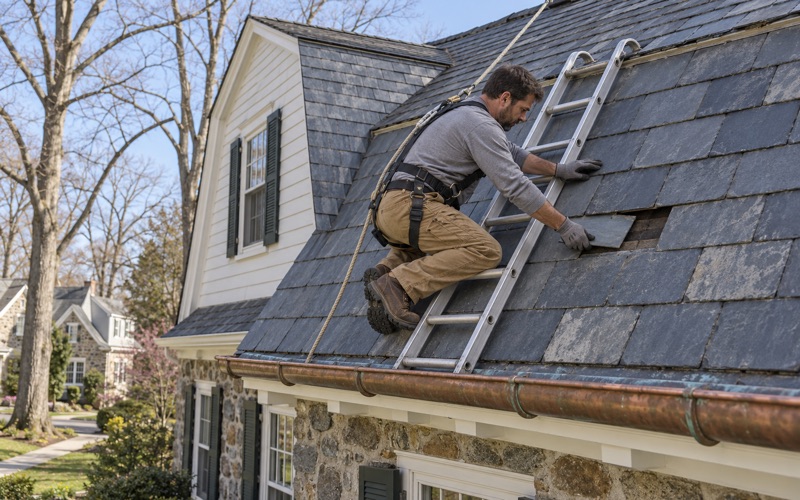
When replacement is the honest answer, we walk the owner through materials suited to the house. Architectural shingles such as GAF Timberline HDZ, Owens Corning Duration and CertainTeed Landmark are common choices on pitched roofs, and standing seam metal suits some porches and additions. Slate roofs get repaired slate by slate with copper nails and slate hooks before anyone raises a tear-off.
Ventilation is part of the same judgment. An attic that runs hot and damp ages shingles from below, so we check ridge vent and soffit intake against the attic’s size before deciding whether the shingles failed on their own or were cooked from underneath.
Storm damage and the owner’s claim
Aston sits in National Weather Service forecast zone PAZ070, served by the Mount Holly office, and that is the zone to watch when a warning is issued. After a storm we photograph the damage and write it up for the owner’s own insurance claim.
If the owner asks, a member of our crew will meet the insurance adjuster on site and point out what we documented. We do not negotiate the claim; in Pennsylvania that is the role of the owner or a public adjuster licensed under the state’s Public Adjuster Licensing Law.
Manufactured homes in Aston
The census counts 187 mobile homes in Aston, 163 of them owner-occupied, and Sunshine Park on Concord Road is a manufactured-home community within the township. A HUD-code home sited in Delaware County is built to the federal South roof-load zone, a 20 psf live load, and Wind Zone I, because Pennsylvania appears in neither the heavier roof-load lists nor the higher wind zones.
That design load matters when an owner asks about adding weight overhead, such as a roof-over system. We look at the home’s data plate and existing roof structure first, and we tell the owner whether a repair to the original roof will serve better than adding a new layer above it.
Contracts and permit paperwork
Every contract we write follows Pennsylvania’s Home Improvement Consumer Protection Act. It carries the three-business-day cancellation notice, and on jobs over $5,000 the deposit stays within the one-third cap the law sets.
Aston makes every permit the property owner’s responsibility and requires it posted before work starts, so we walk owners through each step ahead of time. The township’s inspections go through Catania Engineers Associates and need 48 hours’ notice, and we build that wait into the schedule rather than letting it surprise anyone on the day.
We also keep the scope honest about what the job will disturb. Painted trim and fascia on a pre-1978 house fall under the EPA’s lead-safe RRP rule, so any trim work on Aston’s post-war houses is planned as lead-safe work from the start.
- 20+ Years in Business
- Attic Checked on Every Leak
- Line-Item Written Scopes